

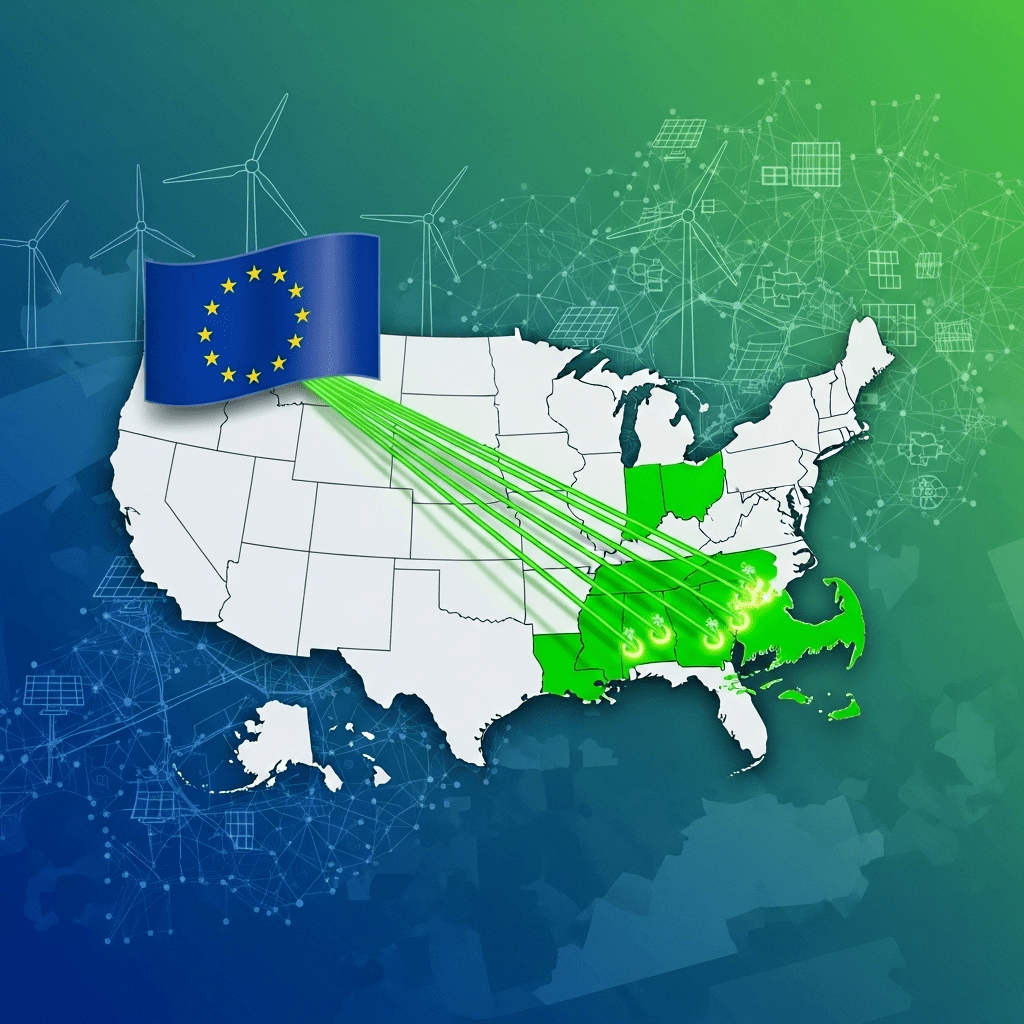
The evolving international climate landscape has taken a new turn as the EU to bypass Washington and woo US states on green agenda becomes a priority in 2025. Facing growing challenges in securing unified climate action at the federal level in the United States, the European Union is shifting its strategy, targeting individual US states to foster economic cooperation and accelerate the adoption of clean energy initiatives.
EU to Bypass Washington and Woo US States on Green Agenda: The Strategic Shift
In the wake of policy differences and stalled federal climate negotiations, European leaders have recognized the limitations of relying solely on Washington, D.C. Instead, the EU is directly engaging with influential US states, particularly those with robust green policies and sizable economies. This pivot reflects a pragmatic move to bolster transatlantic ties and unlock new economic opportunities in the clean tech sector.
Several US states such as California, New York, and Massachusetts have demonstrated leadership in renewable energy targets, carbon reduction commitments, and electric vehicle adoption. The EU is now leveraging these state-level ambitions to co-develop pilot programs, share best practices, and promote joint investments. The California-EU climate partnership announced in late 2024 is an example, centering on carbon trading frameworks and sustainable infrastructure development. This approach is expected to yield long-term growth prospects across cleantech, storage, and smart grid sectors.
Economic Implications of Transatlantic Subnational Partnerships
By fostering direct collaboration with US states, the EU unlocks access to markets accounting for a majority of US GDP. According to the International Energy Agency, states aligned with EU climate objectives represent over $10 trillion in annual economic output. European investors see opportunity in joint ventures ranging from offshore wind to hydrogen production, while state governments benefit from EU expertise and funding. This decentralized strategy diversifies risk and encourages more rapid deployment of clean technologies, circumventing federal gridlock.
For investors and companies seeking global market trends, these new relationships are expected to accelerate project pipelines and reduce regulatory uncertainty. As US federal policy oscillates, state-level commitments offer stability and predictability, both key variables in capital allocation decisions. The move also positions the EU as a trusted partner for US states seeking to expand their green industries and workforce development.
Challenges and Opportunities for Stakeholders
While the EU’s subnational outreach is gaining traction, it is not without challenges. Legal complexities, differing regulatory regimes, and political opposition in some jurisdictions may temper the pace of progress. Nonetheless, the appetite for cross-border collaboration remains high, particularly as climate innovation becomes a strategic economic driver. Transatlantic technology standards coordination could further expand the impact of these partnerships, benefiting industries from electric vehicles to carbon capture.
For business leaders and policymakers, close attention to these policy developments is crucial to navigating evolving regulatory landscapes and capitalizing on emerging investment opportunities. As the US heads into another election cycle, the EU’s state-first strategy is likely to serve as a template for other global actors seeking resilient pathways to advance the green agenda, regardless of federal policy dynamics.
Conclusion: Redefining Climate Diplomacy in the New Economic Order
The decision for the EU to bypass Washington and woo US states on green agenda marks a tactical evolution in transatlantic relations. By fostering economic and climate partnerships at the state level, the EU demonstrates adaptability and ambition in pursuit of its sustainability goals. For investors, companies, and governments on both sides of the Atlantic, this approach offers renewed momentum, fresh investment schedules, and a competitive edge in the rapidly expanding green economy of 2025 and beyond.




