

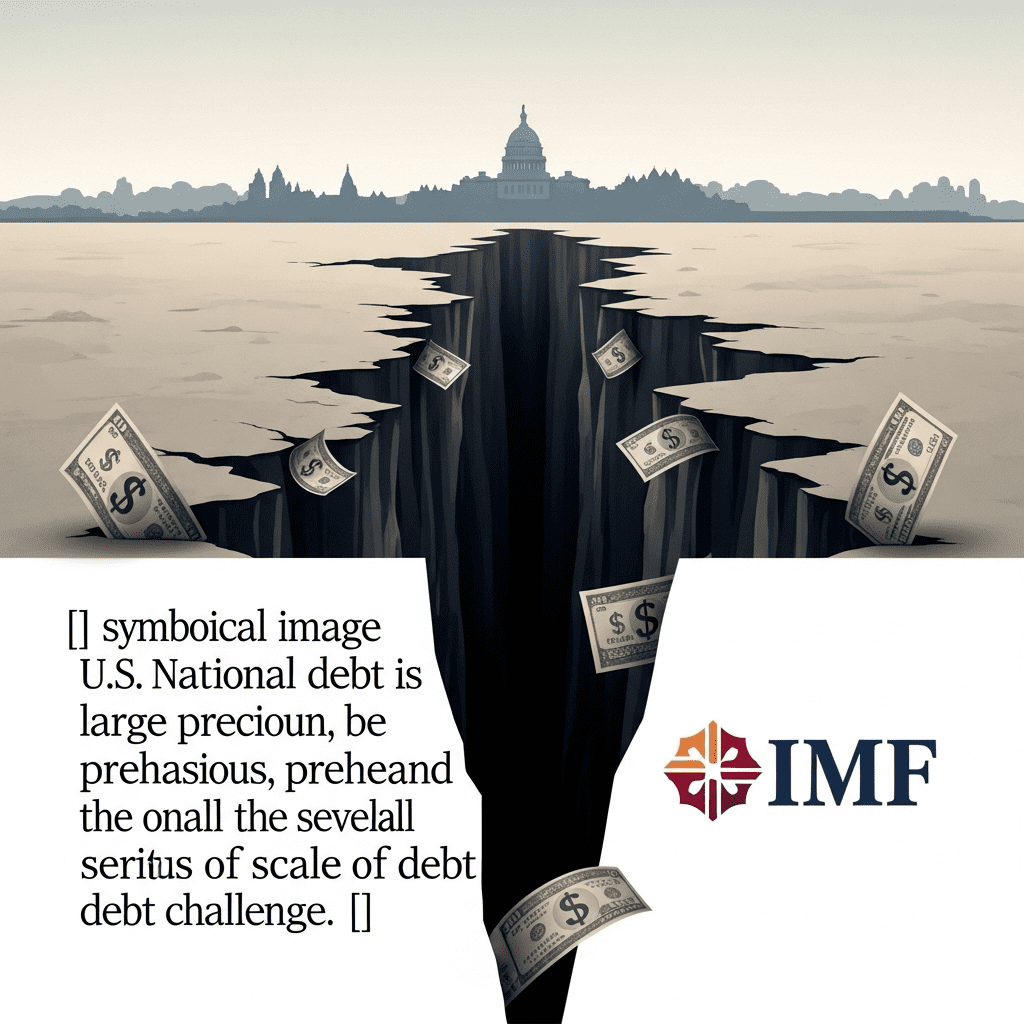
The rising concern expressed as the IMF warns US must tackle its yawning deficit has captured the attention of global markets and policymakers alike. In its latest fiscal outlook, the International Monetary Fund highlighted the urgent need for Washington to confront its ballooning national debt if the country is to maintain long-term economic stability and global financial confidence.
IMF Warns US Must Tackle Its Yawning Deficit Amid Growing Fiscal Risk
In its April 2025 assessment, the IMF issued a stark warning regarding the United States’ fiscal trajectory. The organization pointed out that the U.S. federal deficit has reached levels not seen in decades, driven by elevated government spending, tax cuts, and higher interest payments. According to IMF analysts, this trend threatens to weaken the nation’s fiscal credibility and could have cascading effects on both domestic and global economies.
The Fund’s warning comes at a critical time as concerns mount over inflationary pressures, higher Treasury yields, and monetary policy uncertainty. The IMF urged U.S. leaders to develop a credible medium-term strategy that reinvigorates fiscal discipline, arguing that delay would only exacerbate the problem and potentially trigger adverse reactions across bond markets—impacting investors and ordinary Americans alike.
Key Drivers Behind the Expanding US Deficit
Several factors have contributed to the rapid expansion of the US budget deficit. Pandemic relief measures, while crucial for supporting households and businesses, significantly increased public debt since 2020. More recently, major governmental spending on defense, healthcare, and infrastructure—as well as persistent tax policy debates—have continued to widen the gap between federal outlays and revenues. The rise in interest rates has also made debt servicing far costlier, compounding America’s fiscal challenges.
According to the Congressional Budget Office, the US national debt is projected to surpass $36 trillion by the end of 2025, while annual deficits could reach 6.5% of GDP if no corrective policy actions are implemented. The IMF’s warning underscores the risk that unchecked deficits could crowd out private investment, raise borrowing costs, and limit the fiscal space needed to respond to future economic shocks.
Implications for Markets as IMF Warns US Must Tackle Its Yawning Deficit
The IMF’s caution to policymakers has immediate implications for investors, businesses, and global market stability. Persistent deficits may undermine the US dollar’s reserve status, increase volatility in bond markets, and diminish investor confidence. Analysts at ThinkInvest.org emphasize that an unsustainable debt trajectory often translates into heightened market uncertainty, especially as rating agencies scrutinize US fiscal health more closely.
Moreover, the potential for policy gridlock as the 2026 election cycle approaches adds another layer of uncertainty. As fiscal debates intensify, market participants are seeking reliable economic forecasts and sound portfolio strategies to hedge against volatility stemming from fiscal mismanagement.
What Policymakers and Investors Need to Watch
Experts stress that both spending reforms and revenue enhancements will likely be necessary to place US debt on a sustainable path. The IMF highlights measures such as revisiting tax codes, reining in discretionary spending, and reforming entitlement programs as possible avenues. Maintaining credibility with market participants and investors is critical—and decisive action during robust economic periods is generally less painful than during downturns.
For investors, tracking the policy response as the IMF warns US must tackle its yawning deficit will be essential in 2025. Monitoring yields, bond demand, and government policy signals could help inform strategic asset allocation. Readers can find more investment insights and analysis on fiscal policy trends on ThinkInvest.org.
The Road Ahead: Can the US Address Its Fiscal Challenge?
While the US economy continues to demonstrate resilience, ignoring the mounting deficit could compromise long-term growth and financial stability. The IMF’s warning is a clarion call for proactive, bipartisan solutions. By pursuing a balanced approach—combining growth-oriented reforms with prudent fiscal management—Washington can secure America’s fiscal future and buttress confidence in the global economic order.
As the world’s largest economy, US fiscal health has far-reaching consequences. The message as the IMF warns US must tackle its yawning deficit is clear: decisive action today will help avert more profound challenges tomorrow, ensuring both economic prosperity and stability as the country enters the crucial years ahead.




