

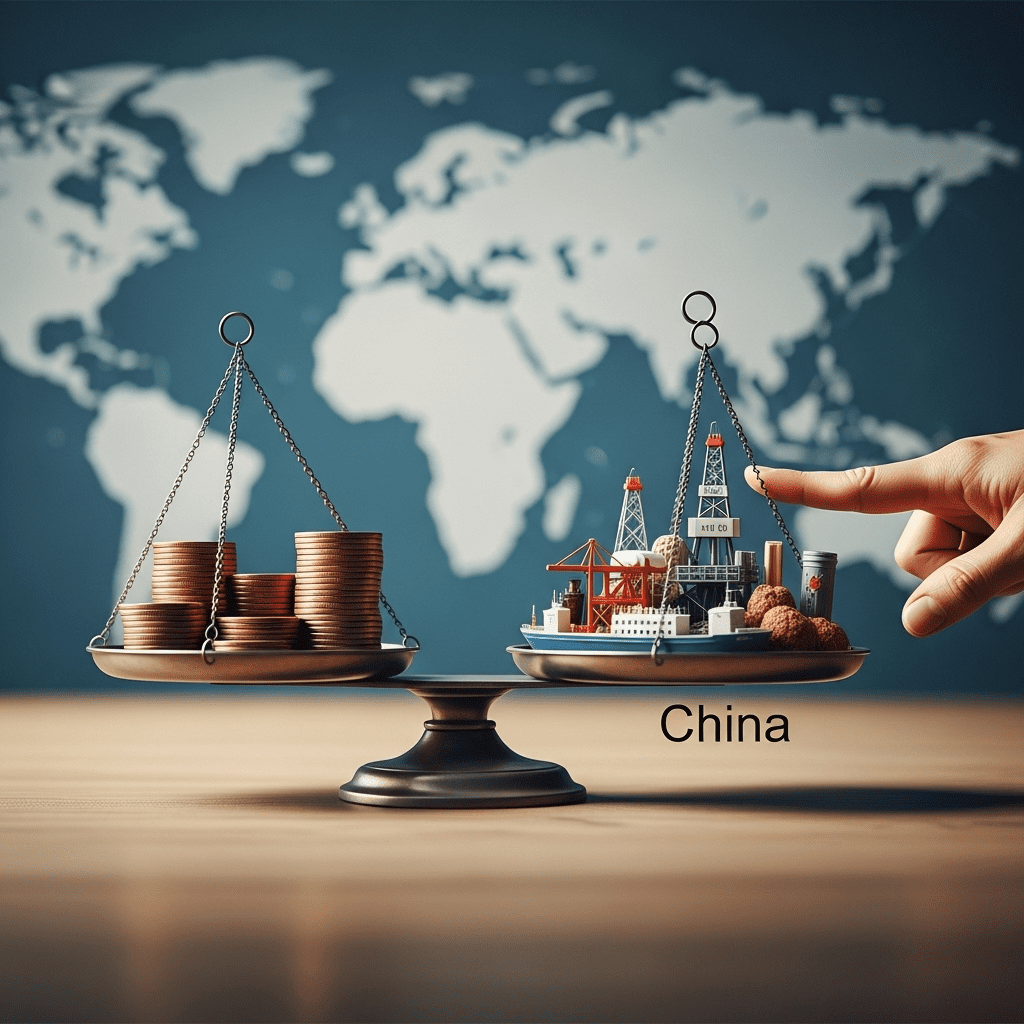
As global debt markets continue to evolve, Beijing’s collateral play can rattle the creditor-borrower balance across both emerging and established economies. With China deploying increasingly sophisticated collateral requirements as leverage in its international lending, the traditional power dynamics between creditors and borrowers face new complications.
How Beijing’s Collateral Play Can Rattle the Creditor-Borrower Balance
In recent years, China’s use of collateral in sovereign lending arrangements has intensified, giving rise to new discussions on risk, transparency, and negotiation leverage. By insisting on strategic assets—such as ports, minerals, or infrastructure—as collateral for loans, Beijing enhances its security but also introduces pronounced volatility into international finance.
This approach stands in sharp contrast to most Western institutional lenders, who typically rely on sovereign guarantees or creditworthiness assessments, rather than physical collateral. As a result, the creditor-borrower balance tips when nations turn to Beijing for capital, especially amid economic strains and limited alternatives.
The Mechanics of Collateral Diplomacy
Beijing’s collateral diplomacy involves the direct linking of high-value national or strategic assets to loan agreements. This is evident in China’s Belt and Road Initiative, where financing for infrastructure often comes with fine print that allows Beijing to take control of assets if repayment terms are breached. While not always exercised, the mere existence of such clauses can alter borrower behavior and risk assessments by other financial institutions and multilateral agencies.
For example, in countries such as Sri Lanka, Uganda, and Laos, the stipulations tied to Chinese financing have become points of international scrutiny. The control, or even the threat of potential control over sovereign assets, increases Beijing’s bargaining power in geopolitical negotiations as well as refinancing situations.
Implications for Global Debt Markets
The impact of such collateral strategies reverberates well beyond bilateral deals. Creditors from other nations and private investors may become wary of lending to countries whose key resources are already encumbered. This can raise financing costs, heighten default risks, and add layers of legal and diplomatic complexity to any debt resolution process.
Moreover, the risk assessment landscape changes significantly. Traditional credit rating models may not fully account for the encumbrance and potential loss of strategic assets when a country has pledged infrastructure or natural resources to Beijing. This underlines the growing need for more nuanced risk management strategies among global investors and policymakers.
Shifting Leverage: Borrowers, Creditors, and Global Power Plays
Beijing’s collateral play not only redefines the creditor-borrower balance on paper—it also affects real-world power dynamics. Borrower nations might find themselves under additional pressure to prioritize repayments to China over other obligations, knowing that failure could lead to the loss of critical assets.
This has sparked concern within the international financial community, as multilateral debt relief efforts, such as those from the Paris Club or International Monetary Fund, may become complicated by claims on collateralized assets. Such a scenario was evident during pandemic-era debt relief measures, where Chinese loans—often shrouded in limited transparency—posed significant challenges to coordinated restructuring.
Transparency, Trust, and the Search for Best Practices
One of the central issues is transparency. Many agreements between Chinese lenders and sovereign borrowers are kept confidential, making it difficult for other creditors to assess risks accurately. The opacity not only clashes with norms promoted by international lenders, but also escalates fears among governments and investors alike.
Institutions committed to financial stability have therefore called for greater disclosure of all collateralized arrangements, whether with China or other emerging creditors. Such efforts aim to restore balance and fairness in global lending practices and reduce the unpredictability introduced by nontraditional collateral structures.
What Investors and Policymakers Should Watch in 2025
As the global economy confronts heightened geopolitical risks, commodities volatility, and a tightening credit environment, the question of how Beijing’s collateral play can rattle the creditor-borrower balance will remain front and center for risk managers and policymakers. Investors must factor into their strategies the potential for sudden shifts in asset ownership, especially in regions heavily tied to Chinese lending.
Furthermore, the trend toward asset-backed financial diplomacy is likely to spur further debate on international norms, fair lending, and the role of supranational agencies in regulating or moderating such agreements. For those seeking actionable investment insights, close monitoring of China’s bilateral lending terms and the evolving response from global financial institutions will be crucial heading into 2025 and beyond.
Conclusion: A New Era of Creditor-Borrower Dynamics
Ultimately, Beijing’s collateral play can rattle the creditor-borrower balance by rewriting familiar rules of international finance. Through the expanded use of asset-based lending, China amplifies its influence, prompting renewed attention to transparency, risk allocation, and global economic governance. As the world navigates these shifts, understanding the nuances and implications of Beijing’s approach becomes essential for smart investment and policy decisions.




