

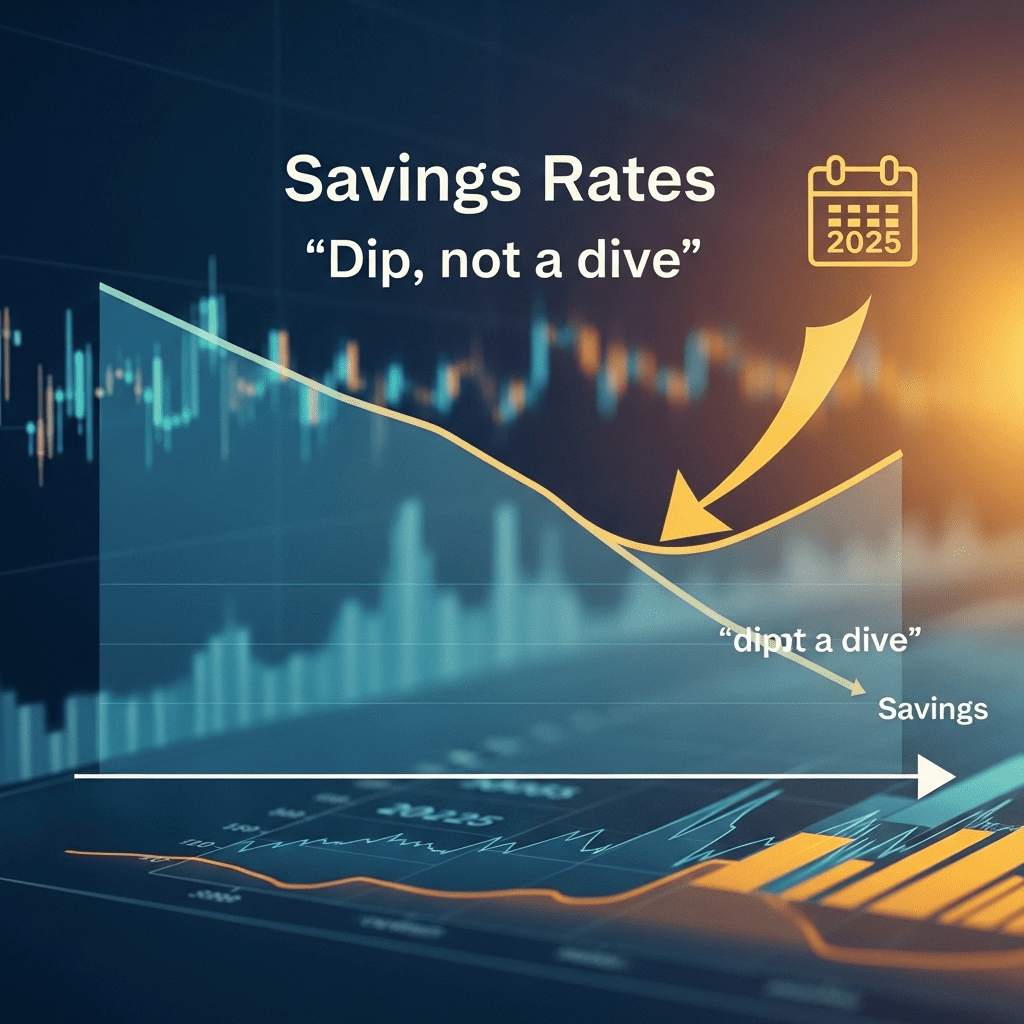
As 2025 approaches, financial experts agree on one thing: savings rates will dip but not dive. This subtle yet pivotal shift in the economic landscape means there is still a valuable window for savers and investors to secure great returns before rates edge lower. What does this forecast mean for your strategy—and how can you make the most of today’s high-yield opportunities?
Why Savings Rates Will Dip But Not Dive in 2025
Over the past few years, savings accounts and CDs have offered headline-grabbing rates, primarily fueled by central banks raising interest rates to combat inflation. Now, as inflation stabilizes and the Federal Reserve signals a potential policy pivot, industry analysts widely expect savings rates will dip but not dive in the year ahead. Strategic factors—including gradual rate cuts and persistent demand for fixed income products—should keep rates above their pre-pandemic lows.
Recent data from major online banks show average high-yield savings accounts still offer APYs well above 4%. Though forecasted to drift downward, these rates remain elevated compared to the historic average of 0.09% from just a few years ago. Comprehensive market analysis and projections affirm that the days of ultra-low returns are not returning overnight.
Expert Perspectives: Why the Downturn Won’t Be Dramatic
According to leading economists and financial advisors, several forces will cushion the decline in savings rates. The Federal Reserve is expected to move cautiously, responding to evolving economic data rather than making abrupt policy changes. This measured approach, coupled with ongoing demand for liquid deposits, suggests that while savings rates will dip but not dive, they will still offer compelling options for risk-averse investors.
Additionally, banks may maintain attractive promotional rates to retain and attract new customers, even as benchmark rates fall. This competitive pressure ensures a buffer that keeps consumer returns more attractive than in prior low-rate eras.
How Savers Can Secure Great Returns Before Rates Slide
With the consensus that savings rates will dip but not dive, now is the strategic time for individuals to capitalize on existing high-rate products. Consider these steps to benefit from the current environment:
- Lock in Promotional CD Rates: Many FDIC-insured institutions are still offering certificates of deposit at peak rates. Opting for longer terms can shield your returns as market rates drop.
- Maximize High-Yield Savings: Online-only banks and fintechs often provide yields that outpace traditional banks. Moving excess cash can boost passive income.
- Ladder Your Investments: A CD ladder helps preserve liquidity while capturing multiple rate tiers. This provides flexibility if market conditions change faster than anticipated.
It’s also prudent to regularly review your banking options. With portfolio diversification increasingly important, don’t hesitate to switch providers if more favorable rates emerge—especially for larger balances.
What Might Change the Outlook?
While the forecast that savings rates will dip but not dive is built on current central bank signaling and macroeconomic trends, unexpected developments could cause adjustments. Persistent inflation, geopolitical shocks, or a sudden economic slowdown might alter the pace of future interest rate changes. However, most scenarios support only modest reductions, rather than a return to near-zero yields.
Staying Ahead: Monitoring and Adapting to Rate Trends
For the savvy saver or investor, vigilance pays. Use reputable sources and data-driven financial strategies to monitor rate movements and adjust your holdings accordingly. Tools for rate tracking, news from central banks, and expert guidance can help you respond swiftly to shifts in the market.
In summary, while savings rates will dip but not dive heading into 2025, the environment remains favorable for those who act decisively. By leveraging today’s high-yield instruments and staying alert to changes, you can protect—and even grow—your returns during the transition to lower rates.




