

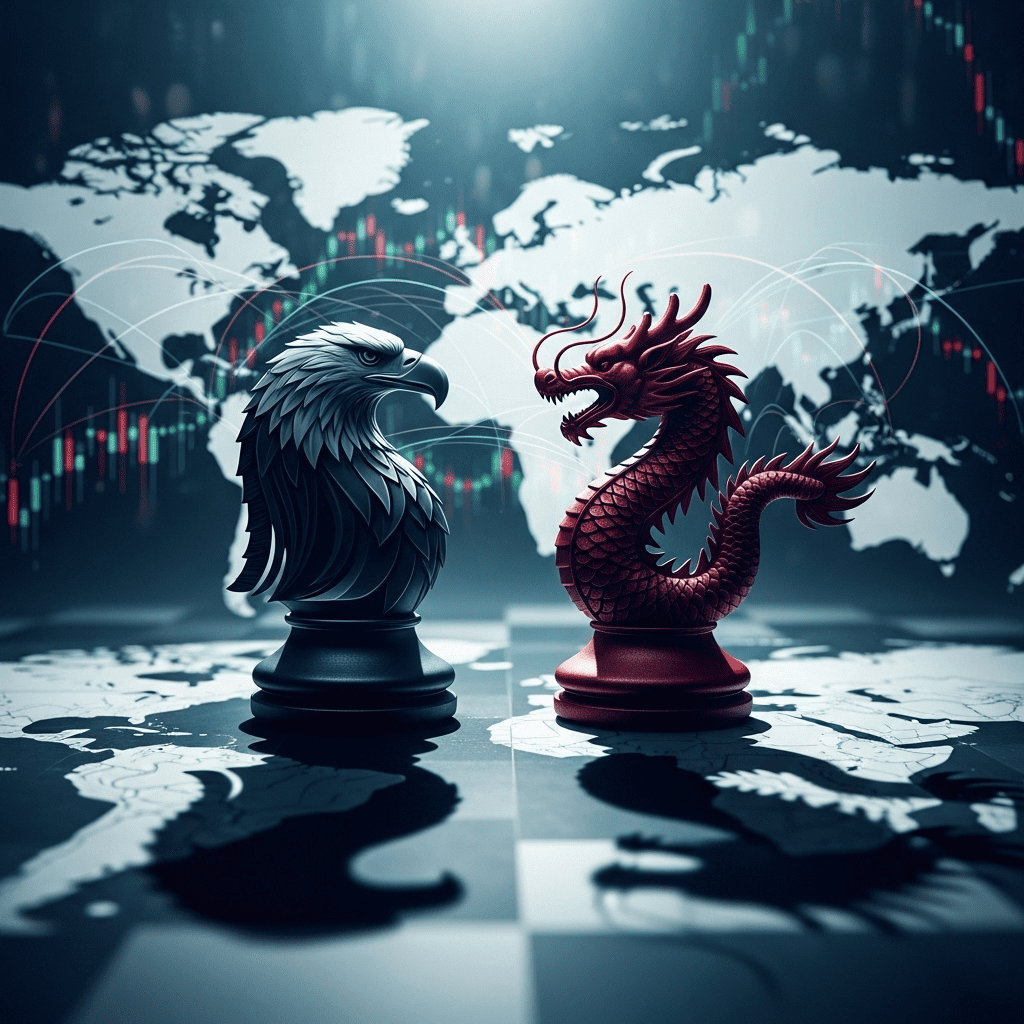
As the world braces for another round of geopolitical tension, the cold war trade stand-off between Trump and Xi is set to take center stage in global economic policy throughout 2025. With both leaders signaling a return to hardline strategies, investors, policymakers, and multinational corporations must prepare for wide-reaching consequences that may reshape international trade dynamics for years to come.
The Cold War Trade Stand-Off Between Trump and Xi: Background and Current Developments
The growing unease in financial markets stems from the possibility of a renewed cold war trade stand-off between Trump and Xi following potential political developments in the United States and China. After years of strained relations marked by tit-for-tat tariffs and tech restrictions, recent rhetoric from both camps has heightened expectations of an escalating confrontation in trade, innovation, and global financial networks.
Donald Trump’s presidential campaign has reiterated promises to implement steep tariffs on Chinese goods, restrict Chinese investment in strategic sectors, and revisit policies targeting China’s technological ambitions. Meanwhile, President Xi Jinping has signaled Beijing’s readiness to respond with reciprocal measures, accelerated self-reliance initiatives, and increased outreach to alternate trade partners.
This environment has prompted many global investors to reevaluate risk exposures in both US and Chinese markets, while multinational companies have begun diversifying supply chains and hedging against further regulatory surprises. According to Goldman Sachs, the re-emergence of protectionist measures could trim global GDP growth by up to 0.5% annually if the standoff escalates further.
Major Economic Sectors at Risk
The renewed cold war climate threatens to disrupt key industries, from semiconductors and rare earths to energy and consumer electronics. The tech sector is especially vulnerable, as export controls and investment bans could choke the flow of essential components and intellectual property between the US and China.
Moreover, the agricultural sector—already a frequent casualty in past trade disputes—faces uncertainty over new tariff regimes and retaliatory quotas. Emerging market strategies may need urgent adaptation as Asian, European, and Latin American economies adjust to realigned supply routes and contract negotiations.
How the Cold War Trade Stand-Off Between Trump and Xi Could Shape Global Supply Chains
The cold war trade stand-off between Trump and Xi is not just a bilateral affair; its repercussions will ripple across global supply chains and international investment flows. In response to deteriorating trust, major corporations are accelerating their ‘China plus one’ strategies, shifting manufacturing footprints to Vietnam, India, and Mexico. This diversification aims to mitigate overexposure to US-China trade volatility, but introduces complexities in quality control, logistics, and regulatory compliance.
Financial analysts note that heightened uncertainty may dampen capital investment and slow the rollout of advanced manufacturing technologies, as companies navigate shifting tariffs, sanctions, and export restrictions. The standoff is also fueling new interest in regional trading blocs and alternative agreements, such as the Comprehensive and Progressive Agreement for Trans-Pacific Partnership (CPTPP).
What Investors Should Watch in 2025
Investors eyeing global markets for the coming year must stay vigilant. Key indicators include the pace of tariff implementation, the evolution of export control lists, and the outcome of diplomatic overtures—or breakdowns—between Washington and Beijing. Safe-haven assets like the US dollar, gold, and government bonds may experience heightened demand should tensions escalate.
Yet, there are potential opportunities as well. Supply chain reconfiguration opens up prospects in emerging markets and alternative manufacturing hubs. Meanwhile, companies specializing in compliance technology and risk management could experience growth as businesses adapt to new regulations. Be sure to leverage trusted investment insights to continually assess portfolio risk in this fluid geopolitical era.
Strategic Responses to the Cold War Trade Stand-Off Between Trump and Xi
Policymakers and corporate leaders are not standing idle in the face of the looming stand-off. Governments are enhancing dialogue with alternative trade partners and accelerating decoupling efforts in critical supply chains—from semiconductors to pharmaceuticals.
Meanwhile, leading financial institutions are rolling out scenario-modeling tools to stress-test asset portfolios under various trade war outcomes. Diversification remains a central theme for investors, particularly through active management strategies, regional ETFs, and direct exposure to resilient sectors like renewable energy, healthcare, and cybersecurity.
For those seeking to equip themselves with up-to-date analysis, ThinkInvest.org offers curated market research and actionable guidance tailored for volatile economic conditions.
Conclusion: Navigating the Impending Stand-Off
The cold war trade stand-off between Trump and Xi represents a pivotal moment for global markets in 2025. While volatility is likely to increase in the short term, savvy investors can mitigate risks and identify new growth opportunities by staying informed and agile. Monitoring policy developments, diversifying exposures, and relying on authoritative sources are imperative as the global economy enters this new era of uncertainty.




