

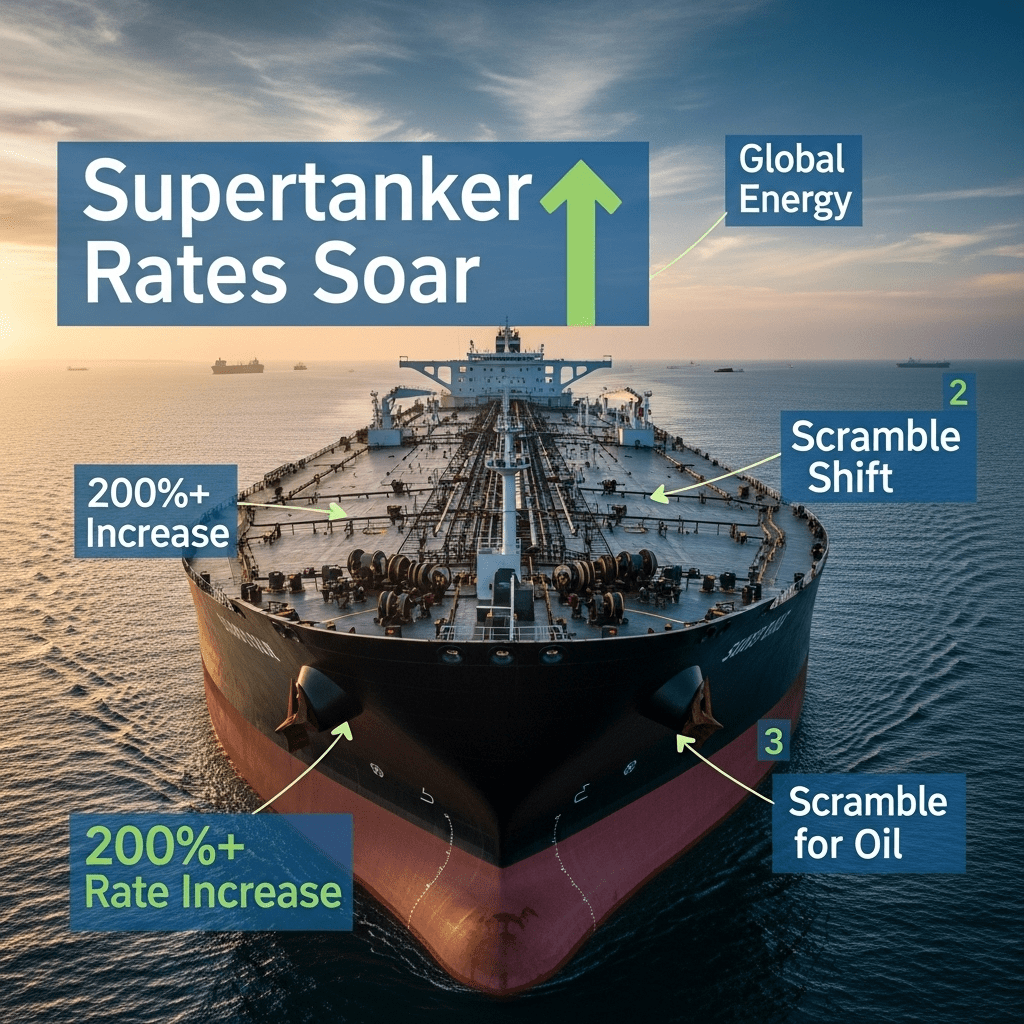
The global shipping industry is witnessing unprecedented turbulence as supertanker rates soar as buyers scramble to replace Russian oil amidst tightening sanctions and shifting trade flows. This surge is reshaping the energy logistics landscape and creating new investment challenges—and opportunities—across world markets.
Supertanker Rates Soar as Buyers Scramble to Replace Russian Oil
In the wake of strict international sanctions on Russia, oil-importing nations are urgently seeking alternative suppliers. This replacement drive is triggering an acute scarcity of large crude carriers (VLCCs and suezmax tankers), and as a result, freight rates have skyrocketed. According to recent market data, average earnings for supertankers on key routes—such as the Middle East to Asia and U.S. Gulf to Asia—have surged by more than 200% compared to early 2022.
This rate spike is not merely a blip; it’s a fundamental reflection of how Russia’s diminished presence in global energy trade has forced buyers in Europe and Asia to source crude from farther afield, including the U.S., West Africa, and the Middle East. The extended voyage distances translate to longer vessel charter times and reduced available capacity, further fanning the flames of rising shipping costs.
Global Energy Markets Recalibrate Freight Dynamics
The redirection of crude flows is causing ripple effects throughout the maritime and energy sectors. As European refiners distance themselves from Russian crude, alternative suppliers are capitalizing on the opening. For instance, U.S. crude exports to Europe recently hit record highs—up nearly 45% year-over-year, according to industry sources—demanding more long-haul voyages and supertanker charters. Meanwhile, Asian refiners are also in fierce competition for Middle Eastern and West African barrels, adding even more pressure on available vessel supply.
These logistical bottlenecks have profound implications for both energy security and oil price volatility. Commodities investors are closely watching tanker indices as a leading indicator of global oil market tightness and inflationary risks spilling over into broader economies.
Impact on Freight Costs and End-User Prices
The knock-on effect of soaring supertanker charter rates is being felt across the energy value chain. Shipping now accounts for a larger slice of total delivered oil costs, narrowing refiners’ profit margins and, in some cases, prompting refiners to cut runs or seek cheaper but less optimal crude blends. According to Clarkson Research, a leading maritime analytics firm, average VLCC rates on popular Atlantic-to-Asia routes have nearly tripled since late 2023, reaching levels not seen since the 2008 commodities boom.
This uptrend is also impacting term contracts, with oil-producing nations and trading companies renegotiating freight terms to hedge against further volatility. The unpredictable shipping landscape is leading energy strategists and analysts to revise their outlooks, warning that persistent rate inflation could counteract efforts to stabilize fuel prices for end-users globally.
Investment Strategies Amid Supertanker Rate Volatility
For investors and financial professionals, the current supertanker rate surge presents both risks and opportunities. Maritime shipping firms, particularly those with modern, fuel-efficient fleets, are reporting robust earnings—some posting quarterly profits not seen in over a decade. Publicly traded tanker operators like Frontline and Euronav have seen their share prices climb as freight demand outpaces vessel supply.
On the flip side, the heightened freight expense is a headwind for oil importers, integrated energy companies, and downstream refiners that lack the ability to pass through higher transport costs. This dynamic has prompted portfolio managers to rebalance their energy holdings, increasing exposure to shipping equities while trimming positions in affected refiners and certain emerging markets reliant on imported crude.
Regulatory and Geopolitical Considerations
The reshaping of global oil trade routes is also prompting governments and industry stakeholders to consider long-term regulatory adjustments. Some governments are investing in strategic reserves and alternative pipeline projects to lessen dependence on maritime shipments. Additionally, the focus on energy transition and decarbonization is leading shipping companies to invest in new, eco-friendly vessel designs to capture premium rates in an evolving regulatory landscape.
Geopolitical risk also cannot be underestimated. Potential escalations in the Black Sea region or disruption of chokepoints such as the Suez Canal could add further instability, amplifying tanker rate spikes and creating further uncertainty for global investors exploring oil and energy logistics plays.
Looking Ahead: Will Supertanker Rates Stay Elevated?
While the current confluence of disrupted Russian oil flows, increased voyage distances, and capacity constraints is keeping supertanker rates elevated, analysts caution that market dynamics are highly fluid. Additional fleet deliveries expected in 2025 and shifts in demand from China or India could temper the rate rally. However, as long as the global market is structurally short of efficient tankers and buyers are hamstrung by limited alternatives, freight rates are likely to remain sensitive to even small shifts in supply or demand.
For energy market participants and financial planners, ongoing monitoring of maritime indicators will be crucial. The intersection of geopolitics, shipping logistics, and crude flows is now front-and-center in formulating resilient energy and long-term investment strategies as the industry navigates a new era of price volatility and structural transformation.




