

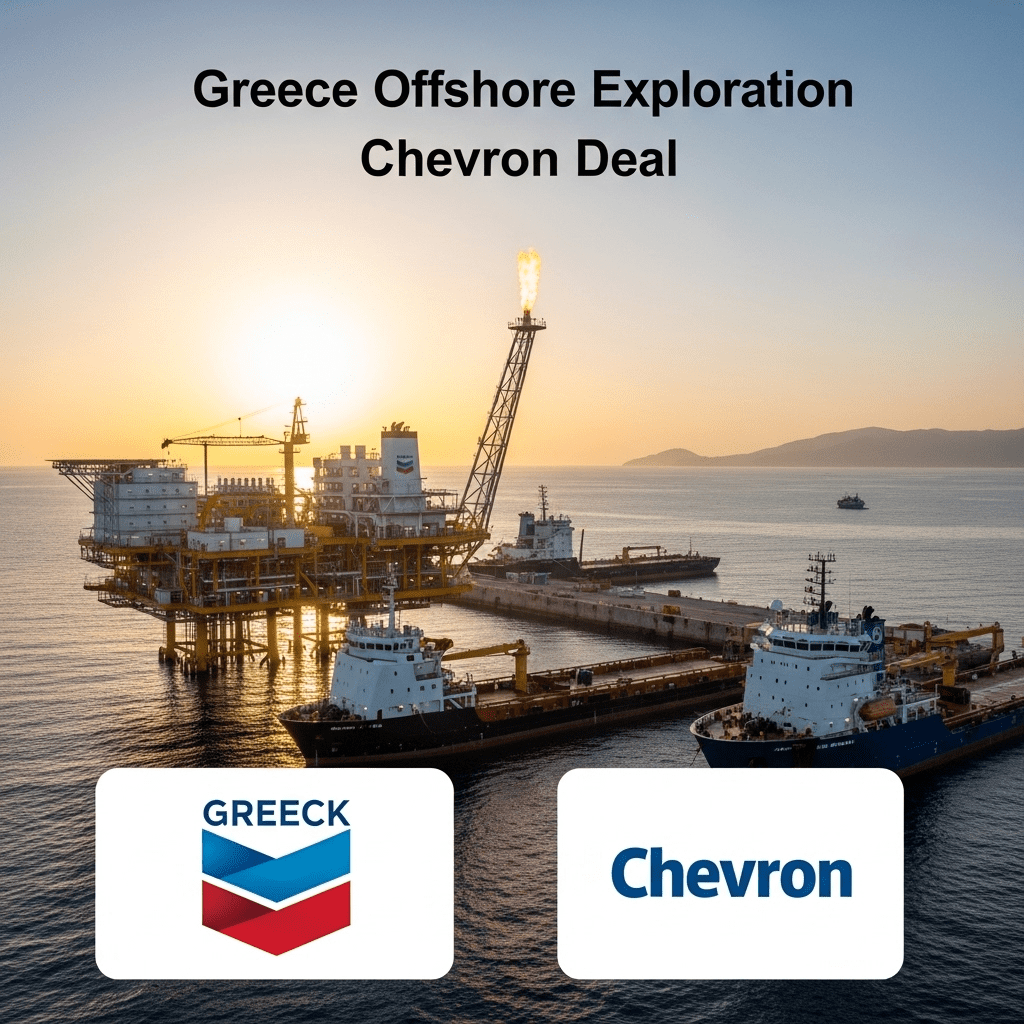
The announcement that Greece awards offshore exploration blocks to Chevron signals a transformative moment for the Eastern Mediterranean energy sector in 2025. With Chevron’s entry, both market participants and investors are closely monitoring the implications for regional energy security, upstream development, and Greece’s economic trajectory.
Greece Awards Offshore Exploration Blocks to Chevron: The Agreement and Its Significance
In early June 2025, the Greek Ministry of Energy revealed that it has granted several key offshore exploration blocks to Chevron, one of the world’s largest integrated energy companies. The move builds on Greece’s ambition to position itself as a pivotal player in the Mediterranean’s natural gas landscape, aligning with broader European strategies to diversify energy sources away from Russian supplies.
The awarded blocks are located mainly in the Ionian Sea and offshore Crete—areas considered high-potential for hydrocarbon reserves. Chevron secured exploration and production rights after a competitive international tender, outperforming rival bids from other major energy firms. The Greek government hailed the result as a vote of investor confidence and a catalyst for technological innovation in Greece’s energy sector.
For investors seeking investment insights into energy transition trends, the deal could spark secondary opportunities in local infrastructure, energy services, and supply chain sectors.
Strategic Rationale: Why Chevron and Why Now?
Chevron’s bid aligns with its global strategy to expand natural gas assets and mitigate risk through portfolio diversification. With post-pandemic energy demand surging and Europe prioritizing alternative sources, the Eastern Mediterranean has gained increased importance. Greece’s favorable regulatory environment, relative political stability, and ongoing reforms have further increased its investment appeal.
From a geopolitical perspective, the partnership strengthens Greece’s role as a regional energy hub and enhances the EU’s energy security posture. Notably, the selected blocks are adjacent to previously surveyed geological formations that have indicated sizable untapped reserves.
According to Greek officials, Chevron is committed to deploying advanced seismic imaging and low-carbon extraction technologies as part of the exploration phase, reinforcing Greece’s ambitions to implement ESG best practices.
Market and Economic Implications
The multi-year agreement is expected to usher in over €1 billion in direct foreign investment, with significant spillover effects on local job creation, research, and technology transfer. The Greek energy ministry estimates that successful commercial finds could increase national gas reserves by up to 20% within the decade.
For Greek markets, the deal is anticipated to bolster investor sentiment and enhance liquidity in related sectors, such as utilities, logistics, and construction, according to financial news analysts. The potential for joint ventures with local firms has also raised prospects for skill development within Greece’s engineering and geoscience communities.
Offshore Exploration and the Future of Greek Energy Policy
As Greece awards offshore exploration blocks to Chevron, policymakers are emphasizing responsible stewardship. The government’s updated hydrocarbon licensing regime incorporates stricter environmental safeguards and community benefits sharing to address public concerns over marine ecosystems and sustainable development.
Additionally, the partnership underscores Greece’s strategy to balance domestic energy needs with its broader commitments under the European Green Deal and Paris Agreement. Chevron will be required to submit an integrated environmental and social impact assessment before deepwater drilling can commence.
Regional Impact: The Mediterranean Energy Chessboard
This agreement comes at a time when Mediterranean energy geopolitics are rapidly evolving, influenced by competitive exploration programs in Cyprus, Egypt, and Israel. By securing Chevron’s expertise and capital, Greece has rapidly advanced its position in the scramble for secure, competitively priced natural gas supplies. The deal may also accelerate regional infrastructure projects such as subsea pipelines, LNG terminals, and potential new export routes to mainland Europe.
With rising energy prices and ongoing supply chain challenges, the partnership delivers critical momentum for ongoing talks about a pan-Mediterranean energy corridor, adding weight to Greece’s diplomatic leverage in EU and regional dialogues. For global investors, such developments represent go-to market opportunities in an increasingly interconnected energy landscape.
Looking Ahead: What Investors Should Watch
Following the news that Greece awards offshore exploration blocks to Chevron, market observers are tracking the coming months for updates on seismic survey results, joint venture announcements, and infrastructure project launches. While the exploration phase carries inherent geological and regulatory risks, Chevron’s technical strength, coupled with Greece’s investor-friendly reforms, offers cautious optimism for material discoveries.
Long-term, successful exploration could help Greece reduce energy import dependence, generate new fiscal revenues, and attract further upstream investment. It will also encourage a robust dialogue between stakeholders regarding energy security, environmental responsibility, and sustainable growth.
For readers interested in tracking these developments, ongoing coverage is available through energy sector analysis and financial reporting as new milestones emerge in Greece’s offshore energy journey.




