

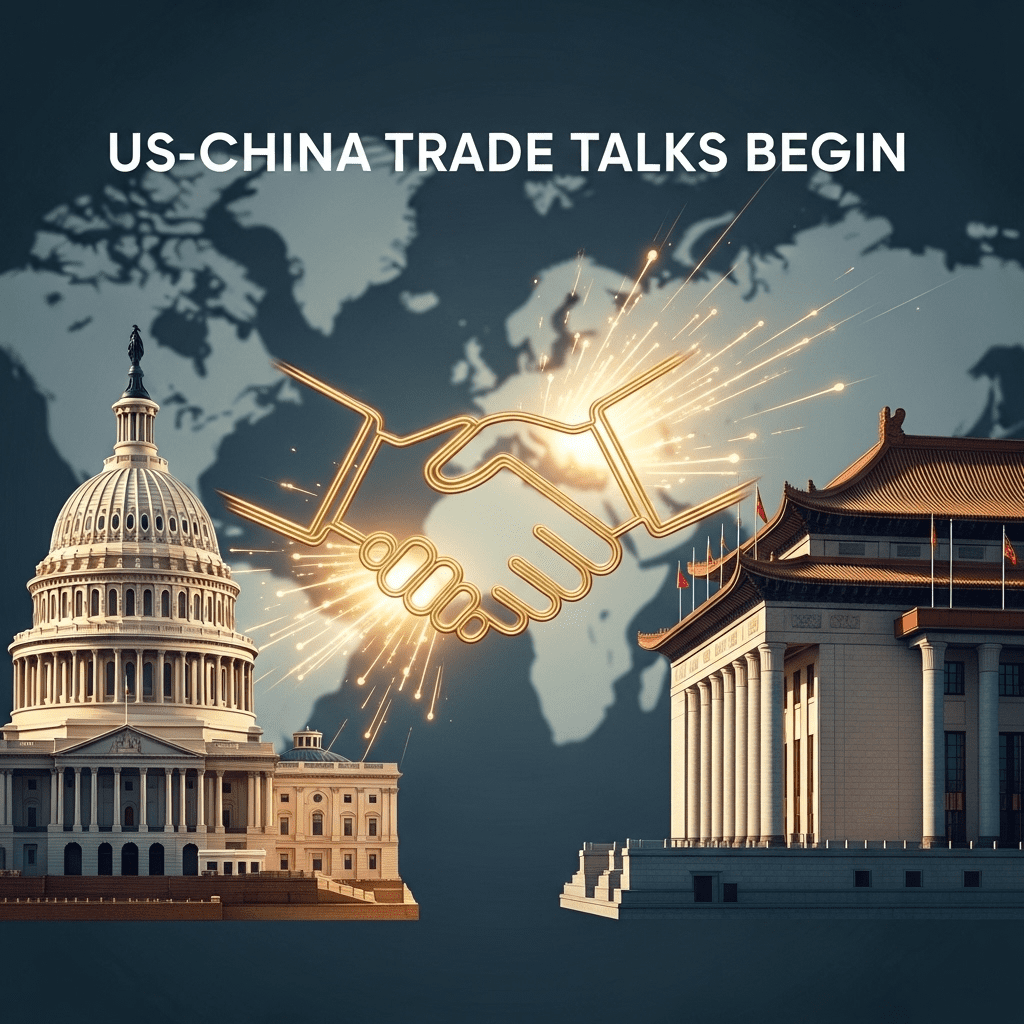
TL;DR: US and China start trade talks just days before the anticipated Trump-Xi summit, sparking market interest and uncertainty. The outcome will shape global trade flows and create new risks and opportunities for investors eyeing US-China relations in 2025.
What Happened
In a significant development underscoring the enduring complexities of global trade, US and China start trade talks ahead of the much-anticipated 2025 Trump-Xi summit. Senior trade officials from both governments initiated discussions in Beijing on June 8, 2025, focusing on reducing tariff barriers, technology transfer policies, and supply chain collaborations. According to a joint statement released by the US Trade Representative’s office, talks aim “to achieve substantive, balanced, and mutually beneficial outcomes.” The renewed engagement follows a nearly two-year freeze in high-level dialogue, largely attributed to escalating technology restrictions and disputes over agricultural goods. Notably, bilateral trade between the US and China contracted 12% in 2024 to $560 billion, according to US Census Bureau data, reflecting increasing trade friction.
Why It Matters
The timing of the US and China start trade talks is pivotal for the global economy. The Trump-Xi summit, scheduled for June 15, could set the tone for the next phase of bilateral relations between the world’s two largest economies. Market observers note these negotiations unfold as global supply chains are still recalibrating post-pandemic, and with inflationary pressures persisting in both countries. Recent IMF analysis estimates that protracted trade tensions have cost global GDP approximately $325 billion since 2022. Meanwhile, both US and Chinese manufacturing PMI data remain below the expansion threshold, pointing to fragile industrial recoveries. In this context, even modest breakthroughs could lower costs for multinationals and stabilize commodity markets.
Impact on Investors
For investors, the US and China start trade talks offers both risks and opportunities. Sectors most exposed to trade policy volatility—such as semiconductors (tickers: NVDA, TSM), logistics (FDX, ZTO), and agriculture (MOS, BG)—could see increased price swings in the run-up to and aftermath of the summit. US equities with large China revenue streams, including select technology firms and automakers, may react sharply to headlines and policy signals. Meanwhile, commodity prices—especially soybeans and rare earth metals—are expected to remain volatile, providing both hedging needs and tactical entry points. The US Dollar Index (DXY) and Chinese yuan (CNY) may also experience heightened currency fluctuations as traders adjust positions in response to diplomatic signals. For additional market analysis on trade-exposed sectors, maintaining a flexible allocation strategy remains key.
Expert Take
Analysts note that any tangible progress from the current round of US-China trade talks could “set the stage for cyclical outperformance in global risk assets,” according to Morgan Feldman, Asia-Pacific strategist at Sigma Investment Partners. Market strategists suggest, however, that investors should be prepared for sudden reversals, citing “deep-rooted structural differences” that may hinder a comprehensive deal in the short term.
The Bottom Line
The 2025 US and China trade talks mark a pivotal moment for international markets as the Trump-Xi summit nears. While the stakes for investors are high, so too are the uncertainties, making vigilant risk management and ongoing analysis crucial. Monitoring policy headlines and cross-border flows will be essential as negotiations evolve.
Tags: US-China trade, Trump-Xi summit, global markets, trade policy, economic outlook.




