

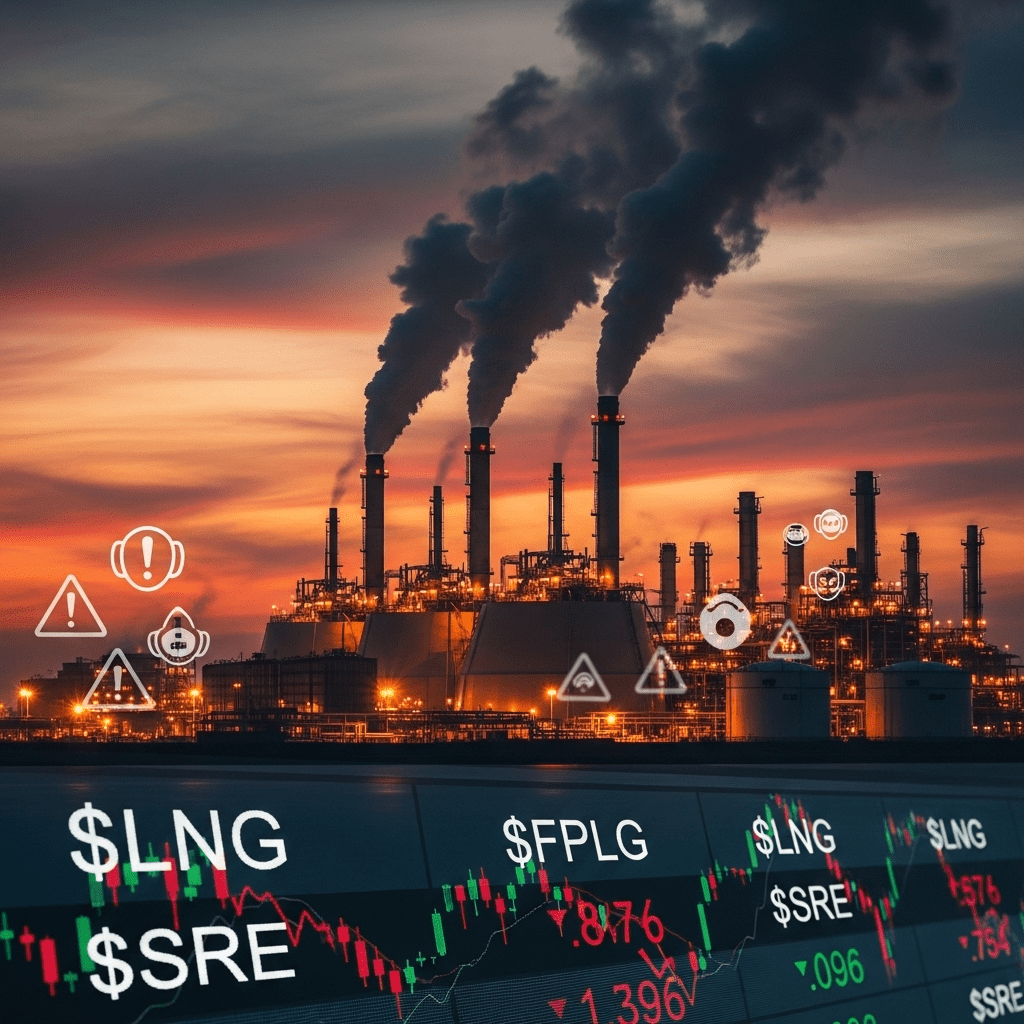
All operational US liquefied natural gas (LNG) terminals, including Cheniere Energy ($LNG), have exceeded federal pollution limits, the latest US LNG terminal pollution report revealed. Investors now face rising regulatory risks as the report highlights infractions at each site. What caught markets off guard: the scale and universality of these violations.
Every US LNG Export Terminal Violated Pollution Limits in 2025
In a comprehensive 2025 analysis, the Environmental Integrity Project reported that all eight major operational US LNG export terminals surpassed their permitted air pollution thresholds between 2021 and July 2025. Terminals owned by Cheniere Energy ($LNG), Freeport LNG ($FPLG), and Sempra Infrastructure ($SRE) were named among those breaching limits on particulate matter, volatile organic compounds, and nitrogen oxides. For example, Cheniere’s Sabine Pass facility reported NOx emissions 23% above permitted levels in 2024, according to EPA data. Freeport LNG discharged 18% more volatile organic compounds (VOCs) than legally allowed during Q3 2024. The violations, spanning more than 170 incidents, triggered at least $3.2 million in federal and state fines, per Reuters (July 2025).
Why Pollution Violations Could Disrupt the LNG Energy Market
LNG facilities are core drivers of US energy exports, with American LNG shipments rising 12% year-over-year to a record 88 million metric tons in 2024, according to the US Energy Information Administration (EIA). Systemic environmental noncompliance threatens future growth as regulatory scrutiny intensifies. Historical precedents, such as the $20 million fine imposed on Shell’s Pennsylvania cracker plant in 2023, suggest regulators may escalate penalties for repeat offenders. Investor concern is mounting after the Department of Energy in mid-2025 opened a public inquiry into stricter environmental permitting, potentially delaying multi-billion-dollar expansion projects. These developments have broad implications for the global LNG supply chain, especially as EU buyers increase demand for US LNG to offset Russian supply constraints.
How LNG Pollution Risk Shapes Investor Strategies in Energy Stocks
Investors holding LNG equities such as Cheniere Energy ($LNG), Sempra ($SRE), and Tellurian ($TELL) must now navigate new layers of regulatory risk and project uncertainty. Active managers are closely watching sector valuations: Cheniere shares dropped 4.8% to $167.32 on October 28 after news of the violations, representing their steepest single-day decline since June 2023 (Bloomberg). Energy funds are weighing the prospect of stricter emissions controls offset by robust global demand. Traders may seek opportunity in utilities or renewable energy equities, anticipating a rotational flow as regulatory headwinds mount. For more analysis on energy market positioning, visit stock market analysis or review latest financial news updates on ThinkInvest.
What Analysts Expect Next After LNG Terminal Pollution Breaches
Industry analysts observe that heightened regulatory scrutiny could extend project timelines and increase operational costs for US LNG producers in 2026 and beyond. Several investment strategists note potential for near-term share volatility as upcoming EPA reviews unfold. However, market consensus suggests that strong global LNG demand and constrained international supply may provide price support, even as operators confront tougher compliance standards.
US LNG Terminal Pollution Report Signals New Era for Energy Investors
The US LNG terminal pollution report signals an inflection point for energy investors as regulatory risk surges. The scope and frequency of violations may catalyze new compliance regimes, impacting both project timelines and sector multiples. Investors should monitor evolving policy, global LNG pricing, and the next wave of regulatory announcements as catalysts to navigate the complex risk landscape ahead.
Tags: LNG, Cheniere Energy, energy stocks, pollution risk, US LNG




