





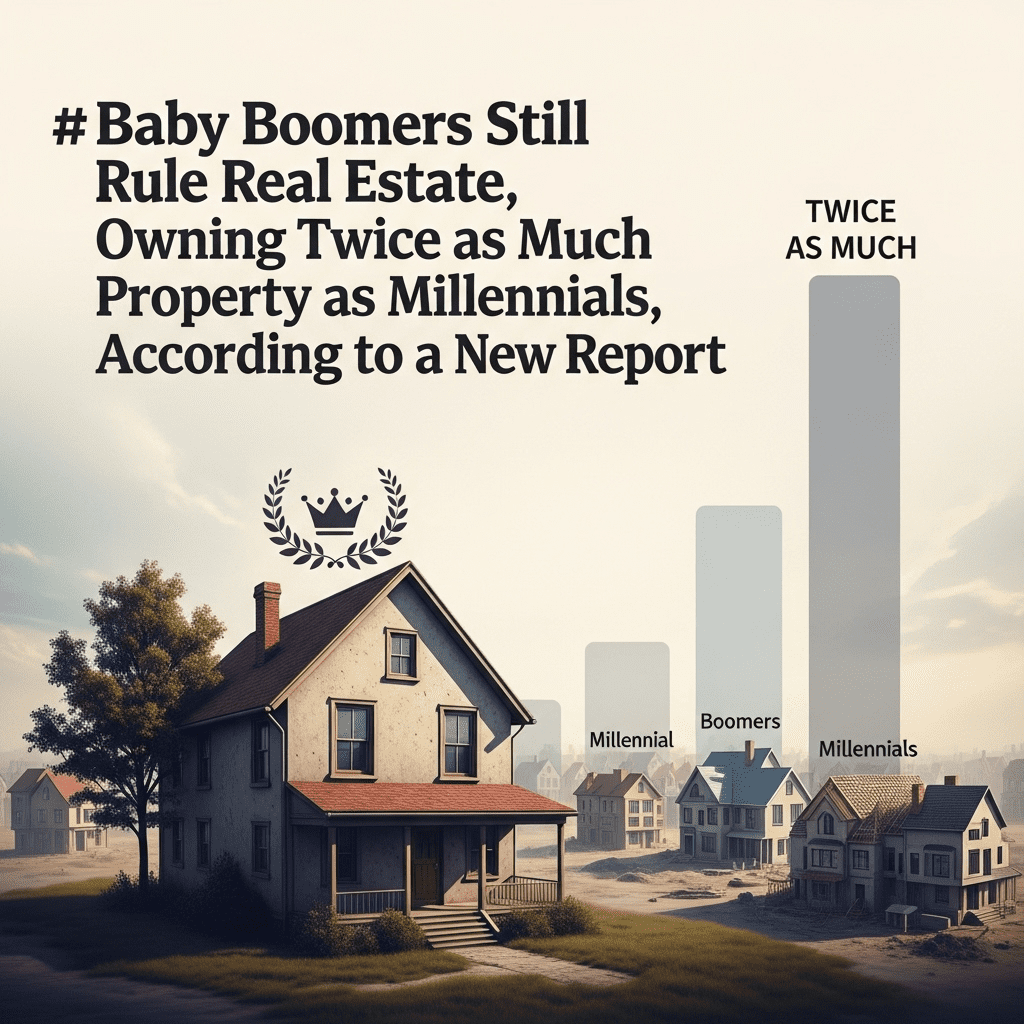
In 2025, it’s clear that Baby Boomers still rule real estate, outpacing Millennials by owning twice the amount of property nationwide. A fresh wave of data reveals the persistence of this generational divide, challenging the perceived trajectory of Millennial ascendancy and reshaping how start-ups, investors, and unicorn founders approach the $43 trillion U.S. housing market.
Why Baby Boomers Still Rule Real Estate in 2025
According to the new report, Baby Boomers—those born between 1946 and 1964—collectively control a staggering share of residential and commercial properties. Despite Millennials making up the largest segment of the U.S. workforce, they lag far behind in total home and asset ownership. The report’s findings upend common assumptions and underscore how demographics, policy, and technology intersect to sustain Boomers’ dominance in real estate.
The Sheer Scale of Boomer Property Holdings
Recent research details that Baby Boomers hold roughly 40% of all residential property value in the United States. In contrast, Millennials, now aged 27 to 44, collectively hold just under 20%. The gap is widest in high-demand urban and suburban markets, but even less competitive regions reflect significant disparities.
This influence extends beyond single-family homes. Baby Boomers are also a driving force behind multifamily dwellings, vacation properties, and commercial real estate portfolios. Their unparalleled equity positions were built over decades of steady price appreciation, favorable lending standards, and political influence.
Start-Ups, Investors, and Unicorns Reacting to the Boomer Stronghold
For anyone in startup life, the enduring dominance of Baby Boomers has profound implications. Proptech start-ups are recalibrating their offerings, focusing on senior-friendly solutions, home-sharing platforms, and tech-enabled downsizing assistants. Venture capital is shifting accordingly, with funding flowing to companies serving mature homeowners navigating retirement, legacy planning, and intergenerational wealth transfer.
Obstacles Limiting Millennial Advancement in Real Estate
Several factors create headwinds for Millennial property acquisition. Entry-level home prices have soared to all-time highs, propelled by low inventory, investor competition, and inflationary pressures. Stubborn student loan burdens and rising mortgage rates compound these challenges. Even as salary growth resumes post-pandemic, structural hurdles persist, limiting Millennial household formation and property accumulation.
Adding to this, the conventional “pathway to homeownership” is shifting. While past generations often bought homes shortly after starting families or careers, Millennials are waiting longer due to high costs, geographic mobility, and a preference for renting in urban centers. These long-term shifts have solidified Boomers’ market share, making it increasingly difficult for the next generation to catch up.
What the Boomer Advantage Means for the Future of Housing
With baby boomer homeownership rates still peaking, the pace of property transfer—whether by inheritance, sale, or gifting—remains slow. This constrains housing supply and drives up prices further, benefiting incumbents. As a result, some predict that significant changes to the housing landscape may not fully occur until well into the 2030s as Boomers age and gradually transfer assets.
Opportunities for Innovation in a Boomer-Dominated Market
Yet inside challenge lies opportunity. Start-ups on the cutting edge are developing platforms designed to help Millennials co-own homes, crowdfund real estate, or access fractional stakes in high-value properties. Policy shifts, such as expanded first-time homebuyer incentives or rezoning for increased density, may help level the playing field. These strategies offer a blueprint for creative founders seeking to disrupt the status quo and expand access across generations.
For investors, current trends reinforce the importance of targeting demographics with the greatest market influence. Older homeowners, flush with equity, are a potent consumer base for services spanning property management, home retrofitting, and legacy planning. At the same time, those who anticipate a gradual market turnover will find opportunities in new partnerships, alternative finance solutions, and tech-enabled platforms bridging generational divides.
Conclusion: Rethinking Real Estate’s Demographic Future
The reality that Baby Boomers still rule real estate frames the ongoing conversation around equity, innovation, and generational wealth. Even as Millennials steadily advance in their careers, the ownership gulf remains stubbornly wide. For founders, VCs, and industry watchers, understanding these macro trends is essential for unlocking the next phase of growth—and ensuring that tomorrow’s real estate ecosystem is more inclusive, dynamic, and resilient than ever.