

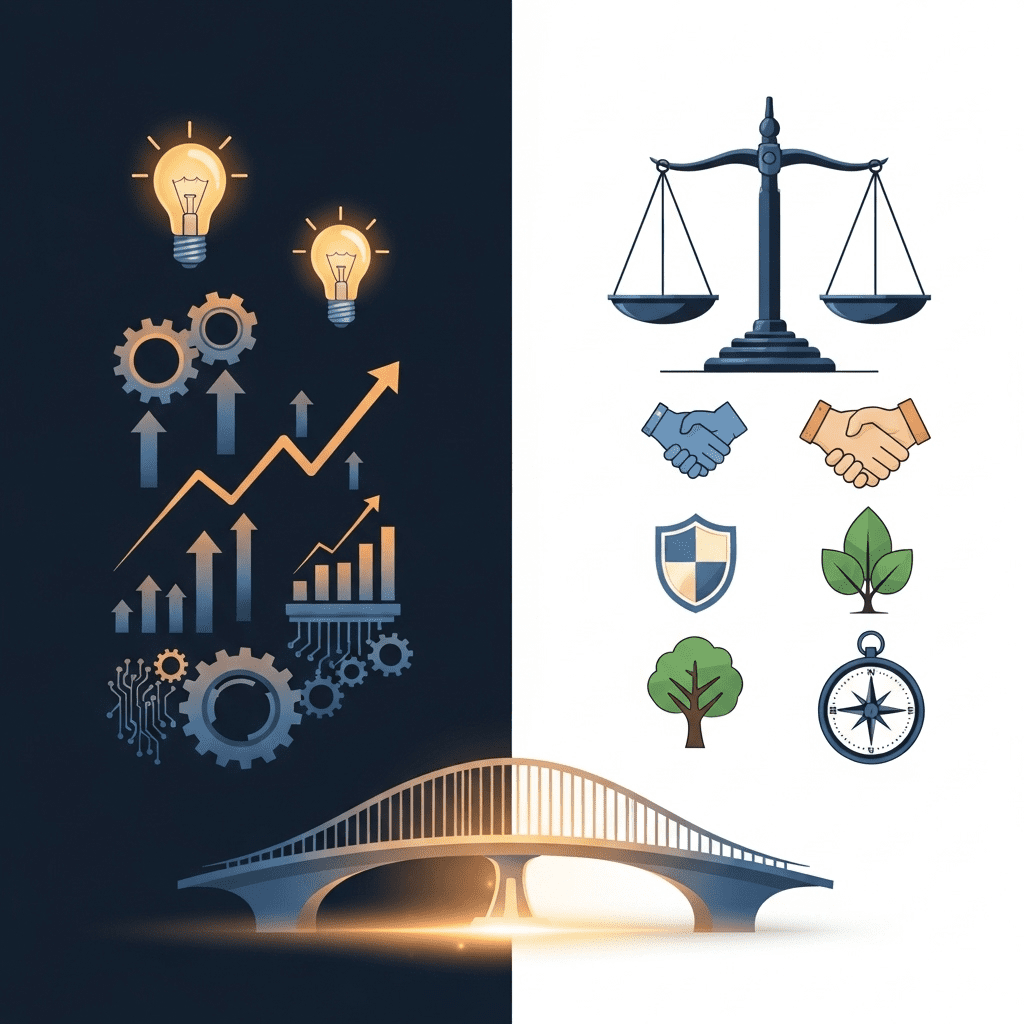
Balancing innovation and responsibility is emerging as a decisive strategy for start-ups aiming at sustainable growth in 2025. Data shows that companies prioritizing ethical frameworks and governance outperform peers relying solely on disruptive technologies.
What Happened
In 2024, high-profile failures among unicorn start-ups underscored the dangers of unchecked innovation, reigniting debate around balancing innovation and responsibility. Notably, a Bain & Company report indicated that over 40% of funded start-ups that scaled rapidly without robust governance experienced regulatory setbacks or market pullbacks (Bain & Company, 2024). Industry voices—including Stripe CEO Patrick Collison—have publicly cautioned that “sustainable impact hinges not just on invention, but on thoughtful stewardship and accountability.” As the regulatory climate tightens in major markets, founders and boards are under heightened scrutiny to integrate responsible practices early in their growth cycles. This trend directly informs investment insights for institutional and private capital entering the sector.
Why It Matters
The implications of balancing innovation and responsibility extend beyond compliance to encompass market confidence, valuation premiums, and exit opportunities. An analysis by PitchBook highlighted that start-ups with dedicated ESG (environmental, social, and governance) policies attracted 27% higher late-stage valuations in 2024 compared to peers lacking such frameworks. This shift parallels broader trends in capital markets, where institutional investors increasingly integrate responsible investing mandates. According to McKinsey, over 60% of growth-stage investors now prioritize governance and ethical risk assessments as part of their standard due diligence. The rise of “responsible unicorns” signals a new market normal, impacting sectoral trajectories—from fintech and AI to healthtech and clean energy. For founders, aligning disruptive ambition with robust responsibility is proving pivotal in both securing funding and navigating exits. Find more sector context in our recent market analysis.
Impact on Investors
For investors, the balance between bold innovation and responsible execution represents both a risk management imperative and a return opportunity. Companies and tickers exposed to regulatory fines, reputational risk, or social backlash—especially in highly scrutinized sectors like digital health (e.g., ONEM, TDOC) and AI (e.g., NVDA)—face increased volatility. Conversely, those integrating ESG frameworks have demonstrated both outperformance and resilience. “Our research shows that start-ups emphasizing governance and transparency produce more enduring returns over a five-year window,” said Tessa Chang, head of private markets strategy at Jefferies. With regulatory shifts likely across the US, EU, and Asian markets in 2025, investors should embed responsible innovation filters within their pipeline and portfolio assessments. For further portfolio strategy tips, subscribe to our updates.
Expert Take
Analysts note that balancing innovation and responsibility is quickly becoming a differentiator for both surviving and thriving in capital markets. Market strategists suggest that start-ups embedding ethical diligence as a core competency improve their odds of scaling, fundraising, and achieving premium exits.
The Bottom Line
The key insight for 2025 is clear: innovation without responsible frameworks exposes start-ups to outsized risk, eroding investor confidence and long-term value creation. Balancing innovation and responsibility isn’t just a regulatory checkbox—it’s a strategic lever for lasting growth, market access, and sustained impact in competitive sectors.
Tags: start-ups, innovation, ESG, responsible investing, unicorns.




