

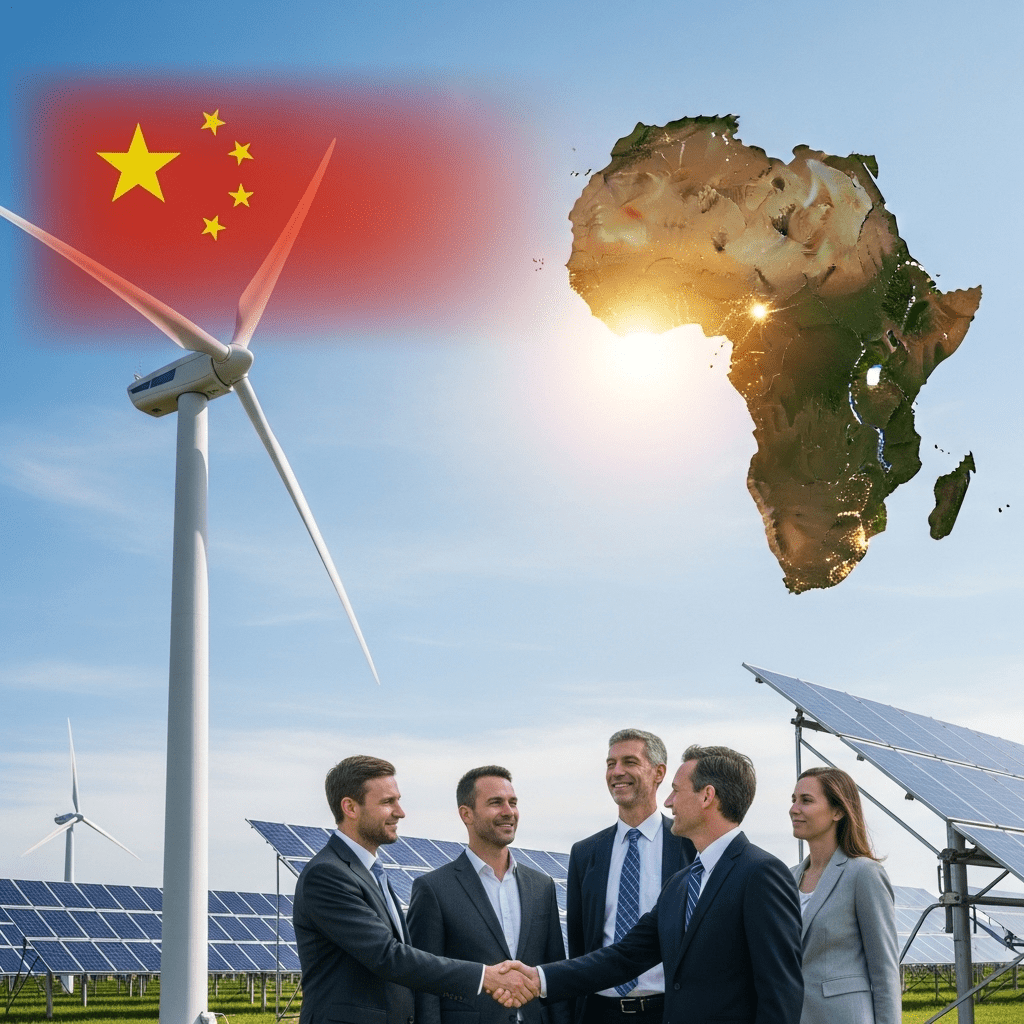
China’s role in Africa’s green energy future has emerged as a transformative force for the continent, reshaping energy infrastructure and creating significant opportunities for sustainable growth as 2025 approaches. As international demand for renewable energy surges, Africa finds itself at the crossroads of clean power adoption, with China positioned as a key partner in financing, technology transfer, and project development.
China’s Role in Africa’s Green Energy Future: A Strategic Partnership
China’s Belt and Road Initiative (BRI) has long focused on infrastructure, but in recent years, its priorities have shifted towards clean energy investments in Africa. In 2023 alone, Chinese companies signed more than $12 billion in renewable energy deals across the continent, covering solar, wind, and hydropower projects. This growing involvement supports Africa’s ambitious goal to add over 100 GW of renewable capacity by 2030, while aligning with China’s global agenda for carbon reduction and sustainable development.
Through financing partnerships and direct project development, China offers African nations access to affordable technology, engineering expertise, and supply chain efficiency. Notable collaborations include Kenya’s Garissa Solar Power Plant—the largest in East Africa—and Ethiopia’s Adama wind farms. These projects not only deliver valuable clean power but also reduce energy poverty and dependence on fossil fuels.
Investment Flows and Financing Mechanisms
China’s approach to financing green energy in Africa differs from traditional Western models. Instead of relying solely on grants or aid, China frequently employs concessional loans, build-operate-transfer (BOT) agreements, and public-private partnerships. The China-Africa Development Fund and major state-owned enterprises like the State Grid Corporation of China and PowerChina actively drive project oversight and capital mobilization, ensuring both long-term revenue and local capacity building.
This strategy incentivizes African governments to prioritize renewable projects in national planning and unlocks private sector participation. According to the International Renewable Energy Agency, Chinese-backed initiatives accounted for nearly 40% of all new renewable capacity installed in Sub-Saharan Africa from 2020 to 2024.
Technology Transfer and Capacity Building
Chinese energy companies deliver more than just financial resources—they also provide critical knowledge transfer, equipment, and technical training. This facilitates local manufacturing of solar panels, wind turbines, and grid components—a shift that boosts job creation and fosters a technology ecosystem within African economies. Programs such as the China-Africa Green Energy Cooperation Initiative focus on skills development for engineers and technicians, making the green energy transition more inclusive and sustainable.
Challenges and Risks Facing China’s Green Energy Investments in Africa
Despite the many benefits, China’s role in Africa’s green energy future presents certain challenges and risks. Debt sustainability remains a concern, as concessional loans could stretch the fiscal capacity of smaller economies if projects encounter delays or underdeliver on projected returns. Furthermore, cases of inadequate local stakeholder engagement and environmental assessment have raised questions about project transparency and social impact.
However, both Chinese and African policymakers are working to improve governance frameworks, enhance transparency, and ensure that investments meet high environmental and social standards. Multilateral institutions are increasingly involved, supporting best practices and increasing trust among global investors.
The Path Forward: Sustainability, Policy Alignment, and Market Growth
For China’s role in Africa’s green energy future to remain positive, policymakers on both sides are emphasizing longer-term sustainability and alignment with global climate targets. African governments are streamlining regulatory frameworks to attract capital and expedite permitting for solar, wind, and hydropower installations. Meanwhile, China is scaling up investments in grid modernization and energy storage, critical for integrating intermittent renewable sources.
Opportunities for international collaboration abound, with institutions such as the African Development Bank and World Bank encouraging blended finance models. For investors seeking emerging market exposure, Africa’s clean energy sector—powered by China’s involvement—offers attractive risk-adjusted returns and diversification. The continent’s young, growing population also points to rising energy demand and a strong long-term outlook.
Outlook: What China’s Role Means for Investors and Africa’s Energy Transition
China’s role in Africa’s green energy future is critical in shaping the investment landscape across the continent. By leveraging technology, finance, and expertise, China is enabling Africa’s transition to a low-carbon economy, supporting new industries and job markets. Investors looking for strategic opportunities in renewable energy finance and sustainable development should closely monitor Chinese-backed projects and regulatory reforms underway in key African markets.
As 2025 approaches, the synergy between China and Africa will likely deepen, with a greater focus on transparent partnerships, local stakeholder inclusion, and climate resilience. For those seeking global investment insights, tracking China’s activities in Africa’s clean energy space will remain essential to understanding future market direction and impact.




