

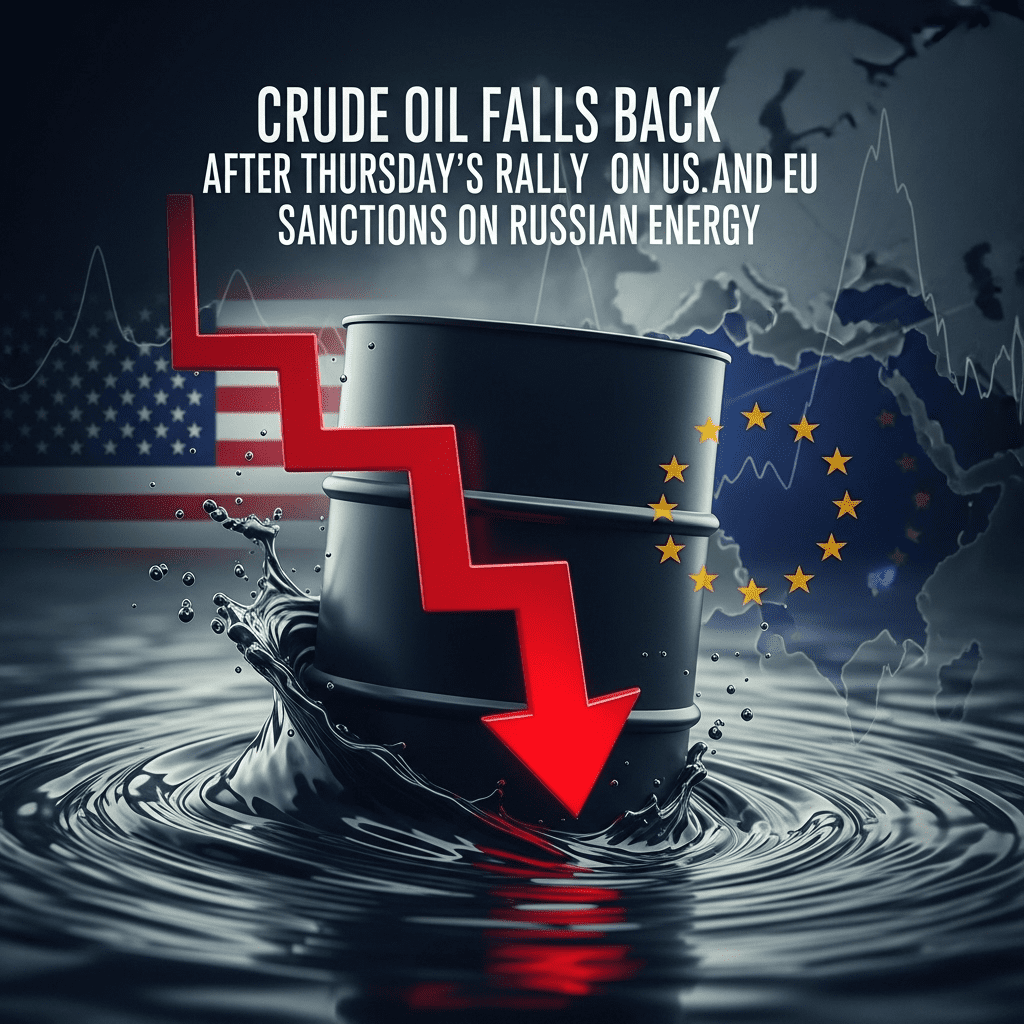
TL;DR: Crude oil falls after sanctions on Russian energy, marking a reversal after Thursday’s sharp rally as traders weigh geopolitical uncertainty. Volatility remains elevated, with new US and EU measures reshaping global energy flows and market sentiment.
What Happened
On Friday, crude oil falls after sanctions on Russian energy, with Brent futures pulling back to $82.40 per barrel by midday in London—down 2.3% from Thursday’s close. The dip follows a surge earlier in the week, triggered by coordinated US and EU sanctions targeting Russian seaborne exports and refining companies in response to renewed geopolitical tensions. According to ICE Futures Europe, Brent crude spiked over 4% intraday Thursday before giving back gains, while WTI futures settled at $78.20, down 2% on profit-taking and concerns about global demand. “The initial reaction reflected supply fears, but market fundamentals are still anchored in tepid demand growth projections,” said Sara Linden, energy economist at BNF Analytics.
Why It Matters
The volatility highlights the fragile balance in global energy markets as Western sanctions attempt to throttle Russia’s oil revenues—Russia remains the world’s third-largest crude producer. Elevated oil prices had stoked inflation worries across developed markets, and now, the rapid reversal signals uncertainty over the longer-term efficacy of sanctions and possible supply responses from OPEC+ and key Asian importers. According to the International Energy Agency, Russia exported 7.4 million barrels per day in May 2024, and disruptions from these sanctions could reverberate across supply chains. Trends toward increased inventories and slowing demand in China and Europe are also pressuring prices lower according to several recent market analysis pieces.
Impact on Investors
For investors, the swing in crude prices poses both risks and opportunities. Energy sector equities, particularly majors like ExxonMobil (XOM), Shell (SHEL), and BP (BP), initially rallied but pared back some gains. Meanwhile, refiners and midstream players, such as Valero (VLO) and Kinder Morgan (KMI), may see margin volatility as the sanctions indirectly impact product flows. Broader indices like the S&P 500 Energy sector remain sensitive to sustained price swings. Heightened uncertainty could rekindle interest in defensive plays or commodity ETFs such as the United States Oil Fund (USO). For portfolio managers, staying agile with allocation strategies is recommended as sanction dynamics evolve and economic data points to potential headwinds in global fuel consumption.
Expert Take
Analysts note that “the back-and-forth in oil pricing shows just how reactive commodities can be to geopolitics and fiscal maneuvers,” says Ingrid Patel, a senior strategist at Preston Wealth. Market strategists suggest volatility will persist in the near term, with downside risks if sanctions fail to realize intended disruptions. As covered in our ongoing energy sector coverage, investors are urged to remain cautious.
The Bottom Line
Crude oil falls after sanctions on Russian energy, underscoring the push and pull between supply risk and weak demand forecasts. Investors should expect continued volatility amid shifting geopolitical alignments, with close attention needed on future sanction responses and global growth signals as 2025 unfolds.
Tags: oil prices, Russian energy sanctions, energy stocks, market volatility, 2025 outlook.




