

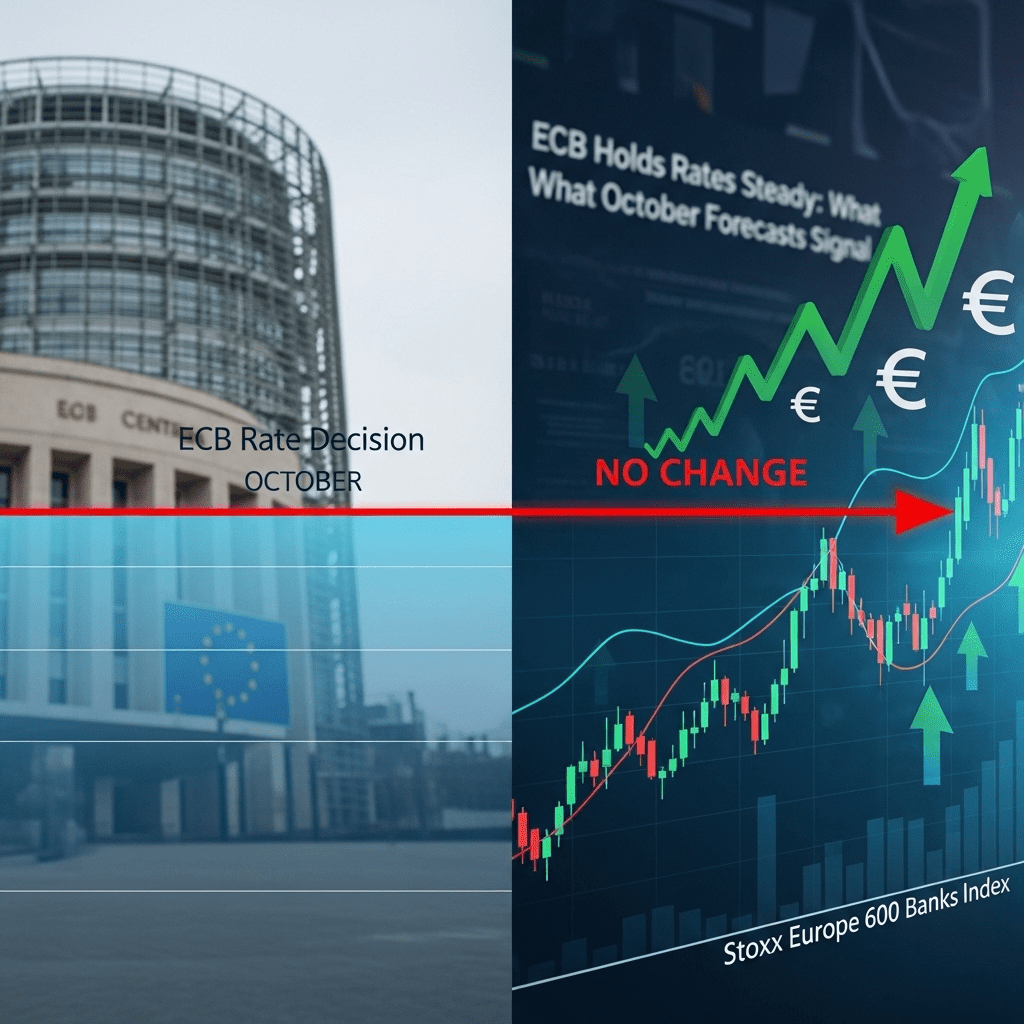
European Central Bank ($ECB) signaled it will stay on hold before year-end forecasts, bucking market hopes for a rate cut after October’s policy meeting. The move surprised analysts, as inflation metrics edged down yet the ECB remained cautious. Investors now seek clues on policy shifts ahead.
ECB Keeps Main Rate at 4.5% Despite Inflation Drop in October
The European Central Bank ($ECB) maintained its key deposit rate at 4.5% following its October 30 meeting, defying widespread expectations for a dovish shift. Eurozone inflation eased to 2.9% in October, down from 3.3% in September, according to Eurostat data. Despite this deceleration and a weak Q3 GDP print of just 0.1% growth, ECB President Christine Lagarde stated, “We remain determined to return inflation to target, but will not speculate on near-term rate moves.” According to Reuters, market pricing ahead of the decision showed only a 20% chance of a reduction in the next two months, indicating growing central bank caution amid persistent core inflation readings.
Why Eurozone Banking and Equity Markets React to ECB Rate Pause
The ECB’s decision to hold rates has broad implications for Eurozone financials and equities, especially banks. Stoxx Europe 600 Banks Index climbed 1.1% intraday after the outcome, as stable rates support net interest margins for institutions like Banco Santander ($SAN) and BNP Paribas ($BNP.PA). Meanwhile, the broader Euro Stoxx 50 Index remained flat, underlining investor ambivalence over growth prospects. Historically, stock market rallies tend to lag after ECB holding cycles begin—Bloomberg data shows the Euro Stoxx 50 posted an average six-month gain of just 1.8% after initial pauses since 2000. Fixed income markets also responded: 10-year German Bund yields fell 5 basis points to 2.36%, reflecting subdued expectations for rate cuts through year-end.
How Investors Should Position for ECB Rate Uncertainty in Q4
Investors managing Eurozone exposure face a complex landscape as the ECB signals a “higher for longer” stance. Equity holders in rate-sensitive sectors such as real estate and banks may benefit from the current pause, but remain vulnerable if inflation rebounds. Long-duration bond investors should watch for shifts in bund yields, which typically react swiftly to any guidance changes. Diversification, emphasizing Eurozone blue chips alongside defensive sectors like healthcare, can help buffer volatility. For broader context, explore stock market analysis for additional insight on rate-driven market shifts and review latest financial news to monitor policy commentaries. After this October decision, all eyes turn to December’s forecasts.
What Analysts Expect Next for Eurozone and ECB Policy Outlook
Market consensus suggests the ECB is unlikely to move on rates until early 2026 unless incoming data signals persistent disinflation or economic slowdown. Analysts at Goldman Sachs noted in a mid-October report that core inflation “remains above comfort levels,” and only a sharp GDP contraction could prompt pre-2026 rate adjustments. Industry strategists see slow normalization, with the first potential cut not priced in by swaps markets until March 2026. As policy remains data-dependent, investors should watch upcoming Eurostat inflation releases and quarterly Eurozone growth indicators for signals on timing of the next ECB move.
ECB To Stay on Hold Before Year-End Forecasts Raises Investor Caution
This latest move reinforces that the ECB to stay on hold before year-end forecasts remains the central scenario, tilting risks toward cautious allocation. Investors should track eurozone inflation reports and December communication for any pivot signals. As year-end approaches, balancing rate-sensitive assets with defensive strategies is key to navigating persistent policy uncertainty.
Tags: ECB, rate decision, eurozone, stock market, inflation




