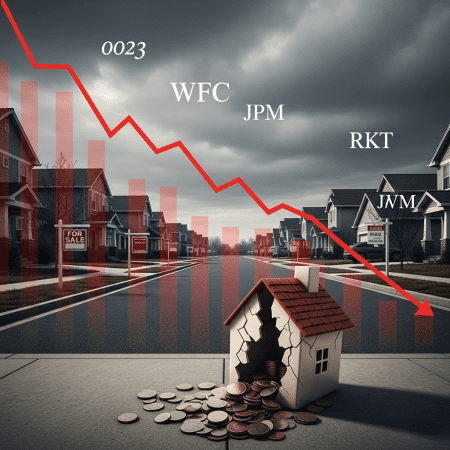






As the federal government shutdown drags on in 2025, concerns over the economic data blackout take center stage. Investors, policymakers, and financial analysts increasingly warn that prolonged disruptions in public economic reporting may lead to a modern data dark age, threatening market transparency and decision-making across the financial sector.
The Impact of Economic Data Blackout on Financial Markets
The ongoing economic data blackout is more than just a temporary inconvenience—it’s a seismic challenge for the global financial system. Reliable economic indicators such as employment figures, consumer spending, GDP growth, and inflation reports supply the oxygen for markets and fiscal policy. When agencies like the Bureau of Labor Statistics and the Census Bureau suspend operations, the flow of this critical information halts, leaving investors in the dark.
As financial experts at ThinkInvest have frequently noted, these data releases are the backbone for strategies ranging from short-term trading to long-term economic forecasting. Without them, asset managers, hedge funds, and retail investors are forced to rely on alternative, often less transparent, datasets or outdated information. The ripple effect extends far beyond Wall Street—main street businesses depend on these numbers for everything from hiring plans to supply chain management.
Volatility and Uncertainty: Consequences for Investors
Uncertainty is seldom welcomed in financial markets. The extended economic data blackout increases volatility, as traders and analysts scramble for any available intelligence to fill the data vacuum. In past shutdowns, market reactions included risk-off sentiment, higher spreads in bonds, and increased skittishness around equities.
When economic reports are delayed or absent, central banks and policymakers also face challenges in setting informed monetary and fiscal policy. For example, the Federal Reserve’s meeting deliberations rely heavily on recent labor and inflation data to calibrate interest rate moves. Inaccurate or missing data could lead to policy missteps with significant market consequences. This fuels a cycle where investors are left to rely on anecdotal evidence, private surveys, or proxy data, none of which carry the same authority as government statistics.
Long-Term Risks: Could the Data Blackout Become a Data Dark Age?
The risk, experts say, is that if the economic data blackout lasts much longer, the result could be a genuine data dark age. The longer agencies are unable to collect, process, and publish economic statistics, the larger the gap in time series becomes, undermining the ability to generate accurate forecasts and historical comparisons.
Analysts are already expressing concern over the potential for lasting ‘blind spots’ in U.S. macroeconomic records. A continuous or repeated blackout could permanently impair the country’s data infrastructure, eroding confidence in U.S. markets. For multinational corporations and overseas investors, this uncertainty raises the risk premium on American assets, potentially impacting everything from foreign direct investment to currency valuations.
Alternative Data: An Imperfect Substitute
With an economic data blackout, the focus turns to alternative data sources. These include private sector payroll reports, credit card transaction data, satellite imagery, and social media sentiment analyses. While these tools offer short-term workarounds, they often lack the breadth, methodological consistency, and public accessibility of government figures. Moreover, overreliance on proprietary or opaque data can amplify market inequality, giving large institutions an advantage over smaller players and retail investors.
As explored in investment trend reports, the democratization of financial information is crucial for fair and efficient markets. A lasting data blackout could reverse progress, concentrating informational power in fewer hands and exacerbating economic divides.
Navigating the Economic Data Blackout: Strategies for Investors
In the absence of regular data releases, investors should adjust their strategies to incorporate broader risk controls and diversified information sources. Expanding the use of real-time indicators—from commodity flows to transportation metrics—and increasing engagement with international economic data may help bridge the informational gap.
Financial analysts also recommend heightened vigilance around policy developments in Washington, as any move toward a resolution could produce swift market reactions. Investors might look to macroeconomic guidance from non-governmental organizations like the IMF or World Bank. However, none of these measures fully replaces the trust and completeness of official U.S. data releases.
The Call for a Permanent Fix
Ultimately, the escalation from an economic data blackout to a data dark age underscores the need for a long-term, legislative solution. Some experts propose insulating critical data agencies from shutdowns altogether, granting them independent funding streams akin to the Federal Reserve. Such reforms would ensure the continuous operation of essential data collection, safeguarding the transparency and reliability of financial markets even during periods of political gridlock.
As the shutdown continues to cast a shadow over economic transparency, the focus must remain on restoring open data flows and protecting the public trust that underpins America’s economic leadership.