

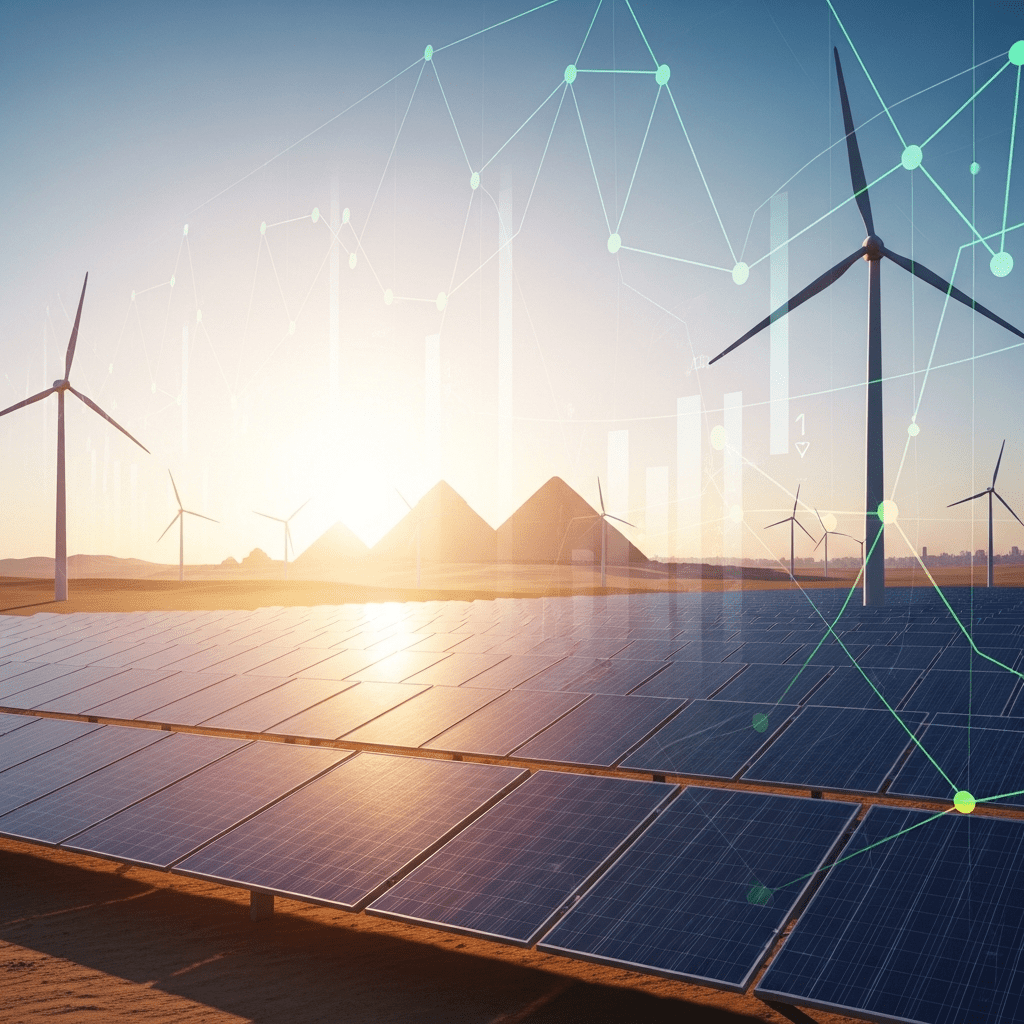
Egyptian government officials announced an ambitious plan at COP30 to boost their clean energy targets to a 42% share by 2030, surprising climate finance analysts and regional investors. Egypt ($EGCPT) aims to accelerate its transition by five years, positioning itself as a regional renewable leader. Are these new Egypt clean energy targets 2030 achievable amid recent market shifts?
Egypt Unveils 42% Clean Energy Target for 2030 at COP30
Egypt detailed a revised national energy roadmap at the COP30 summit, setting a clear objective: reach 42% of electricity generated from renewables by 2030 instead of its previous 2035 timeline. In 2024, Egypt’s renewable energy mix stood at just 21.7%, according to the Egyptian Electricity Holding Company’s annual report. To hit the 2030 target, installed renewable capacity must more than double within five years, from 7.2 GW in 2024 to an estimated 15.5 GW by 2030, based on International Energy Agency (IEA) projections. Major utility-scale projects are underway, including the expansion of the Benban solar park, already Africa’s largest at 1.8 GW capacity as of February 2025 (IEA, 2025; EEHC, 2024).
How Egypt’s Renewables Ambition Impacts North Africa’s Energy Markets
This accelerated timeline positions Egypt as a regional renewable energy front-runner. In 2024, North Africa’s clean energy share averaged just 13.5% (IEA, “Africa Energy Outlook 2024”). The move is expected to fuel cross-border electricity exports, especially as the EuroAfrica Interconnector nears completion in 2026, linking Egypt to Greece and Cyprus. Enhanced renewable capacities may lower overall power costs and attract foreign direct investment, as Egypt secured $10.1 billion in new energy deals in the first three quarters of 2024 (UNCTAD Investment Report, October 2024). Egypt’s solar and wind output could also help stabilize grid reliability for its rapidly growing population, now at 113 million according to World Bank data.
Investor Strategies: Clean Energy Equities and Egypt’s Green Bond Surge
Investors eyeing the Egypt clean energy targets 2030 should monitor both domestic equities and sovereign green bond issuances. Sectors poised to benefit include solar panel manufacturers, grid infrastructure companies, and regional utilities. Egypt’s $750 million green bond issued in June 2024 was oversubscribed by 2x (Bloomberg, 2024), highlighting strong appetite for clean energy assets. Meanwhile, Egyptian Exchange ($EGX30) listed renewable firms saw a 12% average share appreciation year-to-date through October 2025. Global asset managers increasing allocations to emerging market renewables may further drive positive momentum, especially as Egypt aligns with global ESG benchmarks. For broader portfolio diversification, investors may follow latest stock market analysis and tap into latest financial news on North African sector trends.
Analysts See Egypt’s Renewables Plan Driving Regional Competition
Industry analysts observe that Egypt’s accelerated energy transition could pressure neighboring countries to revise their own renewable targets ahead of the next UN climate summit. According to market consensus from Fitch Solutions and regional banks, Egypt’s capacity additions are credible if public-private partnerships and international finance sustain momentum. However, experts caution about grid integration risks and the need for regulatory reforms to reduce permitting timelines (Fitch Solutions, September 2024).
Egypt Clean Energy Targets 2030 Signal New Era for Africa Investors
The Egypt clean energy targets 2030 highlight a pivotal opportunity for global and regional investors seeking exposure to fast-growing renewables. With billions committed, key upcoming catalysts include new power purchase agreements and the launch of large-scale green hydrogen pilot projects. Investors watching Egypt’s clean energy push should closely track policy execution and market reactions to gauge further upside.
Tags: Egypt, clean energy, renewables, EGX30, energy transition




