




What Happened
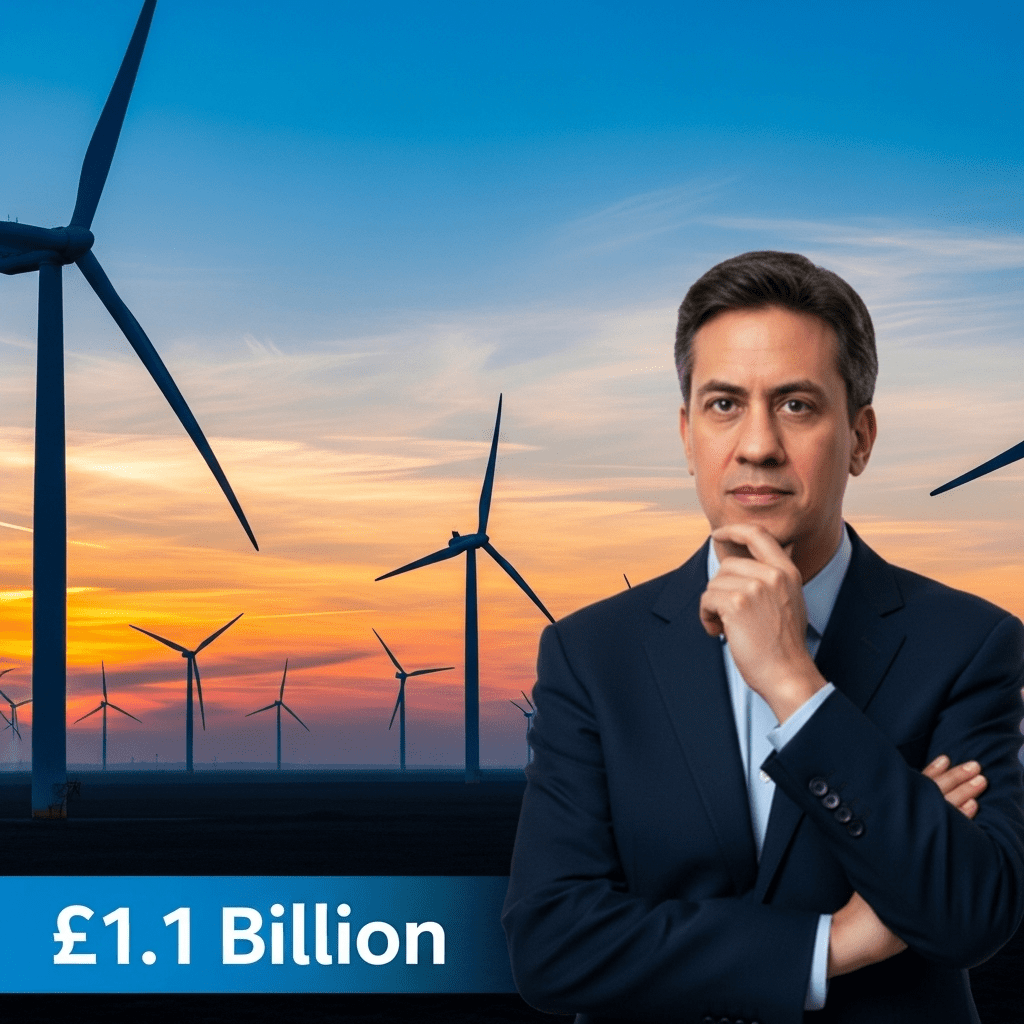
The UK’s Shadow Energy Secretary, Ed Miliband, announced a £1.1 billion commitment for new offshore wind projects, positioning it as a critical step toward cleaner energy in 2025. The funding, part of Labour’s green industrial strategy, targets the acceleration of permit approvals and support for the next wave of offshore wind farms. Yet, leading voices in the energy sector have quickly raised concerns: the promised sum falls significantly below both developer expectations and the capital required to close Britain’s renewable energy gap. Bloomberg data shows average capex for large-scale offshore wind farms now exceeds £2 billion per project, with supply chain and financing costs at historic highs (BloombergNEF, February 2025). Industry leaders argue the £1.1bn allocation would barely underwrite a single major installation rather than catalyze the broader sector expansion Miliband envisions.
Why It Matters
This shortfall lands at a critical inflection point for the UK energy market. As Britain targets 50 GW of offshore wind by 2030—more than double its 2024 operating capacity—policy clarity and fiscal support have become paramount. A recent International Energy Agency report notes that global competition for wind turbine components has pushed costs up by 18% year-on-year. The limited scope of Miliband’s funding risks further project delays, deterring both domestic and foreign direct investment in UK renewables. This could, in turn, threaten the nation’s energy security and emissions targets, with potential downstream effects for European carbon trading markets and cross-border power contracts. The move is reminiscent of past underfunded renewable initiatives that struggled to stimulate long-term sector growth.
Impact on Investors
For investors, the funding gap heightens sectoral uncertainty, particularly for listed firms in the FTSE 350 Utilities and Industrials segments, including SSE plc (LON:SSE), National Grid (LON:NG), and Aviva Investors’ green infrastructure funds. Offshore construction specialists—such as Ørsted (CPH:ORSTED) and Siemens Gamesa—face a continued mismatch between project pipelines and available state backing. “Without adequate funding alignment, the UK risks losing its leadership edge in offshore wind,” warns Claire Jackson, energy equity strategist at Raymond James. “Private equity and institutional capital may pivot to more predictable markets unless the government bolsters support.” For those focusing on green energy investment opportunities, close monitoring of regulatory and funding updates remains crucial. Investors should also assess potential ripple effects in related supply chain sectors and periodically consult market analysis for shifts in renewables policy risk premiums.
Expert Take
Analysts note that while Ed Miliband’s £1.1bn offshore wind projects pledge signals political will, it falls dramatically short of what the industry requires to sustain momentum through 2025 and beyond. Market strategists suggest additional government and private sector collaboration is vital to bridge the existing investment chasm and support a resilient transition to net zero.
The Bottom Line
The consensus is clear: while Ed Miliband’s £1.1bn for offshore wind projects sets a positive policy direction, it lacks the financial weight needed to truly transform the UK’s green energy landscape. Investors should view the pledge as a starting signal, not a solution—and remain vigilant for subsequent funding rounds or incentives as the sector evolves. For more detailed investment insights, stakeholders should track UK government energy announcements and sector performance metrics through 2025.
Tags: UK energy, offshore wind, Ed Miliband, renewable investment, 2025 policy.