

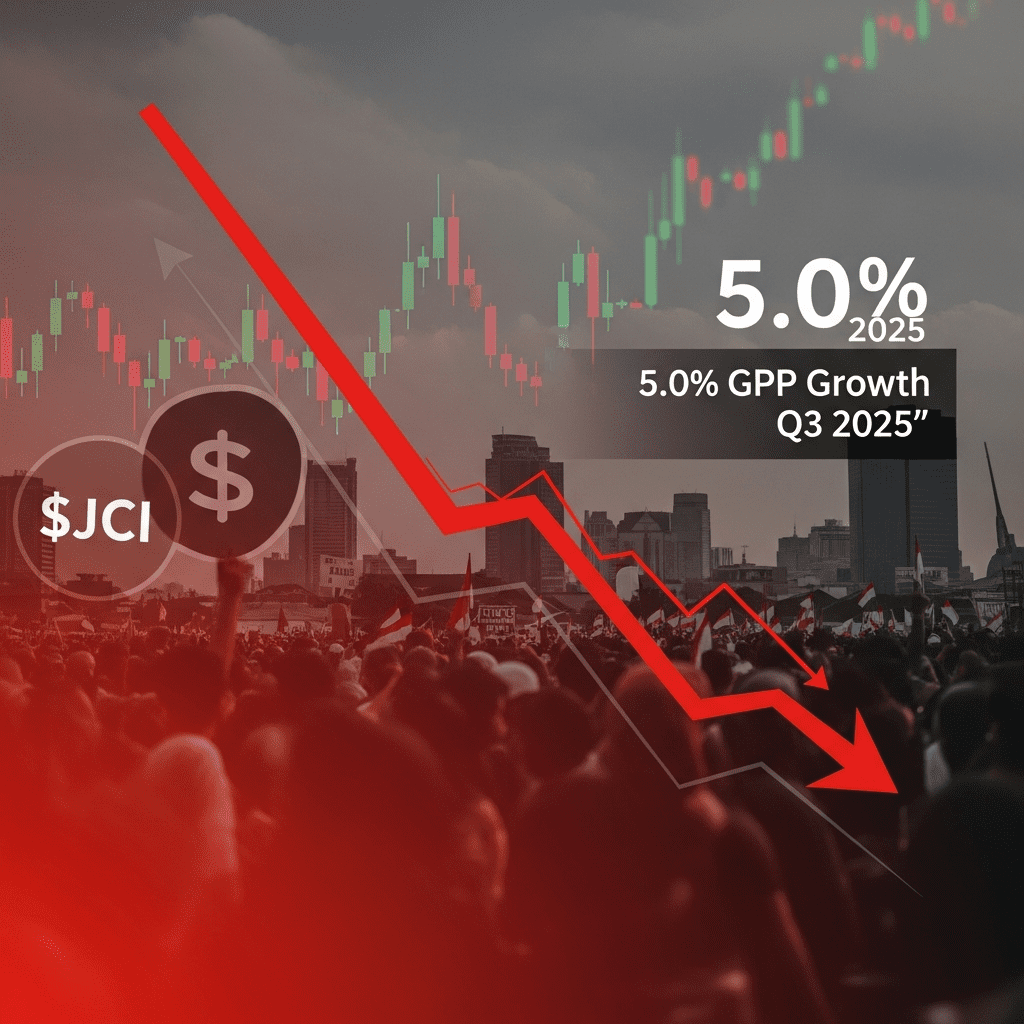
Indonesia’s economy ($IDX) revealed just 5.0% GDP growth in Q3 2025, as widespread protests and sluggish consumer demand disrupt expectations for Southeast Asia’s largest market. This Indonesia GDP growth 2025 trend unsettled analysts, who anticipated stronger momentum amid post-pandemic recovery. What triggered this sharp slowdown?
Indonesia GDP Drops to 5% in Q3 2025 Amid Mass Protests
Gross domestic product in Indonesia ($IDX) expanded by only 5.0% year-over-year in the third quarter of 2025, according to preliminary data released by Statistics Indonesia (BPS) on November 4. This is notably below both the Bloomberg median forecast of 5.4% and the 5.2% growth logged in the prior quarter. Dragged by national strikes over labor reforms in major cities and anti-austerity protests through September and October, retail sales volume contracted 1.2% month-on-month in September (Bank Indonesia), while household consumption, which accounts for over 53% of GDP, rose just 4.1%—the slowest pace since mid-2022. The sluggish demand comes as investment in fixed capital also decelerated to 3.2% growth, down from 4.5% the previous quarter.
How Sluggish Indonesia GDP Growth Impacts ASEAN Markets and Sectors
The lower-than-expected GDP print from Indonesia reverberates across ASEAN equity, bond, and currency markets. In Jakarta, the benchmark Jakarta Composite Index ($JCI) declined 2.3% in early November, underperforming regional peers. Financial firms exposed to domestic consumer lending and commodity exporters both faced selling pressure, as rupiah weakness (down 1.5% in October per Bloomberg) raises input costs. Inflation, which had eased to 2.8% in August, ticked up to 3.3% in October amid higher food and fuel prices, complicating Bank Indonesia’s rate stance. Regional investors are reassessing risk in Indonesia versus faster-growing markets like Vietnam, while multinational firms in sectors such as consumer goods and real estate may trim full-year earnings projections due to persistent demand softness.
Indonesia Investor Strategies: Positioning for Growth Headwinds Now
For investors in Indonesian assets, today’s GDP release underscores the need for caution amid rising volatility. Equity traders holding retail or discretionary stocks on the Jakarta Composite Index ($JCI) may face near-term downside risk as consumer spending slows. Fixed-income investors might pivot to short-duration rupiah bonds to mitigate inflation and currency risk, given the rupiah’s weakness and upward pressure on yields. Meanwhile, those with regional allocations could enhance diversification toward ASEAN economies demonstrating resilient consumption growth, such as Vietnam and the Philippines. Investors monitoring stock market analysis and latest financial news should watch for further civil unrest, fiscal reform headlines, and Bank Indonesia policy decisions as key catalysts driving market moves into year-end 2025.
What Analysts Predict for Indonesia After 5% GDP Slowdown
Industry analysts observe that Indonesia’s disappointing Q3 2025 GDP performance likely marks a turning point, forcing policymakers to consider fiscal stimulus or temporary subsidies to reinvigorate consumption. According to economists interviewed by Reuters in October, upside for Q4 remains capped unless social unrest eases and labor disruptions subside. However, the structural story—urbanization, a young workforce, and digital infrastructure—remains intact, suggesting longer-term opportunities once near-term volatility passes.
Indonesia GDP Growth 2025: Key Risks and Signals for Investors
Indonesia GDP growth 2025 signals mounting caution as civil unrest and weak consumption cloud short-term prospects. Savvy investors should watch for policy responses, central bank moves, and stabilization in consumer demand as signals for re-entry. Sustained recovery depends on restoring confidence and maintaining macro stability—key themes for monitoring Indonesian markets through 2025.
Tags: Indonesia GDP, IDX, JCI, ASEAN markets, 2025 economic growth




