

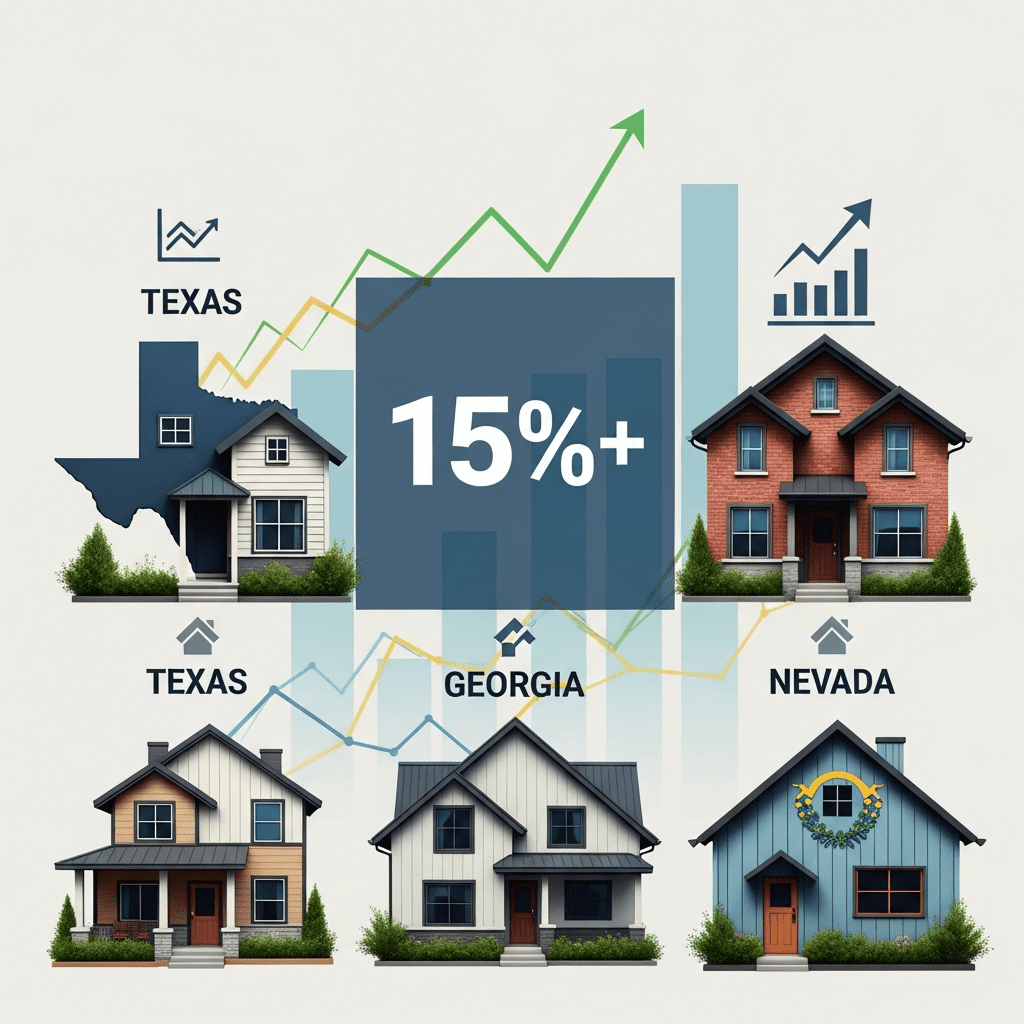
Redfin Corp. ($RDFN) revealed that more than 15% of homes sold in Texas, Georgia, and Nevada are being bought as investment properties. This surge in homes bought as investment properties has stunned local markets, with investors targeting single-family units at a record pace. What’s driving this investor demand—and what does it mean for traditional buyers?
Texas, Georgia, and Nevada See 15%+ Spike in Investor Home Purchases
According to Redfin’s Q3 2025 Housing Investor Report, 18.4% of all home purchases in Texas, 17.2% in Georgia, and 15.3% in Nevada were made by investors—defined as entities or individuals owning multiple properties—between July and September 2025. This marks the highest investment activity recorded in these states since Redfin began tracking the data in 2011. By comparison, the national average for investor purchases stood at 12.2% for the same period (Redfin Data Center, October 2025). Home price appreciation in metropolitan areas like Dallas-Fort Worth and Atlanta outpaced the national average, with Dallas median sale prices rising 7.3% year-over-year to $398,000 (National Association of Realtors, September 2025).
Why Rising Investment Property Demand Is Reshaping Local Markets
This influx of investor purchases has had pronounced effects on local housing availability and affordability. In cities such as Houston, Las Vegas, and Atlanta, elevated investor demand has tightened inventory and accelerated competition, contributing to faster price gains and higher rents. For example, Zillow reported a 6.5% annual rent growth in Atlanta as of October 2025. Industry analysts note that institutional investors are increasingly drawn by strong job growth and population inflows in these Sun Belt states, which have fueled robust rental yields relative to other major markets (Urban Institute, 2025).
How Investors Can Navigate the Surge in Investment Home Buying
Active investors in the residential real estate space should closely monitor housing supply, local inventory shifts, and rental demand trends in high-growth states. The rapid pace of homes bought as investment properties suggests both opportunities and risks: while rising rents and home values may benefit investors, increased competition could compress yields and elevate entry costs. Individual investors in Texas and Georgia may face higher minimum down payments and stricter mortgage requirements, as lenders respond to climbing risk profiles. Those seeking exposure to rental markets may consider REITs (Real Estate Investment Trusts) that focus on Sun Belt portfolios, or explore diverse strategies through stock market analysis and latest financial news for housing sector trends. Additionally, retail buyers should assess shifting market dynamics through investment strategy tools tailored to regional real estate.
What Analysts Expect for Investor Activity in U.S. Housing Markets
Market strategists at CoreLogic and J.P. Morgan Research have observed that sustained demand for homes bought as investment properties may persist into early 2026, given favorable rental economics and demographic shifts supporting Sun Belt migration. However, many experts caution that rising interest rates and stricter underwriting could moderate future investor purchases. According to industry analysts, the resilience of the U.S. housing market will depend on continued employment growth and broader macroeconomic stability.
Homes Bought as Investment Properties Signal a Shifting 2025 Landscape
The surge in homes bought as investment properties across Texas, Georgia, and Nevada indicates shifting market fundamentals, making investor vigilance more important than ever. Watch for regulatory changes and evolving rental demand to shape housing market trajectories heading into 2026. For investors, strategic positioning around these trends may offer both protection and upside potential.
Tags: investment properties, real estate, $RDFN, housing market, Sun Belt




