




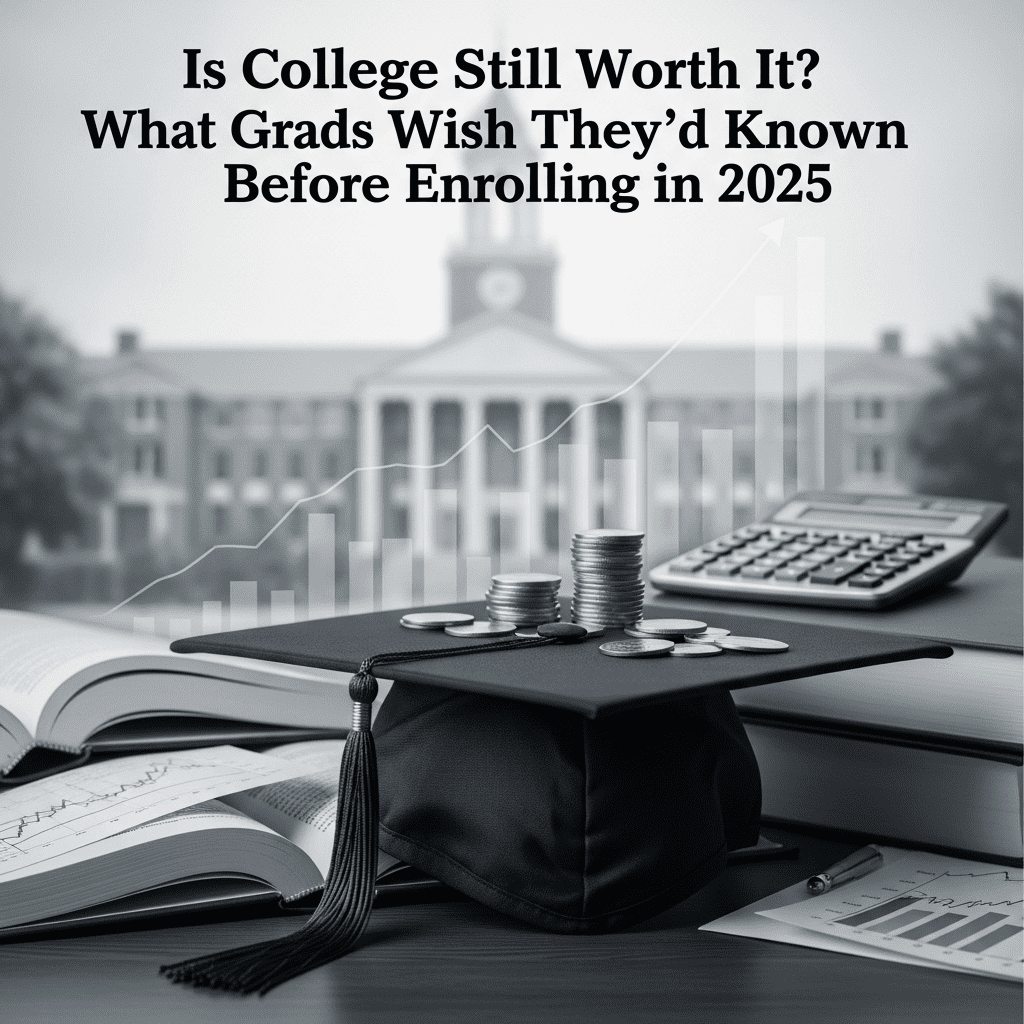
Is college still worth it in today’s economic landscape? As rising tuition costs and shifting job markets collide, more graduates are asking this fundamental question before they enroll. In 2025, evaluating the true value and return on investment (ROI) of higher education is more complex—and crucial—than ever for students, families, and financial planners.
Is College Still Worth It? Understanding Costs, Debt, and ROI
For decades, earning a four-year degree was seen as a guaranteed path to upward mobility. Yet in the current landscape, marked by ballooning student loan debt and increased scrutiny over tuition fees, many are reconsidering if the tradeoffs make sense. According to the National Center for Education Statistics, the average published tuition and fees for public four-year colleges in the U.S. surpassed $11,000 per year in 2024, not including living expenses. Meanwhile, student debt is at historic highs, with the Federal Reserve reporting that the average borrower owed over $38,000 upon graduation last year.
The calculation is further complicated by the uneven salary outcomes across disciplines. Graduates in lucrative STEM fields continue to see strong demand and high starting salaries, while those in arts, education, or humanities may face a tougher job market. As a result, the decision of whether college is “worth it” depends heavily on the chosen major, expected earnings, financial aid received, and individual career goals.
What Recent Grads Wish They’d Known
Many graduates reflect on their educational investments with mixed feelings. Surveys from the Strada Education Foundation show that one in three recent grads regret their major or the amount of debt they accumulated. Some key takeaways:
- Understanding Financial Aid: Many students wish they’d grasped the full impact of loans versus grants, and how repayment terms would affect their financial future. Research suggests that properly optimizing financial aid packages can reduce total debt burden significantly.
- Return on Investment Awareness: Comparing the average starting salaries in their fields to the cost of attendance could have influenced different choices. For instance, a computer science major at a public university may see a faster ROI than a liberal arts major at a private college.
- Alternatives to Traditional Degrees: Several grads wish they’d explored options such as community college, trade schools, or certificate programs, which often offer lower upfront costs and more direct job placement.
You can explore more about education financing and career planning at smart money management strategies.
Changing Job Markets: The New Value Equation for Higher Education
The pandemic, the rise of automation, and the proliferation of remote work have all upended what a college degree delivers in job security. Employers are increasingly valuing certifications, hands-on skills, and adaptability—sometimes on par with a traditional degree. An IBM study revealed that 40% of US employers now see skills-based hiring as equal to or more important than degree requirements in certain fields.
Still, data from the Bureau of Labor Statistics show that, on average, bachelor’s degree holders continue to outearn those with just a high school diploma by $24,000 per year. However, these averages mask large variations by occupation, region, and individual achievement.
Tips for Prospective Students: Maximizing College Value
- Research Earnings by Major: Use reliable resources to compare the earning potential of your intended field. The Georgetown University Center on Education and the Workforce provides comprehensive salary data.
- Minimize Student Loan Debt: Apply for scholarships, consider federal loan options first, and look for personal finance guidance before signing borrowing agreements.
- Consider the College’s Network: Alumni networks and internship opportunities can add measurable value beyond a diploma. Investigate placement rates and career support services offered by each institution.
- Explore Cost-Effective Alternatives: Community colleges, online programs, and employer-sponsored apprenticeships may offer better ROI, especially in technical fields.
Is College Still Worth It? Final Thoughts for 2025
The answer to “is college still worth it” is increasingly nuanced. For students with defined career goals in high-demand sectors, a traditional four-year degree can still offer robust payoffs. For others, particularly those unsure of their major or career path, alternative routes or more affordable institutions may deliver a better financial outcome.
Ultimately, higher education remains a powerful tool—but only when approached strategically and with full transparency about costs, debt, and long-term career expectations. Prospective students should weigh every variable before making what is likely the most significant financial decision of their early adult lives. For further reading on navigating financial decisions, visit investment insights on ThinkInvest.org.