

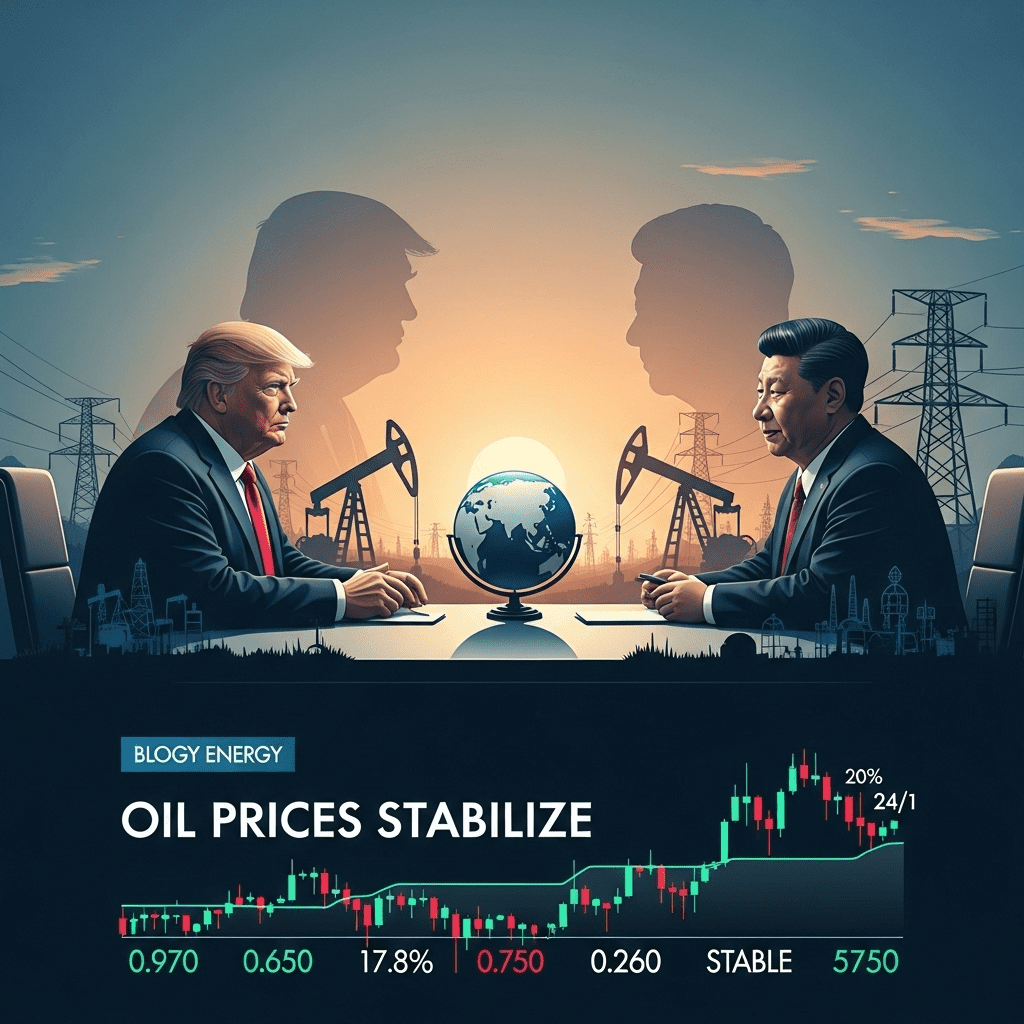
Oil Prices Stabilize as Traders Eye Trump-Xi Meeting, marking a crucial moment for global energy markets entering the second quarter of 2025. Investors and analysts are closely monitoring diplomatic developments between the United States and China, recognizing that any breakthroughs or setbacks in these high-profile talks could reverberate throughout the commodity landscape.
Oil Prices Stabilize as Traders Eye Trump-Xi Meeting: Market Dynamics in Focus
This week, Brent crude futures hovered around $82 per barrel, while West Texas Intermediate (WTI) maintained steady footing at $78.50, both benchmarks reflecting a restrained confidence among traders. The stability in oil prices comes on the back of widespread anticipation for the upcoming summit between former President Donald Trump and Chinese President Xi Jinping, where trade, tariffs, and energy collaboration are expected to feature prominently.
Traditionally, U.S.-China meetings of this caliber have influenced not only market sentiment but also shaped the trajectory of global oil demand. According to S&P Global Commodity Insights, any easing of tariffs or improved trade agreements could unlock fresh demand from China—the world’s largest oil importer—thereby supporting upward movement in prices. Conversely, renewed tensions could dampen hopes for global demand growth, especially amid lingering concerns about the pace of economic recovery worldwide.
Geopolitical Drivers and Supply Concerns
Oil market stability remains sensitive to a confluence of geopolitical events beyond the Trump-Xi meeting. Ongoing conflicts in the Middle East, production adjustments by OPEC+, and continued sanctions on Russian exports all feed into supply narratives that traders analyze daily. The International Energy Agency (IEA) recently highlighted that supply-side uncertainties, particularly disruptions from key producers, keep upside risks alive even as sentiment leans towards relative calm.
Moreover, with OPEC and its allies—collectively known as OPEC+—set to review their output quotas next month, all eyes are not only on diplomatic overtures in Washington and Beijing but also in Vienna. Market participants argue that any miscalculation in balancing global supply and demand could quickly reverse current price stability.
Macroeconomic Conditions Underpinning Energy Markets
While the spotlight is on the Trump-Xi summit, broader macroeconomic trends cannot be ignored. Recent U.S. inflation data, coupled with shifting Federal Reserve policy expectations, have both influenced sentiment toward risk assets, including energy commodities. Investors seeking comprehensive market analysis have noted that a stronger U.S. dollar, for instance, typically places downward pressure on oil prices by making dollar-denominated commodities more expensive for international buyers. However, renewed optimism over a potential thaw in U.S.-China relations provides a counterbalance, as improved diplomatic ties historically boost cross-border trade volumes and energy shipments.
Energy Transition and Long-Term Implications
Another layer influencing oil prices in 2025 is the steady progress toward green energy and decarbonization. While immediate price moves are shaped by trader sentiment and geopolitical headlines, institutional investors and energy companies are recalibrating their long-term strategies. According to analysts at Morgan Stanley, sustained investments in clean energy have begun to temper the bull case for oil, but the global transition is gradual. The Trump-Xi meeting’s outcome could impact not only near-term trade flows but also cooperation on climate and technology standards—a development with far-reaching implications for future commodity price cycles.
Strategic Insights for Investors Navigating Volatility
For those navigating the recurring cycles of volatility in commodities, diversified strategies and a sharp eye on global events remain essential. Seasoned traders are utilizing a mix of tactical option plays, exposure to integrated energy firms, and positions in renewable infrastructure to hedge against sudden swings. Sourcing the latest investment insights and maintaining a flexible approach can help market participants ride out shifts prompted by high-level summits such as the one between Trump and Xi.
Conclusion: The Road Ahead
As oil prices stabilize ahead of the Trump-Xi meeting, the world’s attention is riveted on policymakers and their capacity to shape economic and commodity market outcomes. Whether the summit ushers in a phase of renewed trade collaboration or signals renewed fracturing will carry lasting consequences for oil investors and the broader energy sector. Staying informed with timely energy news and adapting to emerging trends will be pivotal in 2025.




