




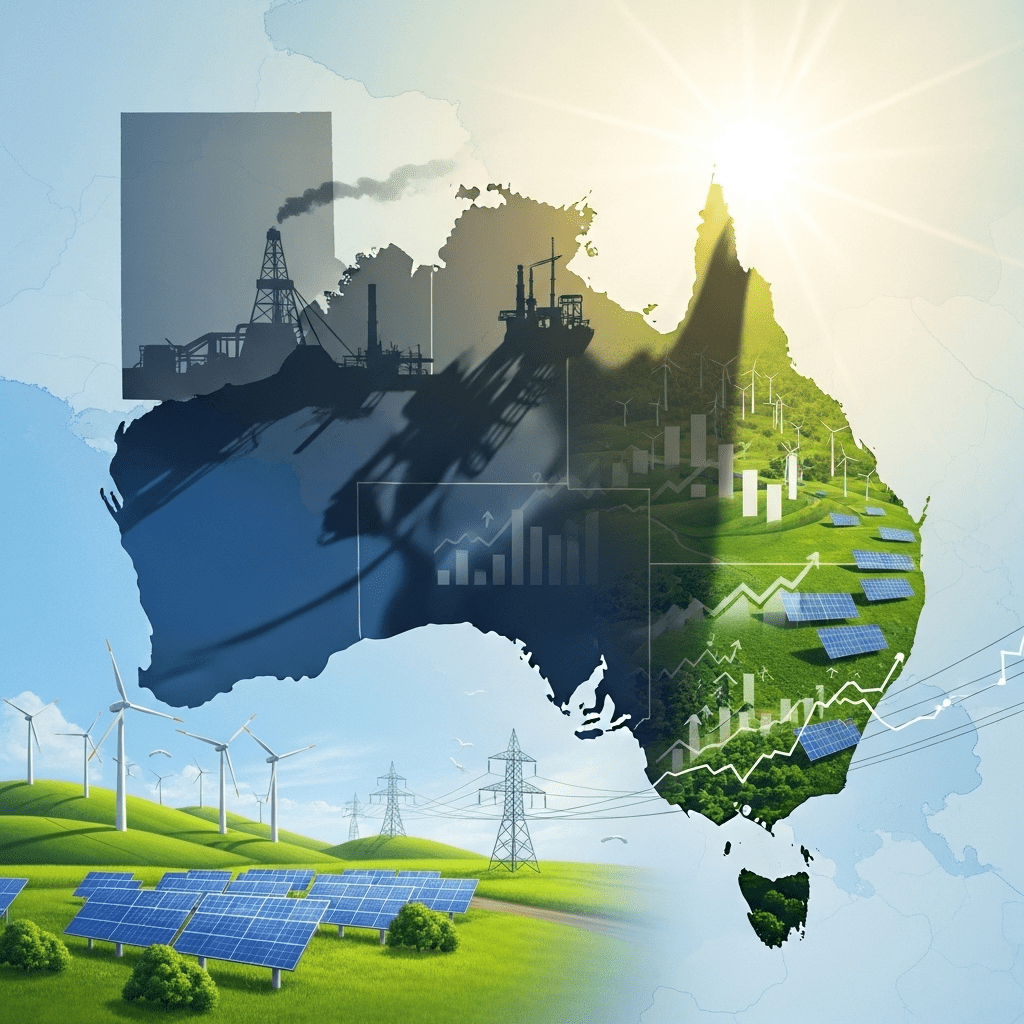
Queensland’s pandering to climate deniers is casting a long shadow over Australia’s emission reduction ambitions, threatening to derail national climate progress while undermining investor confidence in renewable energy projects.
How Queensland’s Pandering to Climate Deniers Impacts Australia’s Emission Targets
Australia’s clean energy sector has experienced robust growth in recent years, but Queensland’s approach to climate policy risks stalling further advances. The state’s recent legislative decisions and public rhetoric, often influenced by climate denialist views, are fueling uncertainty about the pace and direction of Australia’s emissions reduction strategy.
State policies that continue to favour fossil fuel industries—such as coal mining and gas extraction—directly conflict with federal efforts to accelerate the energy transition. Instead of embracing proven clean technologies, the Queensland government’s equivocation invites skepticism from environmentally conscious investors and may even drive capital toward regions with clearer climate commitments.
Investment Climate at Risk: The Financial Lens
Queensland’s reluctance to fully commit to net-zero targets adds volatility to the investment landscape. International financiers and sustainability-focused funds increasingly target jurisdictions with tangible emission reduction policies. As such, Queensland’s perceived alignment with climate deniers could cause divestment or withheld capital, stalling projects that are crucial for national emissions targets.
A report from the Clean Energy Council highlights that projects in policy-stable regions attract up to 30% more external funding compared to areas mired in policy uncertainty—a direct consequence of Queensland’s approach. The state’s stance also weakens Australia’s credibility in global green finance markets, impacting not just environmental outcomes but also broader economic growth.
Clean Air, Clean Energy: Why Policy Certainty Matters
Policy certainty is the bedrock of successful decarbonization. Queensland’s pandering to climate deniers sends mixed signals to clean energy project developers and utility providers. Persistent advocacy for new coal projects and tepid support for large-scale renewables undermines market confidence at a time when grid modernization and firming investments are critical.
Other states, such as New South Wales and Victoria, are surging ahead with strong emissions targets and incentives for renewable energy zones. Queensland risks isolation from the influx of green capital reshaping Australia’s energy mix, missing out on both emissions reductions and job growth opportunities associated with the sector.
National Consequences: Delaying Net-Zero
National progress relies on collective action. Queensland’s policy drift dilutes the efficacy of Australia’s climate commitments, making it harder to reach net-zero by 2050. Grid interconnection and federal-state cooperation are essential to deliver lower emissions, affordable energy, and sustainable economic growth.
The International Energy Agency (IEA) has repeatedly warned that high-emitting regions need to pivot quickly. If Queensland remains a laggard—pandering to climate deniers—the nation risks missing out on its Paris Agreement obligations, opening the door for carbon tariffs and trade disadvantages in export-dependent sectors.
Investor Actions and the Path Forward
For investors, the priority must be diligent risk assessment and support for policy advocacy. Engaging with stakeholders in Queensland and across Australia is essential to promote science-backed climate strategies. Responsible asset allocation can incentivize forward-thinking policymakers while sending a clear signal that capital will follow true climate leadership, not denialist inertia.
Ultimately, a strategic pivot away from pandering to climate deniers will bolster confidence at both state and national levels, positioning Australia as a climate action leader in the Asia-Pacific region. Investors and policymakers must collaborate to ensure that Queensland’s potential is not squandered—and that meaningful emission reductions are the priority for 2025 and beyond.