

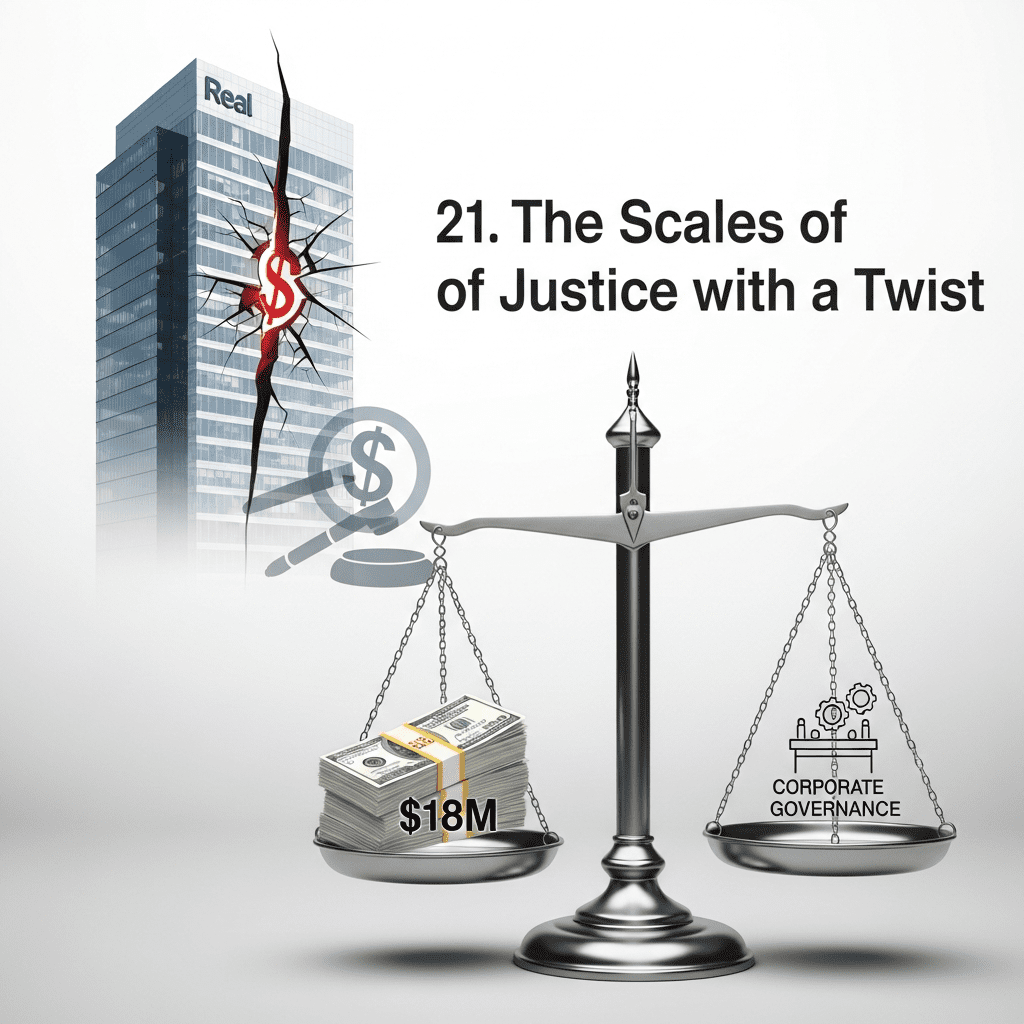
Real ($REAL) and its former CFO revealed an $18 million wrongful termination settlement, ending months of litigation that unsettled shareholders. The Real CFO wrongful termination settlement comes as a surprise after earlier denials by both parties, raising questions about leadership risk and governance at the high-growth real estate firm.
Real ($REAL) Pays $18M in Wrongful Termination Lawsuit Settlement
Real ($REAL), a Nasdaq-listed real estate technology company, agreed to pay $18 million to resolve the lawsuit brought by its ex-CFO, Mark Schaefer, over alleged wrongful termination in late 2024. The settlement, announced on November 7, 2025, follows protracted legal proceedings that began in January 2025, according to court filings and Real’s latest 8-K statement. Shares of Real ($REAL) fell nearly 4.7% to $5.32 following the news, with trading volume spiking to 2.1 million shares—about twice its 30-day average, based on Nasdaq data. The former CFO had sought $25 million in damages, citing breach of contract and reputational harm; the parties ultimately agreed to an $18 million out-of-court resolution. (Sources: SEC Form 8-K, Nasdaq, Bloomberg Law.)
How the Real CFO Settlement Ripples Through Real Estate Stocks
The Real CFO wrongful termination settlement highlights governance issues increasingly scrutinized across the proptech and real estate sectors. Over the past year, industry peers such as Compass ($COMP) and Redfin ($RDFN) have faced management turnover, sparking 7-12% stock volatility on key executive news (according to Bloomberg data, August–October 2025). The National Association of Realtors’ 2025 midyear report notes that high-level staff departures can pressure share prices and undermine investor confidence. Real estate equities have already lagged the broader S&P 500 in 2025, posting a sector-wide return of just 3.8% year-to-date compared to the index’s 9.6% rally, according to FactSet data as of November 1, 2025.
Real Estate Investors Adjust Strategy Amid Leadership Lawsuit Risks
Investors holding real estate and proptech stocks may want to reassess exposure to company-specific governance risks after the Real CFO wrongful termination settlement. Firms with recent executive turnover or unresolved litigation have underperformed industry benchmarks by 2–5% on a three-month basis (Morningstar sector report, Q3 2025). Portfolio managers are increasingly favoring diversified REITs and firms with stable management, while reducing concentrated bets on growth names susceptible to leadership disruption. For deeper sector risks and portfolio shifts, investors can consult stock market analysis and stay abreast of latest financial news for upcoming real estate earnings and litigation outcomes. Institutional clients are also adding “ESG” (Environmental, Social, Governance) screens when evaluating new real estate holdings, focusing on board transparency and executive compensation policies.
Analysts See Heightened Scrutiny for Proptech Corporate Governance
Industry analysts observe that the Real CFO settlement will amplify market focus on board practices, disclosure, and risk management across proptech firms. According to Evercore ISI and public market commentary from September 2025, investors may apply risk premiums to similarly structured real estate technology companies. Market consensus suggests that resolving high-profile legal disputes remains critical for restoring investor trust and narrowing valuation discounts relative to peers.
Real CFO Wrongful Termination Settlement Signals New Era for ESG Oversight
The Real CFO wrongful termination settlement marks an inflection point for real estate investors prioritizing governance and ESG transparency. Going forward, shareholder focus may intensify on executive contracts, board accountability, and legal risk monitoring. Investors should monitor governance disclosures in earnings calls and regulatory filings, as sector leadership stability remains a critical market catalyst in 2025.
Tags: Real, REAL, real estate, corporate governance, wrongful termination




