

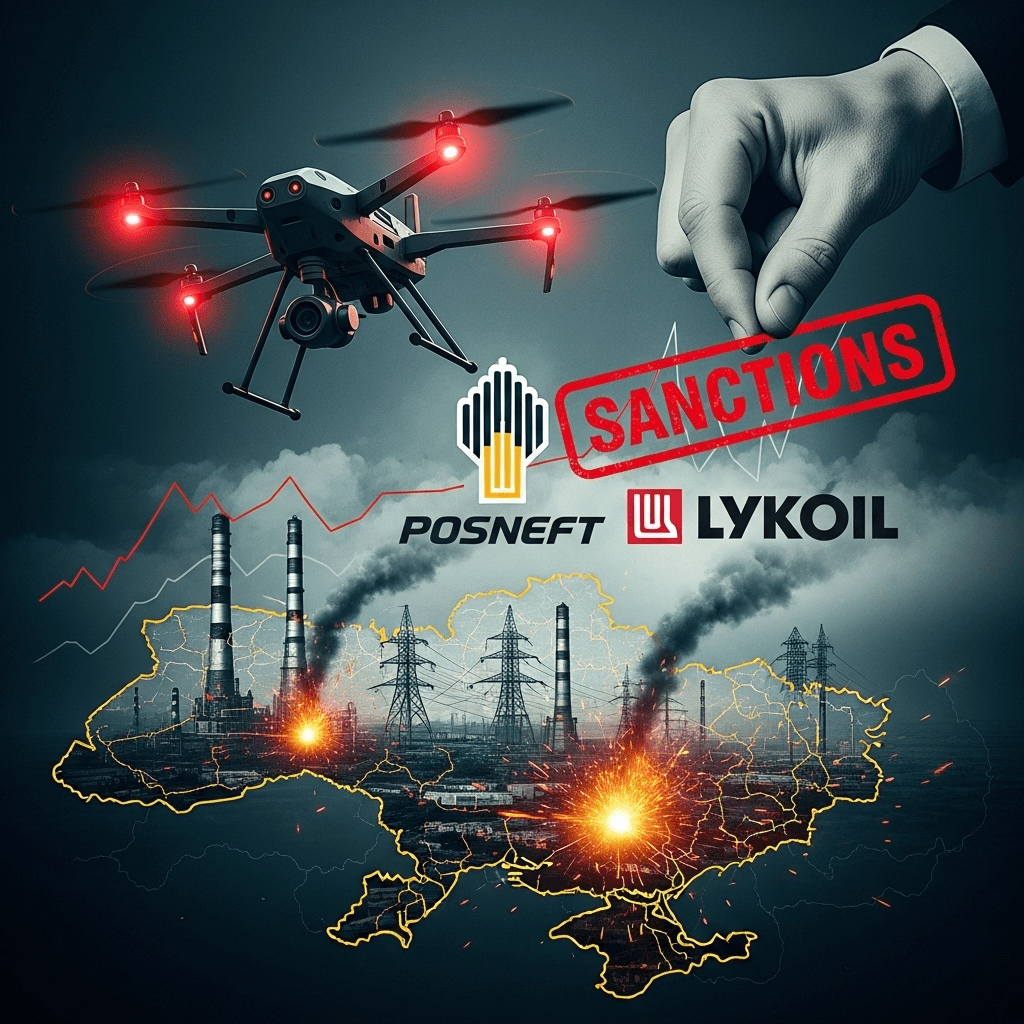
The global energy landscape is roiled once again as Russian Drones Pound Ukraine as Trump Slaps Sanctions on Rosneft and Lukoil, sparking sharp market reactions and leaving investors questioning the future of oil supplies and regional stability. As escalating conflict intertwines with aggressive U.S. policy moves, stakeholders from energy majors to portfolio managers are rapidly reassessing risk and opportunity in the sector.
Russian Drones Pound Ukraine as Trump Slaps Sanctions on Rosneft and Lukoil: Energy Market Repercussions
Overnight strikes by Russian drones across major Ukrainian energy infrastructures have intensified hostilities just as former President Donald Trump, now re-elected, announced sweeping sanctions targeting Russian oil giants Rosneft and Lukoil. These moves aim to curb Moscow’s energy revenues while signaling renewed U.S. assertiveness in foreign policy. The combined impact on global energy markets has been immediate: Brent crude prices spiked 7% following the announcements, while European natural gas futures touched six-month highs as traders priced in new disruptions and supply grid stress.
The sanctions restrict not only direct U.S. investments in Rosneft and Lukoil, but also extend to their supply chains and finance partners worldwide, creating cascading uncertainties across the oil and gas industry. According to energy analysts at Rystad Energy, “These sanctions risk removing up to 1.5 million barrels per day of Russian oil from global markets by late 2025, unless strategic reserves or alternative production ramps up at record pace.”
Broader Energy Security and Geopolitical Implications
Market volatility stemming from the sanctions and drone attacks underscores the fragility of global energy security. European nations, already grappling with the renewable transition and legacy Russian gas dependence, face renewed urgency to diversify imports. The International Energy Agency (IEA) advises that OECD stockpiles could be drawn down if Russian supply is severely curtailed, pushing nations back to coal or nuclear to avoid blackouts in colder months.
For Asian markets, especially China and India, fresh sanctions complicate ongoing efforts to secure discounted Russian barrels. Industry executives speculate that shadow fleets and alternative payment mechanisms may circumvent some restrictions, but compliance risks–as seen with insurers and global banks–remain significant. As noted in a recent analysis, sanction circumvention can expose firms to secondary penalties, making due diligence paramount.
How Sanctions Shift Investor Strategies in the Energy Sector
Investors are already reallocating capital in anticipation of prolonged instability. Major funds are tilting toward North American shale producers and renewable infrastructure, which are perceived as more insulated from geopolitical shocks. Oilfield service companies with minimal Russian exposure have outperformed the broader energy index since the sanctions were announced.
Meanwhile, European oil majors face pressure on two fronts: operational resilience against possible Russian retaliatory cyberattacks, and supply chain bottlenecks if Russian crude is further restricted. A ThinkInvest spotlight notes that energy ETFs have seen record inflows into U.S.-centric funds over the past quarter, suggesting a strategic pivot toward markets less affected by Eurasian turbulence.
Potential for Long-Term Structural Change in the Energy Industry
Industry experts caution that extended disruption from both kinetic warfare and financial sanctions could accelerate the fragmentation of global energy markets. While past rounds of sanctions produced workarounds, the synchronized targeting of both physical assets (via drone attacks) and financial channels (via U.S. sanctions) represents a step-change in policy rigor. This may force a rewiring of supply routes and deepen the east-west energy divide that began after 2022.
In its latest report, the Oxford Institute for Energy Studies highlights that the “decoupling” of Western and Russian energy flows could be increasingly permanent if alternative pipelines and LNG terminals are completed. This would likely have far-reaching effects not only on price stability but also on investment confidence and long-term energy transition goals. Analysts at JP Morgan have suggested keeping an eye on upstream investments and new energy partnerships, as highlighted in market updates from earlier this year.
Outlook: Monitoring the Fallout from Russian Drones and U.S. Sanctions in 2025
The events surrounding Russian Drones Pound Ukraine as Trump Slaps Sanctions on Rosneft and Lukoil represent more than transactional volatility—they signal a potential new era of resource conflict and policy entrenchment. For investors and energy professionals, the next phases will require vigilance on both supply chain disruptions and shifting regulatory landscapes. As sanctions bite and military actions persist, volatility is expected to remain elevated for the foreseeable future. The financial community and portfolio managers should expect accelerated adaptation, scenario planning, and a careful watch on government and industry responses worldwide.




