

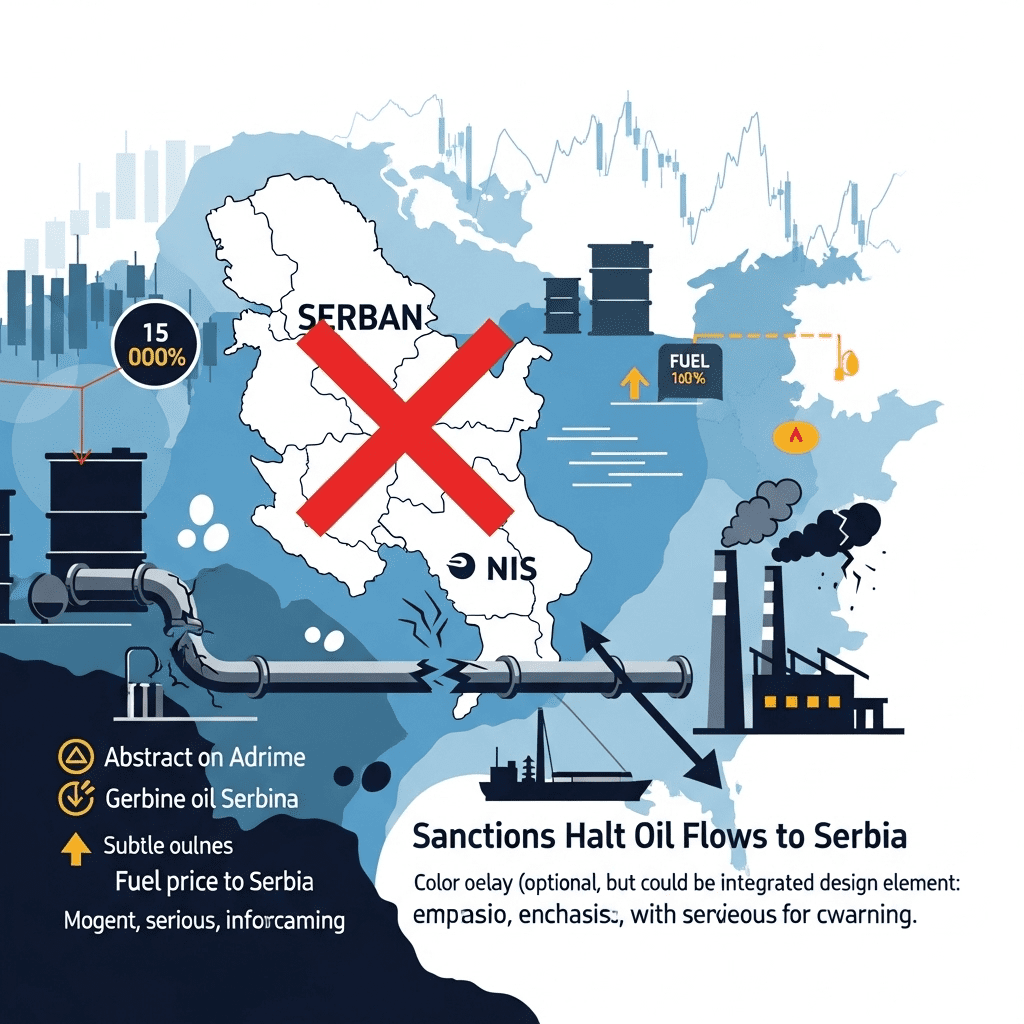
TL;DR: Sanctions halt oil flows to Serbia, disrupting operations at the Russian-owned NIS refinery and intensifying regional energy security concerns. The halt marks a pivotal shift for Balkan energy markets and presents new challenges for investors across related sectors.
What Happened
In a move set to reverberate through the region, international sanctions have halted oil flows to Serbia, leaving the Russian-owned Naftna Industrija Srbije (NIS) facing an imminent refinery shutdown. According to government officials and industry sources, Serbia’s supply chain disruption stems from the latest round of EU-mandated sanctions targeting Russian energy assets and affiliates amid ongoing geopolitical tensions in 2025. NIS, majority-owned by Gazprom Neft, relies on seaborne crude shipments—primarily via Croatia’s Adriatic oil pipeline—which have now ceased. “We are rapidly depleting reserves,” a senior NIS spokesperson told Reuters, confirming output may be suspended within days unless an alternative source is found. The NIS refinery in Pancevo processed about 4.2 million tons of crude in 2024, accounting for nearly 80% of Serbia’s refined petroleum output (Serbian Energy Ministry data). The focus keyphrase, ‘Sanctions halt oil flows to Serbia,’ defines the critical juncture for both the energy sector and wider regional supply chains.
Why It Matters
The disruption has far-reaching implications for energy security, economic stability, and geopolitical alignments in the Western Balkans. Serbia, historically reliant on Russian oil owing to long-term contracts and infrastructure ties, now faces the prospect of expensive, logistically complex replacements. The shutdown threatens domestic fuel supply, raises inflation risks, and could prompt Serbia to accelerate diversification efforts or deepen energy ties with other suppliers. Analysts at Wood Mackenzie report that the Balkans—already registering a 13% average hike in wholesale fuel prices following sanctions in mid-2024—could see even sharper price volatility and short-term shortages. Regional market integration, diversification strategies, and diplomatic maneuvering will now take center stage, as highlighted in our market analysis.
Impact on Investors
For investors, the refinery shutdown at NIS—listed on the Belgrade Stock Exchange (NIIS)—puts renewed focus on exposure to state-influenced oil firms, Balkan infrastructure operators, and energy transit plays. NIS shares have fallen approximately 17% since early May on escalating supply concerns (Bloomberg data). Broader regional ETFs and energy transportation companies may experience higher volatility, while European oil indices (e.g., STOXX Europe 600 Oil & Gas) are tracking developments closely for spillover risk. Debt investors should monitor moves in Serbian sovereign bond spreads, which widened 38 basis points last week amid macro headwinds. For actionable sectoral insights, refer to our recent energy sector outlook.
Expert Take
Analysts note that the enforced halt in Russian-linked oil flows is accelerating Serbia’s search for alternative supply partners – a process likely fraught with higher costs and policy risks. Market strategists suggest that while upstream firms with diversified supply lines may benefit, refiners concentrated in Russia-adjacent markets face heightened operational and regulatory threats.
The Bottom Line
The halt in oil flows to Serbia underlines the vulnerability of single-source energy strategies in the current geopolitical climate. Investors should anticipate sustained volatility in Balkan energy equities and supply chain exposures as Serbia navigates a period of forced transformation. For broader implications and forward-looking strategies, explore our latest investment insights.
Tags: Serbia energy, Russian sanctions, NIS refinery, Balkan markets, oil supply disruption.




