

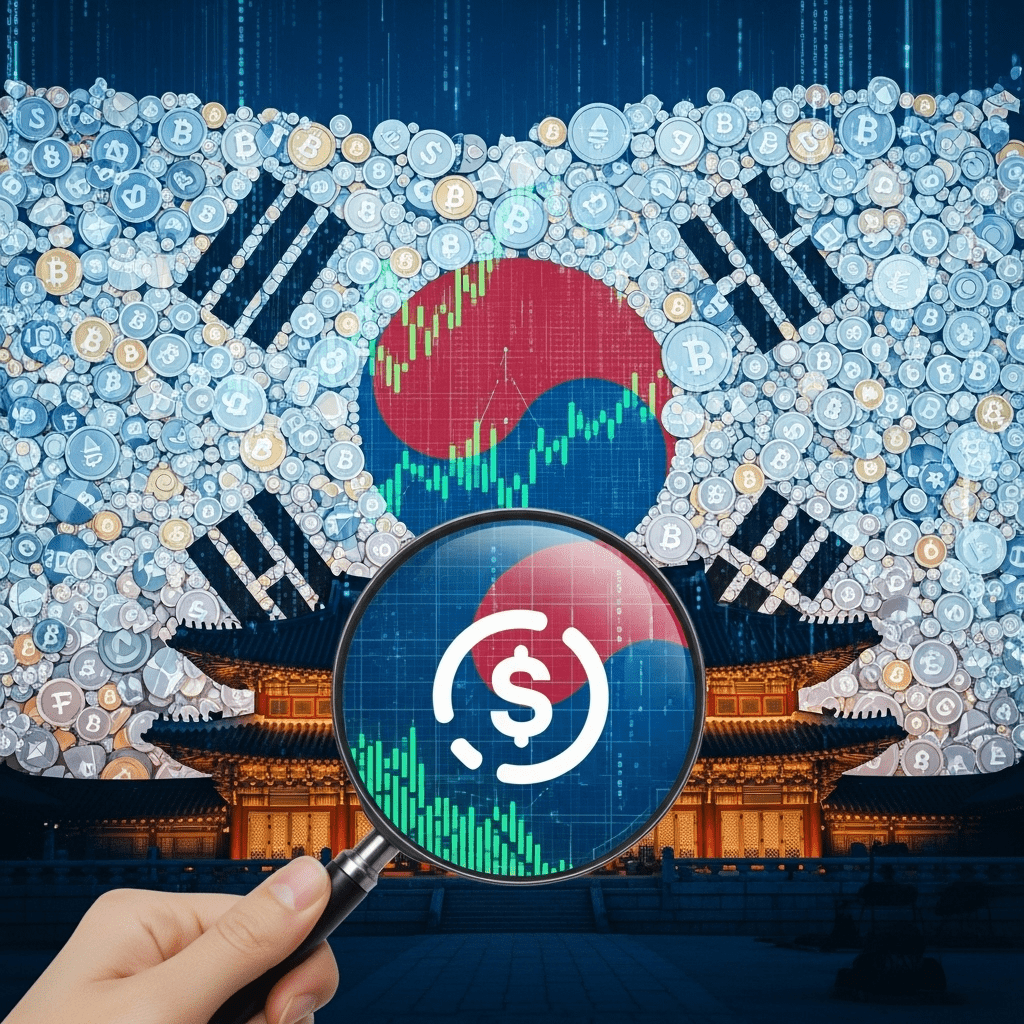
South Korea’s leading financial association, Kaia ($KAIA), revealed sharp criticism of the government’s bank-first stablecoin approach, a move that puts South Korea bank stablecoin logic squarely in the spotlight. The stance surprises market observers as policymakers diverge from global crypto trends.
Kaia Chair Flags $150B Stablecoin Market as Policy Test for Banks
The chairperson of the Korea Artificial Intelligence Association (Kaia) publicly condemned the nation’s decision to grant commercial banks first rights to issue stablecoins. This policy, announced by South Korea’s Financial Services Commission (FSC) on October 27, would position regulated banks as the sole authorized issuers in a market valued at over $150 billion globally, according to CoinGecko data as of September 2025.
Kaia’s chair argued the approach “lacks logic” given that banks in South Korea account for only 18% of domestic digital asset transaction volume, compared to 51% handled by non-bank fintech firms, per the Korea Financial Telecommunications & Clearings Institute (KFTC) H1 2025 report. The FSC cited consumer protection and KYC compliance, but the chair countered that narrow access could curb market innovation—contrasting with the recent move by the Monetary Authority of Singapore, which licensed both banks and fintechs to issue stablecoins in Q3 2025 (MAS statement, Aug 2025).
Why South Korea’s Stablecoin Policy Shifts Crypto Sector Dynamics
South Korea’s bank-focused stablecoin initiative could reshape the country’s crypto sector, which transacted over $45 billion in quarterly digital assets by Q2 2025, according to Upbit Exchange. By restricting stablecoin issuance to incumbent banks, policymakers appear to limit opportunities for a broader range of market entrants, including exchanges and fintech startups.
This diverges from the regulatory frameworks in Europe and the US, where stablecoin issuers range from banks to technology firms—Circle ($USDC) and Tether ($USDT) command over 65% of the global stablecoin supply, neither being traditional banks. Analysts point to new competitive barriers for non-bank Korean players and warn the policy risks stifling growth in an industry currently posting over 19% annualized transaction growth (FSC data, July 2025).
How Investors Are Positioning Amid South Korea Stablecoin Policy Shift
Crypto investors and institutional traders in South Korea are reassessing allocation strategies in light of the stablecoin market upheaval. For players focused on domestic exposure, attention is shifting to banking stocks with potential to benefit from new revenue streams, such as Shinhan Financial Group ($SHG) and KB Financial Group ($KBFG), both up over 4% since the FSC announcement (Korea Exchange data, October 28). Digital asset funds tracking local fintechs, however, declined by 2.7% on average, as reported by Korea Investment Trust Management.
Portfolio managers are also monitoring key developments in regional stablecoin markets for regulatory arbitrage opportunities. With stablecoins crucial for on- and off-ramping crypto in South Korea, multi-platform strategies are gaining traction. For deeper context on cryptocurrency market trends and ongoing policy updates, investors are closely following regulatory news through sources like the latest financial news and comparative investment strategy developments in the APAC region.
Market Analysts See Short-Term Friction, Long-Term Questions
Industry analysts observe that the forced “bank-first” stablecoin policy may introduce short-term bottlenecks for digital asset liquidity in South Korea. While banks may offer greater consumer safeguards, investment strategists note that a lack of competition could slow innovation and ecosystem adoption rates.
Market consensus suggests that whether South Korea adapts its stance—opening stablecoin issuance beyond banks—will be a critical indicator for future market depth and international competitiveness.
South Korea Bank Stablecoin Logic Signals Sector Rethink in 2025
The ongoing debate over South Korea bank stablecoin logic signals a pivotal moment for the nation’s digital asset sector. Investors should closely monitor regulatory updates and secondary market responses as potential catalysts for both risk and opportunity in 2025. The ultimate shape of stablecoin policy will likely dictate the next phase of Korean crypto innovation.
Tags: South Korea, stablecoin, KAIA, crypto regulation, fintech




