





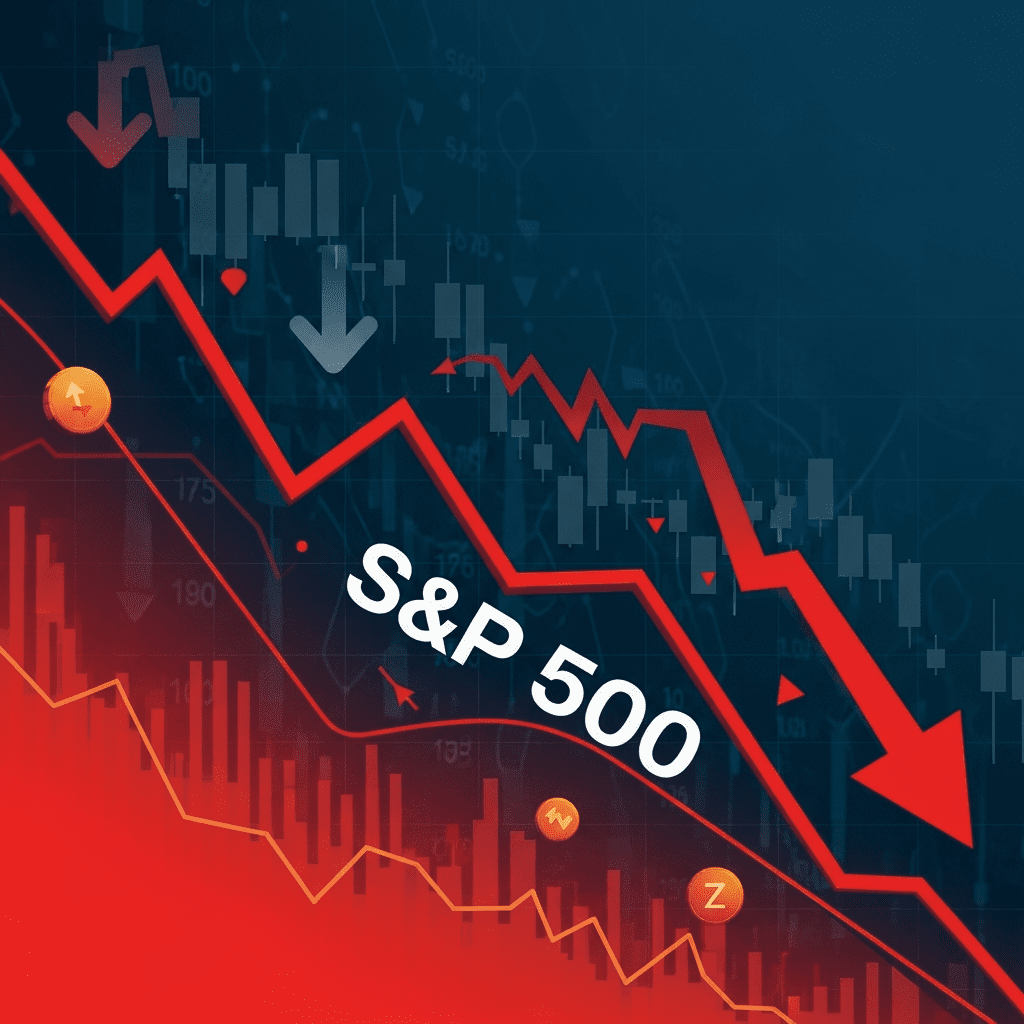
The S&P 500 ($SPX) tumbled 4.7% to 4,278.11 this week, triggering heated debate over how deep the latest stock pullback will go. Major tech stocks like Microsoft ($MSFT) and Apple ($AAPL) also posted multi-session declines, surprising investors seeking stability amid tightening financial conditions. What’s next for the S&P 500 stock pullback in 2025?
Sharp S&P 500 Drop Wipes $1.4T From Market: Key Data
The S&P 500 ($SPX) erased $1.4 trillion in market capitalization over the past five sessions, closing at 4,278.11 on November 4—down from 4,491.67 on October 28, according to Bloomberg data. Trading volume surged to 20% above the 30-day average as volatility spiked, with the CBOE Volatility Index (VIX) jumping from 14.1 to 21.8 in the same period. Large-cap tech led declines: Microsoft ($MSFT) dropped 3.1% to $336.70, Apple ($AAPL) shed 2.7% to $176.52, and Alphabet ($GOOGL) slid 4.4% to $148.53. Investors responded to mixed Q3 earnings and increasing odds of another Federal Reserve rate hike before year-end.
How Rising Yields and Economic Uncertainty Pressure Stocks
This stock pullback reflects mounting investor concerns over persistent inflation and a hawkish policy stance by the Federal Reserve. The yield on 10-year U.S. Treasuries climbed to 5.12%—its highest since 2007—placing further pressure on equity valuations, per Reuters. Financial and industrial sectors also lagged, with the S&P Financials index down 5.6% and Industrials off 4.9% this week. The labor market showed renewed strength, as the October jobs report delivered 208,000 new positions and wage growth of 4.1% year-over-year, prompting fears that inflation could remain sticky. These crosscurrents complicate the outlook for equities despite solid GDP growth of 2.4% in Q3 (Bureau of Economic Analysis, October 2025).
Investor Strategies: Rotation Into Defensive Stocks and Cash
Amid the S&P 500 stock pullback, institutional investors are rotating toward defensive sectors like consumer staples and healthcare. The Utilities sector advanced 1.9% this week, while Consumer Staples edged up 0.5%, data from the NYSE show. Meanwhile, risk appetite is waning: ETF flows indicate net outflows of $7.8 billion from equity funds and inflows of $4.9 billion to money market funds over the last week (Investment Company Institute, November 2025). Short-term traders are watching technical levels at S&P 4,200 and 4,100, while long-term investors are reassessing allocations. For those seeking further stock market analysis or monitoring broad investment strategy shifts, staying informed on sector rotation and macro catalysts is critical during heightened volatility.
Analysts Warn of Further Volatility Amid Uncertain Fed Path
Market consensus suggests volatility could persist as investors await clearer signals from the Federal Reserve regarding future rate hikes. According to investment strategists at Bank of America, lingering inflation and robust economic data may keep pressure on equities through year-end. Industry analysts observe that sentiment remains fragile, with downside risks if bond yields keep rising or earnings growth falters. Many market participants are also watching geopolitical developments and commodity price swings for additional cues ahead of the final FOMC meeting of 2025.
S&P 500 Stock Pullback 2025 Signals New Risks and Opportunities
The S&P 500 stock pullback in 2025 highlights the delicate balance between resilient economic data and tightening monetary policy. Investors should monitor bond yields, earnings revisions, and Fed communication closely, as these will shape the next direction for equities. For now, heightened vigilance and flexibility will be key as markets navigate new risks and potential opportunities.
Tags: S&P 500, stock pullback, market volatility, MSFT, AAPL