

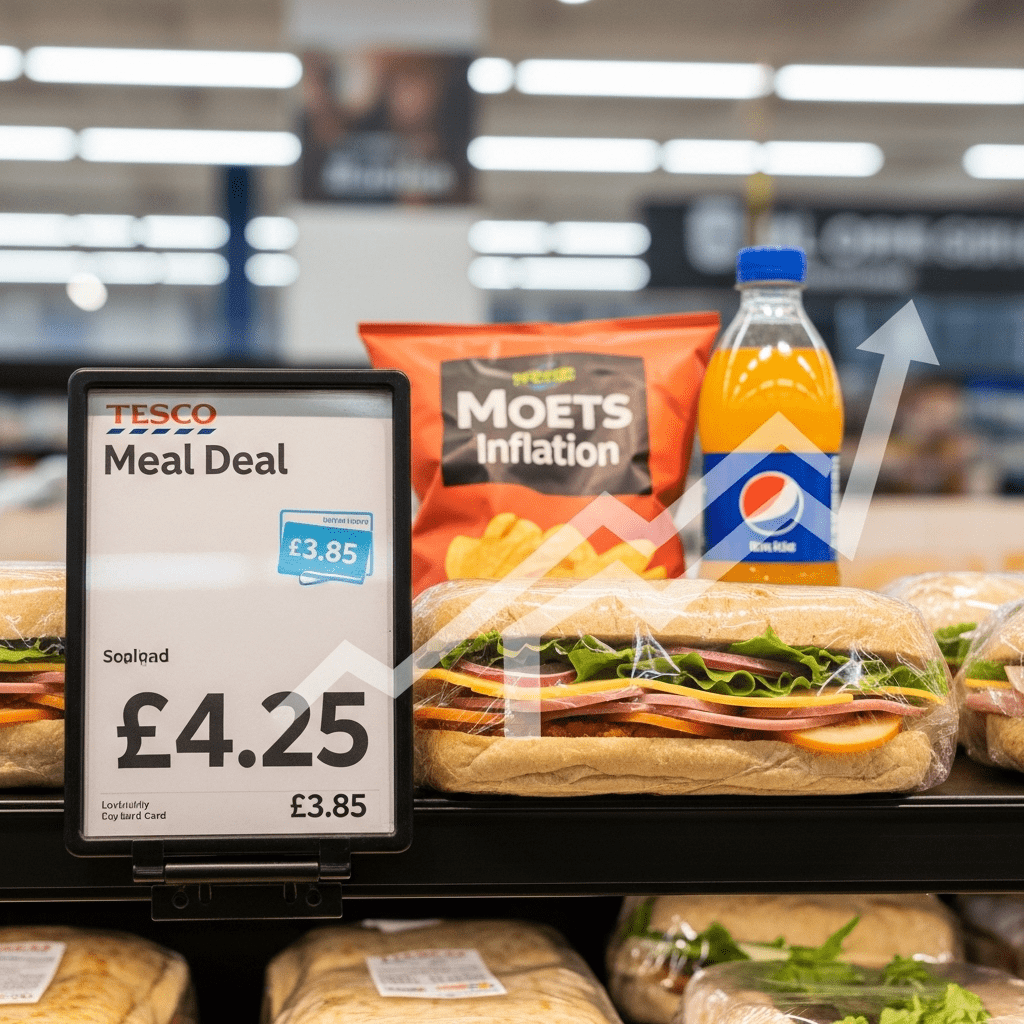
Tesco PLC ($TSCO) revealed a fresh price hike in its signature Meal Deal, raising costs for millions and shining a spotlight on the enduring Tesco meal deal inflation threat as the Bank of England pursues its elusive price stability goal. The move surprises both consumers and markets watching UK’s stubborn inflation closely.
Tesco Lifts Meal Deal Price to £4.25, Outpacing CPI Gains
On October 30, 2025, Tesco PLC ($TSCO), the UK’s largest supermarket operator, increased its standard Meal Deal to £4.25, up 7% from £3.95 in September, according to Bloomberg data. Loyalty card holders now pay £3.85, versus the previous £3.50. The price rise comes after a cumulative 21% hike over 24 months, outstripping the UK consumer price index (CPI) rise of 9.2% over the same period (ONS, September 2025). Tesco’s prepared foods segment accounted for £2.1 billion in revenue for fiscal H1 2025, reflecting a resilient demand environment despite ongoing cost-of-living pressures.
Why UK Retail Price Increases Heighten Inflation Risks
The latest Tesco move underscores inflation’s persistent grip on UK households and signals broader sector pricing pressure. Supermarket price strategies carry outsized weight in the Office for National Statistics basket, given food and non-alcoholic beverages make up 17% of the CPI calculation (ONS, 2025). In 2025, prepared foods saw a 12.8% annual price surge, ahead of most CPI subcategories. Since the start of 2024, leading grocers—including Sainsbury’s ($SBRY.L) and Asda—have followed Tesco’s lead with incremental food price bumps, testing consumers’ tolerance for retail cost pass-through.
How Investors Should Respond to Persistent Retail Inflation
Investors exposed to UK equities may reassess retail and consumer discretionary allocations as profitability and pricing power diverge amid the Tesco meal deal inflation threat. Tesco ($TSCO) shares have advanced 4.6% YTD as of October 30, but margin pressures remain; Sainsbury’s ($SBRY.L) is up just 2.9% (London Stock Exchange data). Rising consumer resistance and interest rate uncertainty may cap further upside. Conversely, supermarket suppliers and processed food manufacturers, such as Premier Foods ($PFD.L), have experienced 10.3% YTD gains, benefiting from supplier pricing dynamics. For sector-specific analysis, see stock market analysis. Amid macro volatility, diversifying into defensives and monitoring inflation-sensitive equities is prudent. Stay updated with the latest financial news on inflation and retail sector movements.
What Analysts Expect Next for UK Inflation and Supermarkets
Industry analysts observe that persistent retail price rises continue to challenge the Bank of England’s 2% inflation mandate, even as wage growth moderates. According to market consensus tracked by Reuters, many strategists project UK CPI to remain above 3.5% through Q4 2025, led by sticky service and food prices. Investment strategists note that unless supermarkets stabilize price hikes, headline inflation could remain elevated well into 2026, complicating monetary policy normalization.
Tesco Meal Deal Inflation Threat Reshapes UK Investment Outlook
The Tesco meal deal inflation threat signals broader pressures on UK consumer sectors and monetary policy in 2025. With persistent retail inflation, investors should closely monitor grocer pricing strategies, upcoming BOE rate decisions, and evolving consumer trends. Navigating these dynamics is essential for defensively positioning UK equity portfolios for the months ahead.
Tags: Tesco, TSCO, inflation, Bank of England, UK retail




