

What Happened
The Fed’s rate decision—closely watched by markets and policymakers—is scheduled for announcement this week, with many investors bracing for heightened volatility. According to Bloomberg, as of June 5, 2025, CME FedWatch data show market odds pricing in a 70% probability that the Federal Reserve will hold its benchmark interest rate steady, while 30% expect a potential cut in response to cooling inflation. Federal Reserve Chair Jerome Powell recently stated, “We remain attentive to inflation dynamics and will act as needed to support our dual mandate,” reinforcing the central bank’s data-dependent stance. The Fed’s current policy range sits at 5.00–5.25%, the highest level since 2007, following a campaign of rapid hikes aimed at containing persistent inflation pressures.
Why It Matters
The upcoming Fed’s rate decision carries significant weight for the broader economy, directly affecting everything from mortgages and credit cards to bond yields and savings returns. Historically, such decisions serve as pivotal inflection points for both equity and fixed income markets. While inflation has cooled from 2022 peaks—core CPI rose just 2.7% year-over-year in May, per the Bureau of Labor Statistics—it remains above the Fed’s stated 2% target. “The central bank’s next steps could signal whether we’re on track for a soft landing or facing further uncertainty,” noted economists polled by Reuters. In recent cycles, even small shifts in policy rates have triggered outsized moves in the S&P 500 and volatility indexes, underscoring the event’s market-moving potential.
Impact on Investors
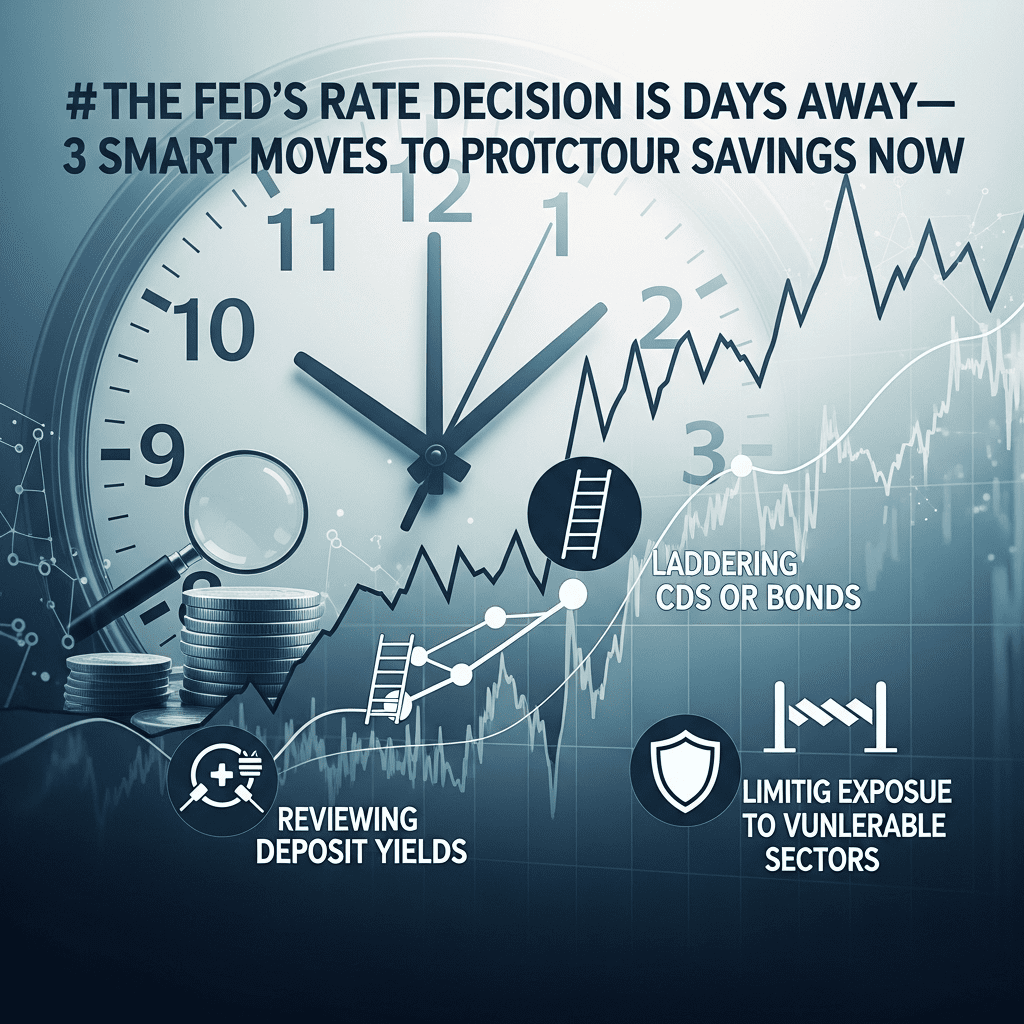
For investors and savers, the Fed’s rate decision highlights both risks and opportunities. Persistent high rates strengthen returns for cash accounts and short-term Treasurys (e.g., SHY, SGOV), but reinvestment risk remains if rates fall. Conversely, rate cuts may boost growth stocks and sectors like technology (see: QQQ, XLK), yet compress yields for savers and those in money market funds. “In this environment, diversification across fixed income maturities and defensive equities can help cushion portfolios against policy swings,” advised Lindsay Martinez, senior strategist at Alpine Asset Management. Proactive steps to protect your savings now include: reviewing deposit yields to ensure competitive rates, laddering CDs or bonds to capture potential rate shifts, and limiting exposure to sectors that historically underperform when rates move unexpectedly. For more strategies, consult market analysis or explore our latest investment insights.
Expert Take
Analysts note that “With market expectations finely balanced, any Fed policy surprise could generate near-term volatility across both equity and fixed income markets.” Market strategists suggest that savers prioritize flexibility and liquidity—keeping options open for future moves as the macro landscape evolves.
The Bottom Line
With the Fed’s rate decision imminent, investors and savers should remain alert to shifting policy signals and economic data. Taking defensive, data-driven steps today can help preserve savings and position portfolios for the next phase, whatever path the Fed chooses. The Fed’s rate decision may offer both risks and opportunities—but a smart, proactive approach remains the best defense.
Tags: Federal Reserve, interest rates, savings strategies, investor tips, market outlook.




