

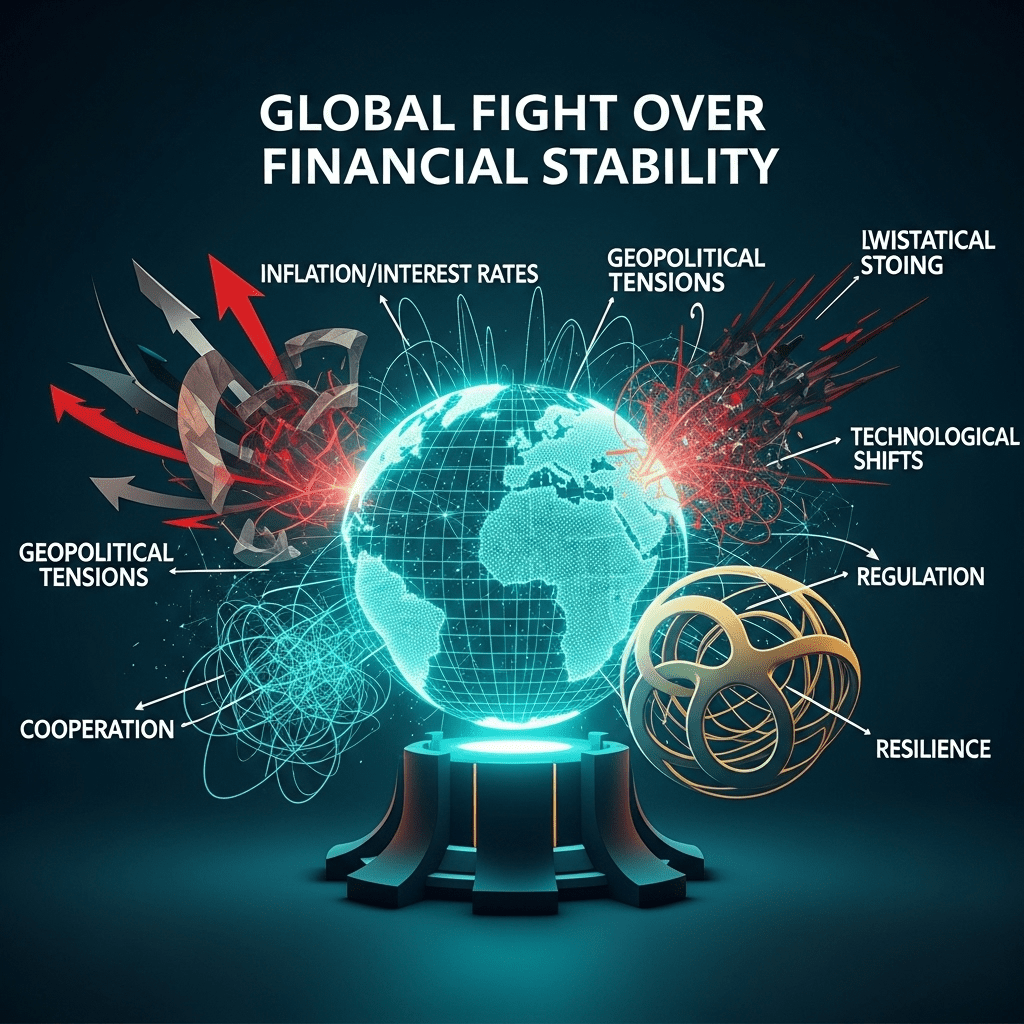
The global fight over financial stability has become a defining theme for world economies in 2025, as nations grapple with escalating risks from inflation, interest rate volatility, geopolitical tensions, and rapid technological shifts. Investors, policymakers, and institutions are watching closely as the global economic landscape evolves in unpredictable ways, making stability not just an ideal but a necessity for growth and confidence.
The Global Fight Over Financial Stability: The Core Challenges
The global fight over financial stability is being shaped by an interconnected web of complex challenges. Rising inflation, lingering effects from the global pandemic, and persistent supply chain disruptions have led central banks worldwide to respond with aggressive rate hikes and tighter monetary policy. These measures, while intended to control inflation, raise the specter of recession and financial contagion across emerging and developed markets alike.
Central Banks at the Forefront
Central banks play a pivotal role in the global effort to maintain financial stability. In 2025, coordinated policy moves between the U.S. Federal Reserve, European Central Bank, Bank of Japan, and others are more critical than ever. While synchronized tightening aims to rein in inflation, it can lead to volatile capital flows and currency fluctuations that increase risks for global investors.
Emerging markets face particular pressure as higher interest rates in developed countries attract investment away from countries with less stable economies, exposing vulnerabilities in sovereign debt, corporate borrowing, and consumer lending.
Geopolitical Risks and Market Turbulence
Geopolitical instability remains a constant threat to global financial stability. Ongoing conflicts in Eastern Europe and the Middle East, as well as tensions in the Indo-Pacific region, have added layers of market uncertainty. Sanctions, trade restrictions, and upheavals in global energy markets further complicate recovery efforts and contribute to cross-border credit risks.
For investors seeking risk management strategies, weighing geopolitical factors is vital for portfolio resilience, as sudden redirections in capital can trigger sharp swings in emerging market assets and commodities.
Global Cooperation and the Path Forward
The global fight over financial stability is not won on a single battlefield. It requires international cooperation, transparent regulation, and robust financial institutions. Major economies are working through multilateral frameworks like the IMF and the Financial Stability Board to develop common standards for bank capital requirements, stress testing, and systemic risk oversight.
Technology Disruption and Cybersecurity
As digital transformation accelerates, financial systems become more interconnected but also more vulnerable. In 2025, cyber risks have moved to the forefront, with systemic financial infrastructure at greater risk of attack. Regulators and financial institutions are investing heavily in cybersecurity, data protection, and AI-driven surveillance systems to ensure market continuity and mitigate new types of operational risk.
Climate Change and ESG Considerations
Another pillar of global stability is the integration of climate risks and ESG (environmental, social, governance) standards into financial decision making. Catastrophic weather events and shifting regulatory requirements pose significant challenges to asset valuations, insurance, and forward-looking investment strategies. The ability to assess and price climate risk accurately is now seen as essential for sustainable financial stability, driving new opportunities in green finance and ESG portfolios.
Opportunities and Strategies for Investors in the Global Fight Over Financial Stability
Despite the daunting risks, the global fight over financial stability creates new avenues for informed investors. Diversification across asset classes, regions, and currencies is paramount in a volatile environment. Utilizing advanced data analytics, scenario planning, and real-time monitoring tools can help investors anticipate market shifts and mitigate downside risk.
Moreover, investors are increasingly turning to expert resources and platforms offering global macroeconomic analysis to stay ahead of major trends shaping the world economy.
The Role of Policy and Regulation in Shaping the Future
Forward-looking monetary and fiscal policy coordination, as well as prudent regulatory oversight, will be key to maintaining the integrity of financial systems during the global fight over financial stability. Robust stress testing, improved cross-border data sharing, and a renewed commitment to financial inclusion can facilitate stronger recovery and long-term growth.
Ultimately, the contest for global financial stability is ongoing and multifaceted, requiring agility, vigilance, and collaboration at every level. As the economic environment continues to evolve, so too will the strategies that sustain stability and foster confidence in global markets.




