

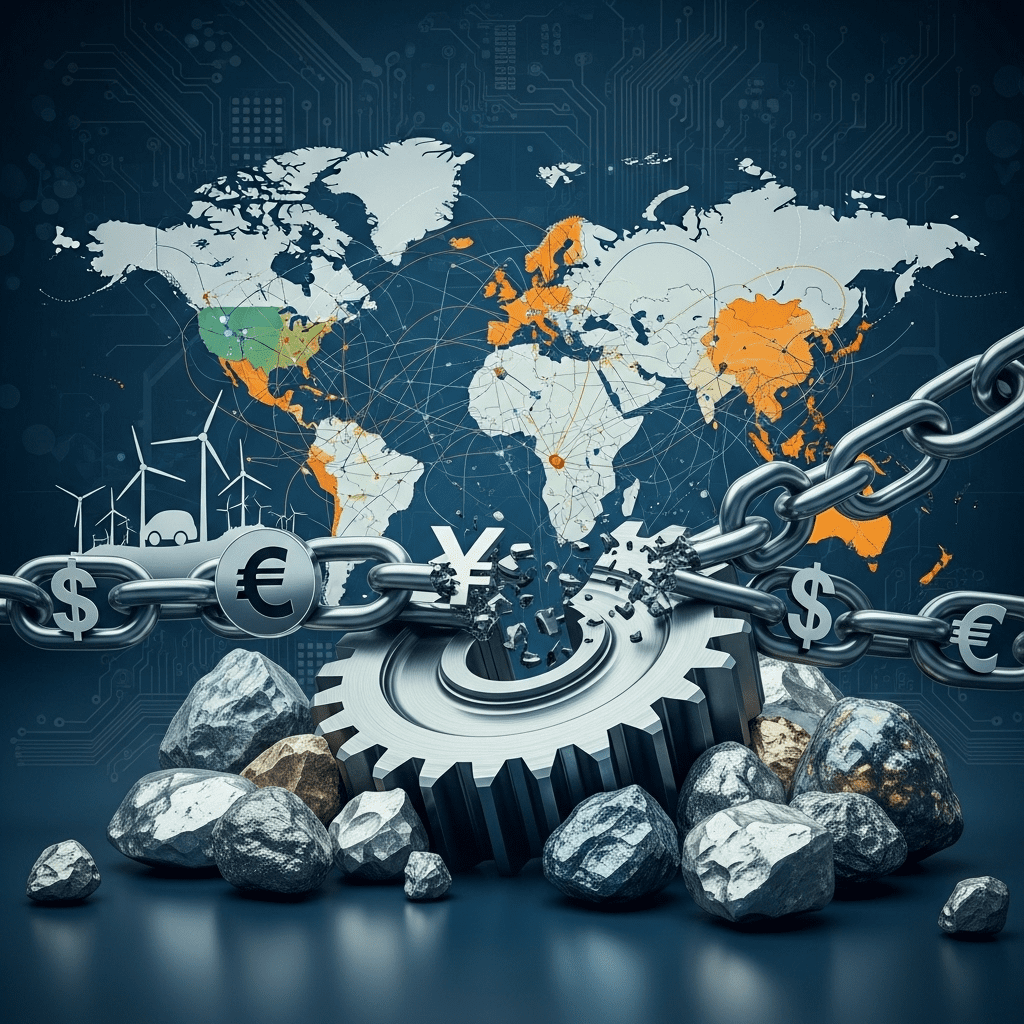
The real risks from China’s rare earths curbs are coming into sharp focus as global markets brace for fresh disruptions in 2025. China’s dominant position in rare earth minerals—vital for green energy, technology, and defense applications—has become a double-edged sword for economies and investors worldwide. As Beijing tightens export controls, the ripple effects threaten supply chains, cost structures, and economic strategies far beyond Asia.
Real Risks from China’s Rare Earths Curbs: A Critical Assessment
China supplies nearly 60% of globally mined rare earths and processes upwards of 85% of these minerals, making its export policies a linchpin in global manufacturing. The real risks from China’s rare earths curbs are multifaceted—encompassing direct supply shortages, price volatility, and a powerful reshaping of global trade balances. As 2025 approaches, Beijing’s strategic moves to curtail exports of certain heavy rare earths, citing national security concerns, are intensifying policy and market anxieties.
Strategic Sectors Under Pressure
Rare earths such as neodymium, dysprosium, and terbium are crucial for electric vehicles, wind turbines, smartphones, and advanced military technologies. China’s curbs have already led to material price surges—neodymium oxide climbed 15% in Q1 2024—and manufacturers in the U.S., EU, and Japan face difficult choices about reshoring supply chains or paying higher premiums. These dynamics put added stress on key growth sectors, including the clean energy transition and semiconductor fabrication.
Global Economic Impact and Supply Chain Vulnerabilities
The real risks from China’s rare earths curbs extend far beyond national interests. Countries dependent on Chinese exports are now grappling with supply chain fragility. According to the International Energy Agency (IEA), demand for rare earths could triple by 2030, further elevating market vulnerabilities. Disruptions can delay rollout of electric vehicles and renewable energy infrastructure, jeopardizing the ambitious net-zero targets set by major economies.
Responses and Resilience Strategies
Governments and corporations are diversifying supply and accelerating recycling programs, but progress is slow. The U.S. Department of Energy and European Commission have pledged billions to strategic mineral initiatives, yet building alternatives to China’s established processing capacity will take years. Partnerships, like Australia’s investments in Lynas Rare Earths and Japan’s supply agreements with non-Chinese producers, receive growing attention but cannot fully offset near-term risks.
Investment Outlook Amid Rare Earths Uncertainty
For investors, the real risks from China’s rare earths curbs mean heightened volatility and opportunities in critical minerals sectors. Analysts caution that price spikes could lead to speculative bubbles, while persistent shortages may make rare earth equities attractive for long-term portfolios. Prudent investment strategies require closely tracking policy shifts in Beijing, as well as global efforts to reduce dependence on Chinese rare earths. For further context on how geopolitical factors shape investment decisions, see ThinkInvest’s market risk analysis and recent commentary on emerging economies.
Long-Term Prospects: Innovation or Entrenchment?
The coming years will test whether the world’s response to China’s rare earths curbs fosters innovative alternatives or cements existing dependencies. The race to develop new extraction and processing technologies—such as ionic clay separation or deep-sea mining—offers both hope and controversy. Intellectual property, environmental standards, and regulatory regimes will shape the next phase of global competition. Ultimately, the real risks from China’s rare earths curbs underscore a broader imperative: building secure, transparent, and sustainable supply chains to support economic resilience in 2025 and beyond.




