




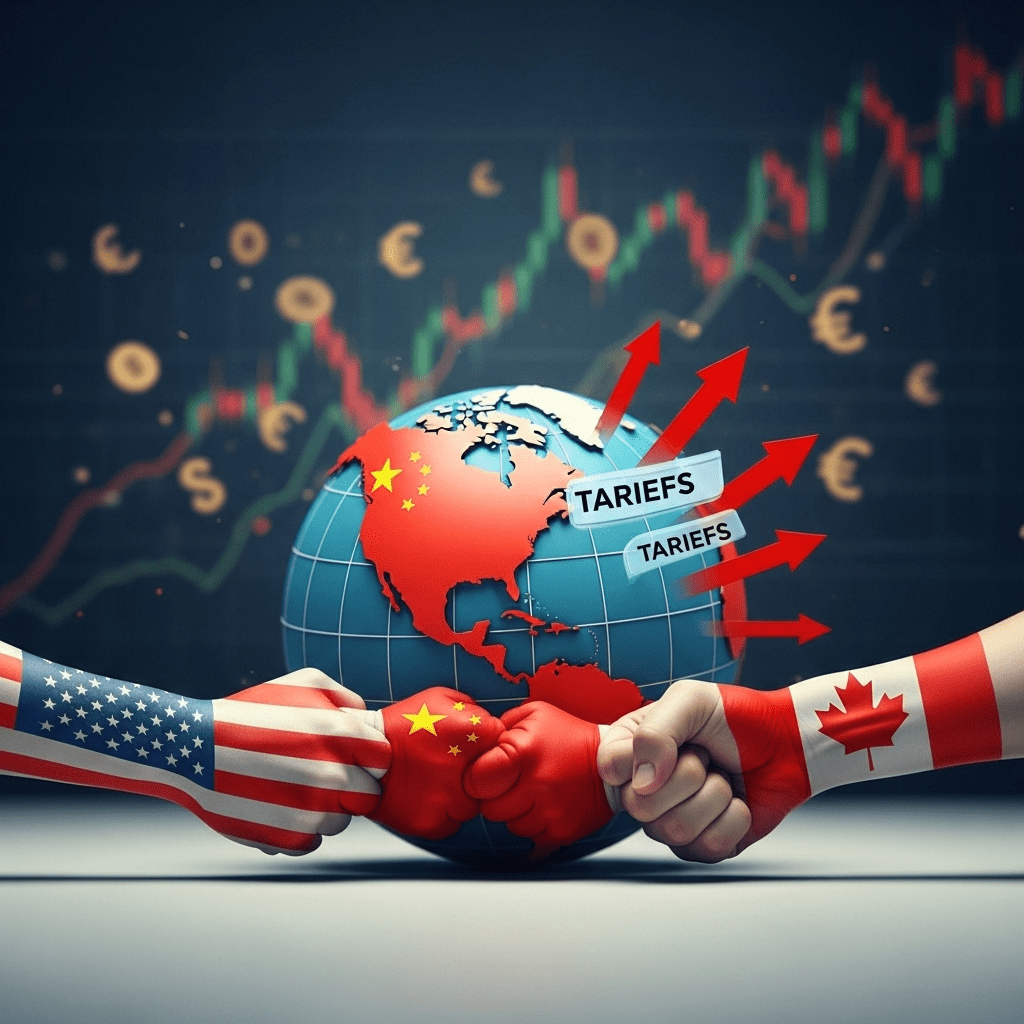
TL;DR: Trump clears way for new China tariffs and amplifies criticism of Canada, stirring market volatility and reigniting global trade tensions. Investors should prepare for potential sector impacts and heightened economic uncertainty heading into 2025.
What Happened
This week, Trump clears way for new China tariffs amid sharp comments targeting Canadian trade policy, marking an assertive turn in U.S. trade strategy. On Tuesday, the former president and leading 2024 Republican candidate unveiled a plan for sweeping tariffs on over $300 billion worth of Chinese imports, with rates reportedly set to increase as high as 60% on select categories such as semiconductors, EV batteries, and advanced technology components — up from the current 25% average imposed during his previous administration (source: Office of the U.S. Trade Representative).
Simultaneously, Trump criticized Canadian dairy and timber exports, arguing that Ottawa maintains “unfair trade barriers” detrimental to U.S. manufacturers and farmers. In remarks from a campaign stop in Ohio, he said, “We’re done letting China and Canada stack the deck against our workers. America is going to play to win.” The announcement sent S&P 500 futures down 1.2% in overnight trading while shares of major North American exporters slipped. For background, trade tensions between the U.S., China, and Canada had eased since 2021 but now face renewed escalation as 2025 approaches.
Why It Matters
Analysts see the renewed tariff measures as a pivotal inflection point for global markets and supply chains. According to the Peterson Institute for International Economics, higher tariffs threaten to disrupt $150 billion in annual goods flow between the world’s two largest economies. This move also arrives as U.S. inflation cools to 2.5% (down from a peak of 9.1% in 2022) and the Federal Reserve signals a steady rate environment through mid-2025.
Escalating trade friction with Canada could imperil the revised USMCA agreement, a pillar of North American commerce supporting $1.7 trillion in yearly trilateral trade (source: U.S. Census Bureau). Heightened trade barriers may weigh on manufacturing, agriculture, and auto supply chains — sectors crucial to the economic outlook profiled in recent investment insights. Market strategists warn that persistent volleying between the U.S., China, and Canada may fuel volatility, test international alliances, and challenge recent optimism over global growth (IMF projects 3.1% global GDP growth in 2025).
Impact on Investors
For investors, short-term volatility is likely across sectors exposed to international trade. U.S. industrials and consumer electronics (key tickers: CAT, HON, AAPL) may face higher input costs, while agricultural exporters could see decreased demand from retaliatory Chinese or Canadian tariffs. The Philadelphia Semiconductor Index (SOX) dipped 2.7% on the tariff news, underscoring supply chain worries. Market analysis suggests diversification and attention to domestic-oriented companies may soften downside risk.
On currencies, the U.S. dollar index (DXY) strengthened 0.6% on a flight-to-safety bid, while the Canadian dollar fell to a two-year low. Bond markets remain stable, but an escalation or drawn-out dispute could pressure U.S. Treasury yields if economic growth stutters. Long-term, some firms may benefit if onshoring accelerates domestic investment — especially in critical tech sectors and materials. See more about U.S. manufacturing trends on ThinkInvest’s industry coverage.
Expert Take
Analysts note that, while the policy aims to protect U.S. industries, it may also raise costs for downstream manufacturers and consumers. Market strategists suggest “investors should monitor policy clarity and company guidance, as the medium-term winners and losers will depend on sector exposure and supply chain flexibility.”
The Bottom Line
The latest move as Trump clears way for new China tariffs and intensifies rhetoric against Canada is poised to reshape trade dynamics and inject renewed uncertainty into global markets. Investors should stay alert to policy updates, consider risk adjustments, and watch for volatility across exposed sectors as 2025 progresses.
Tags: China tariffs, Trump 2025, Canada trade, global markets, supply chain risk.