





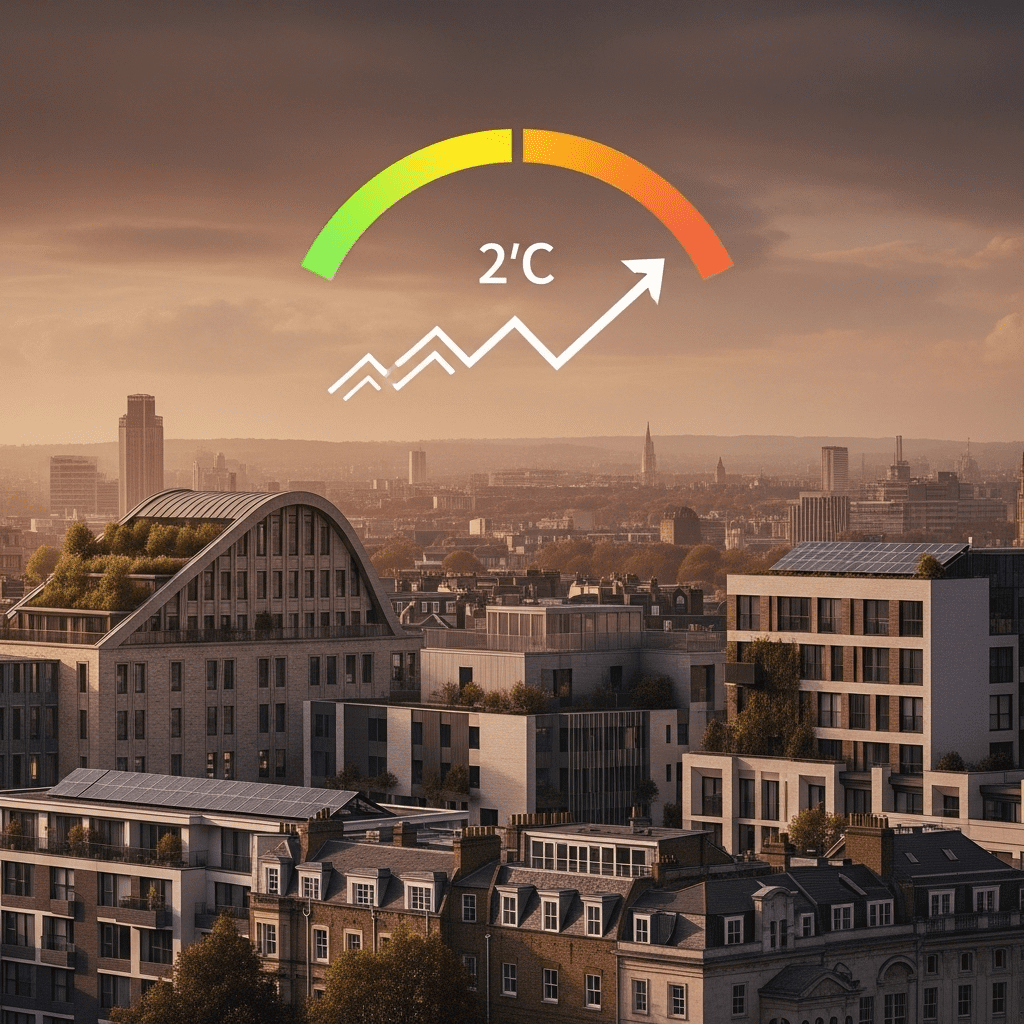
The urgent call that the UK must prepare buildings for 2C rise in global temperature is echoing throughout the energy sector, as investors, policymakers, and industry leaders come to grips with the mounting risks of climate change. With projections indicating that global warming could exceed the critical 1.5°C threshold by the early 2030s, British infrastructure faces unprecedented challenges—and opportunities—requiring immediate and strategic action.
UK Must Prepare Buildings for 2C Rise in Global Temperature: The Stakes for the Energy Sector
As the world edges closer to a 2C rise in temperature, UK buildings—responsible for approximately 20% of the nation’s carbon footprint—stand at the frontline of both risk and resilience. Climate adaptation is becoming not just a matter of public safety, but a crucial element in sustainable property investment. The government, advised by leading scientists and industry bodies, is being urged to revise building regulations to address future climate realities, ensuring that homes, offices, and public infrastructure can withstand extreme weather, higher energy demands, and changing environmental standards.
The UK's Committee on Climate Change (CCC) has repeatedly warned that building codes and retrofit incentives must evolve ahead of international climate targets. Recommendations include mandatory standards for insulation, smarter ventilation systems, heat-resilient building materials, and integration of renewable energy technologies. For investors, these requirements signal both risk—for stranded, non-compliant assets—and opportunity, as demand for green construction and energy efficiency solutions accelerates.
Implications for Investors and Real Estate Markets
For those seeking sustainable investment opportunities, the transition toward climate-resilient buildings is reshaping the UK’s property landscape. Buildings adapted for 2C global temperature rise—featuring high-performance insulation, solar panel integration, and advanced cooling systems—are commanding premiums in both rental and sales markets. Conversely, legacy properties that fail to meet emerging energy standards risk obsolescence, lower valuations, and higher insurance costs.
Institutional investors are increasingly factoring in climate adaptation measures as part of their ESG (Environmental, Social, and Governance) criteria. According to May 2024 data from the Global Sustainable Investment Alliance, assets following ESG strategies now make up over 40% of institutional portfolios in Europe, with UK-focused funds accelerating investments in retrofit projects and green building materials. These strategic adaptations align not only with environmental goals, but also with financial imperatives in a market where regulatory compliance is set to determine long-term asset value.
Government Policy: Driving Building Adaptation for Climate Resilience
Central to the drive for resilience is the government’s role in ensuring the UK must prepare buildings for 2C rise in global temperature. Regulatory interventions are currently being discussed, such as updating Part L and Part F of the Building Regulations to enforce higher standards for both new builds and retrofits. The focus extends to the social housing sector, where vulnerable populations are most exposed to the adverse effects of overheating and damp, as well as the commercial sector where energy inefficiency threatens business continuity.
The UK’s recently published Climate Resilience Framework (March 2025) outlines multi-billion-pound investments in flood defense, energy-efficient retrofits, and digital monitoring systems. In parallel, the Bank of England has included climate adaptation risk assessments as part of routine stress testing for major lenders, shaping the flow of capital allocation across the built environment.
Solutions: Resilient Design, Innovation, and Technology
A 2C warmer world demands innovation in building design and energy systems. Stakeholders are embracing passive cooling, dynamic facades, and advanced HVAC solutions to counteract the urban heat island effect. On-site renewable energy generation—solar PV, heat pumps, and thermal storage—is quickly becoming the norm for futureproofing developments against rising utility costs and stricter emissions criteria.
Technology providers are delivering specialized solutions, from AI-enhanced building management systems that optimize energy consumption, to climate modeling platforms that predict site-specific impacts. These advances not only provide resilience, but also generate value for forward-thinking investors who prioritize the intersection of climate risk and real estate strategy.
Navigating Risks and Capturing Opportunities in the Transition
The imperative that the UK must prepare buildings for 2C rise in global temperature is more than a compliance issue: it is a strategic inflection point for risk mitigation and value creation. Investors and developers who anticipate changing code requirements and shifting tenant expectations are best positioned to capitalize on government incentives, rising green asset premiums, and reduced exposure to climate-driven losses.
Meanwhile, collaboration between the public and private sectors is essential for bridging the investment gap in widespread retrofitting and resilience upgrades. Financial innovations—from green bonds for retrofit projects to blended finance models—are already being deployed to accelerate the pace of adaptation across both urban and rural property portfolios. For more on policy and market shifts, visit our finance and policy analysis section.
Outlook: The 2025 Investment Landscape
As global policymakers converge ahead of COP30, the message to the UK’s energy and property sectors is clear: adaptation is not optional. The ability to navigate regulatory shifts, harness technology, and mobilize capital toward resilient infrastructure will determine which companies lead in a future defined by a 2C rise in global temperature. For stakeholders at every level—from individual homebuyers to multinational asset managers—the time to act is now.