

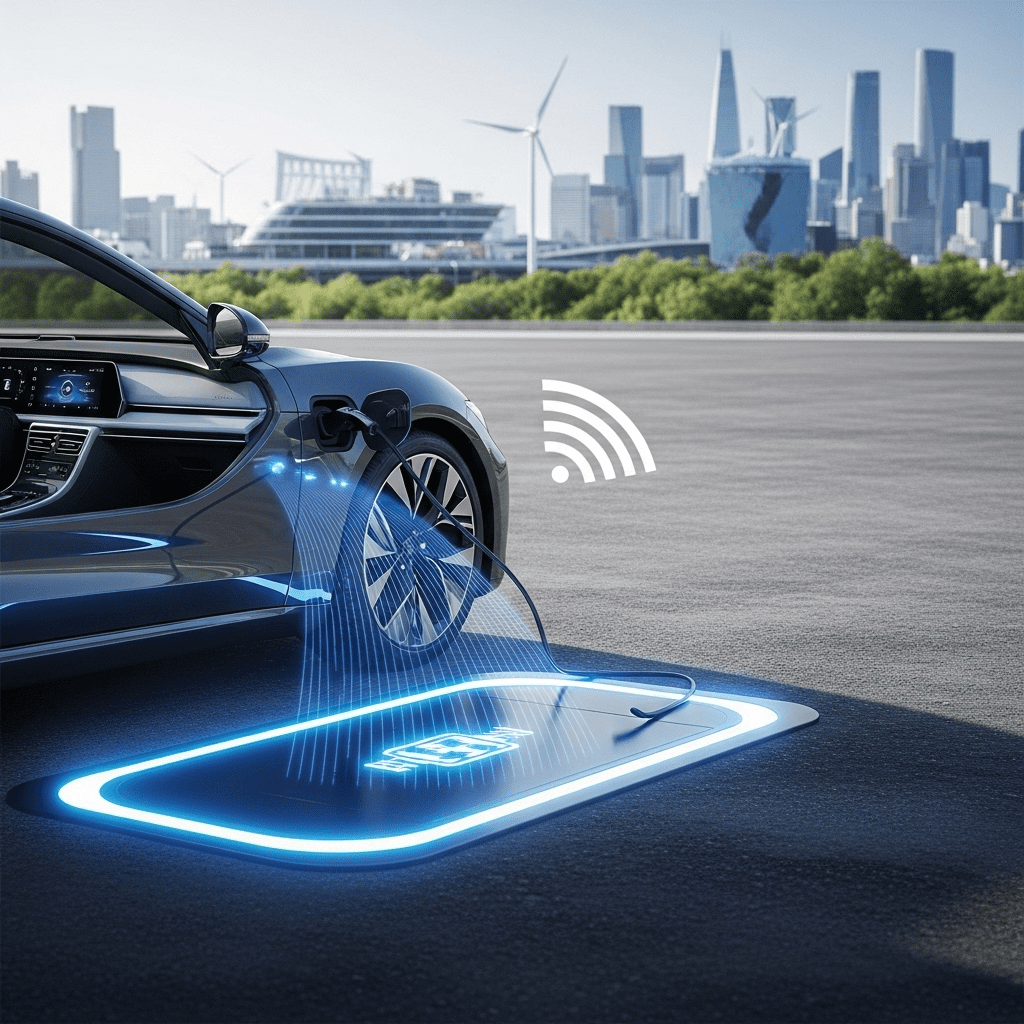
The electric vehicle (EV) revolution is accelerating faster than ever, and why automakers are racing to adopt wireless charging is a question driving strategic investments and groundbreaking advancements across the global auto industry. As the demand for efficient, user-friendly, and scalable EV infrastructure intensifies, wireless charging emerges as a transformative solution reshaping the future of energy and mobility.
Why Automakers Are Racing to Adopt Wireless Charging: Industry Drivers
The transition to electric mobility has introduced both opportunities and obstacles for automakers and energy stakeholders. Traditional plug-in charging stations, while effective, often present hurdles related to convenience, scalability, and urban space constraints. This is prompting industry leaders to double down on wireless charging systems—technology that enables vehicles to recharge simply by parking over charging pads embedded in the ground.
Major players like BMW, Hyundai, and Tesla are piloting next-generation inductive charging technologies, aiming to create a more seamless and efficient charging experience. The race is not just about brand differentiation; it’s a response to evolving consumer expectations, government mandates for zero-emission vehicles, and the urgent need for sustainable urban infrastructure.
Unlocking Competitive Advantages and Consumer Confidence
Automakers understand that range anxiety and charging hassle remain primary barriers to mainstream EV adoption. By implementing wireless charging, manufacturers can dramatically enhance convenience, reduce friction for drivers, and extend the lifespan of battery components—thanks to gentler, optimized charging cycles.
At the same time, wireless technology future-proofs vehicle design, allowing for better integration with urban smart grids and autonomous vehicle fleets. These advantages are compelling investors seeking long-term growth opportunities as the EV market matures.
Financial Impacts: Strategic Investment and Market Growth
The global wireless EV charging market is projected to exceed $5 billion by 2030, according to recent studies. Automakers and their suppliers are actively pursuing partnerships, prototyping, and IP acquisition in this space. For financial analysts and investors, the key is understanding how first-mover advantage in wireless charging can enhance market share, build loyalty, and justify premium pricing.
Technological advancements are also lowering the total cost of ownership for EVs. Reduced wear and tear from automated, cable-free charging minimizes maintenance expenses for fleet operators, further enhancing the return profile for institutional investors.
Integration with Renewable Energy and Smart Cities
Wireless EV charging doesn’t just enable convenience; it is integral to broader trends in sustainability and urbanization. By integrating with renewable energy sources and smart grid management systems, wireless charging can facilitate dynamic load balancing—critical for peak demand periods in cities scaling EV adoption.
Automakers racing to deploy this technology also position themselves as partners to municipal governments, real estate developers, and energy companies—a crucial strategy as cities invest in sustainable infrastructure projects and compete for innovation leadership.
Challenges and the Road Ahead for Automakers Racing to Adopt Wireless Charging
Despite its promise, wireless EV charging still faces technical, regulatory, and standardization hurdles. Issues such as charging efficiency, cost of infrastructure retrofitting, and interoperability must be resolved for mass adoption. Leading automakers are collaborating with tech startups and standards bodies to develop robust, future-proof protocols.
Policy support from local and national governments also plays a critical role. Markets that incentivize the rollout of smart charging infrastructure can catalyze adoption and provide competitive advantages for manufacturers that move quickly.
Conclusion: Strategic Implications for Investors and the Future of Mobility
Why automakers are racing to adopt wireless charging is fundamentally about tomorrow’s mobility ecosystem. As wireless charging transitions from pilot projects to widespread deployment, its financial, operational, and environmental benefits will reshape how investors, businesses, and consumers view energy and transportation.
Embracing wireless EV charging can yield substantial first-mover benefits in a rapidly evolving competitive landscape. For those seeking actionable investment insights, monitoring the rollout of wireless charging infrastructure should be a top priority as the energy and automotive sectors converge in 2025 and beyond.




