

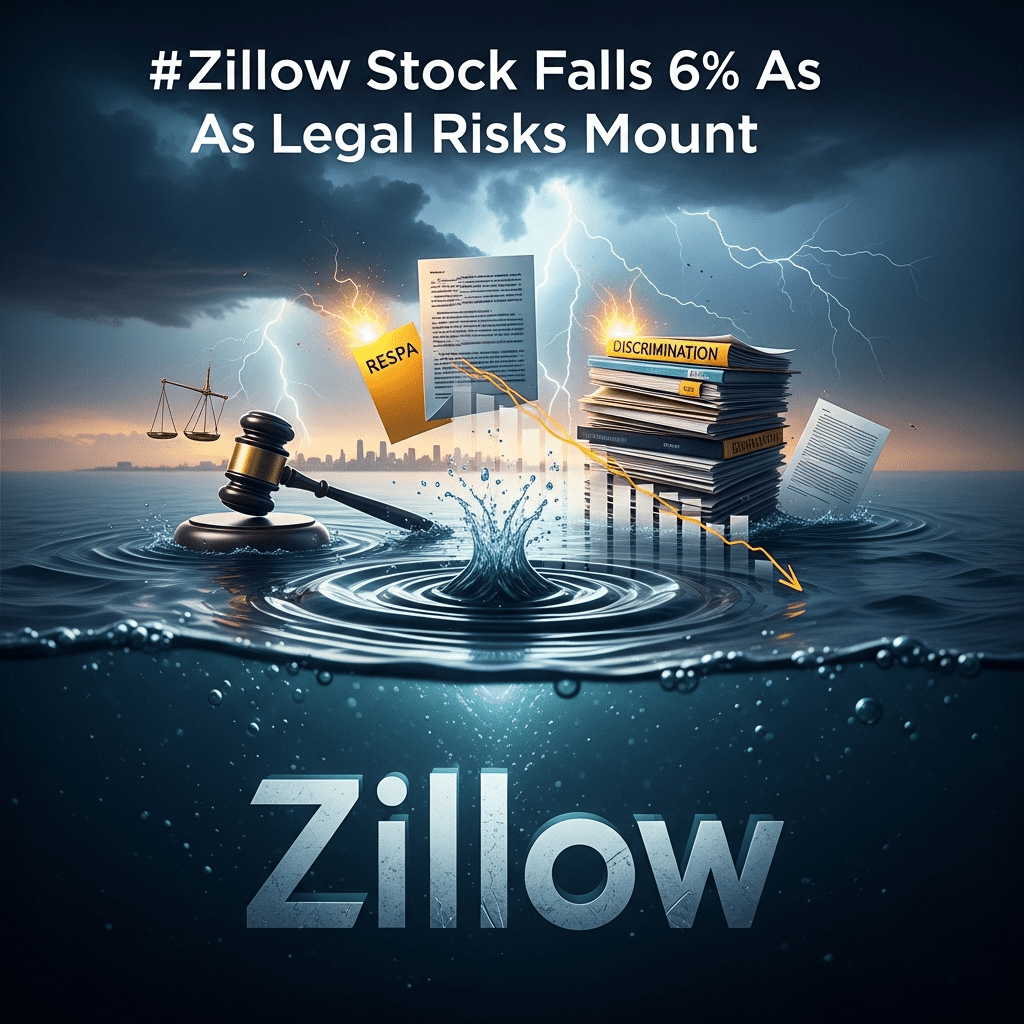
Zillow Group ($Z) revealed new regulatory scrutiny involving RESPA violations and job discrimination allegations, escalating its legal challenges and driving a 6.1% stock drop to $35.87 on November 11, 2025. The Zillow legal storm analysis signals broader risks for real estate investors as federal probes intensify and class actions mount.
Zillow Stock Falls 6% As Legal Risks Mount on Multiple Fronts
Zillow Group ($Z) shares tumbled 6.1% to $35.87 during early trading on November 11, 2025, following disclosures of an intensifying legal storm. The company confirmed it is under investigation by the Consumer Financial Protection Bureau (CFPB) for alleged RESPA (Real Estate Settlement Procedures Act) violations linked to its Premier Agent program, as stated in its November 8 SEC 10-Q filing. Simultaneously, new federal lawsuits allege systemic job discrimination, including a class action filed in late October 2025 claiming gender bias in recruitment and promotion. Zillow reported $517 million in Q3 revenue, but rising legal costs—already up 14% year-over-year—are raising concerns about possible impacts on 2025 earnings. (Sources: SEC Filings, Bloomberg, Reuters)
Why Heightened Legal Scrutiny Is Reshaping Real Estate Stocks
The surge in regulatory action against Zillow echoes a wider clampdown sweeping the real estate sector. CFPB enforcement actions across the industry have jumped 21% year-over-year according to a September 2025 Mortgage Bankers Association report, with major brokerages like Redfin ($RDFN) and Compass ($COMP) facing parallel probes. The heightened legal scrutiny has pressured sector valuations: the FTSE NAREIT All Equity REITs index is down 8.4% year-to-date as of November 10, 2025. Broader macro factors—such as the 75 basis-point rise in mortgage rates since January 2025—have compounded sector stress. Industry analysts warn that lingering regulatory uncertainty may constrain transaction volume and margin growth heading into 2026. (Sources: MBA, FTSE Russell, Bloomberg)
How Investors Should Navigate Zillow and Sector Volatility Now
Investors exposed to Zillow and peer real estate equities face distinct risks and opportunities in the wake of these legal headwinds. Short-term traders betting on volatility have seen above-average daily volumes, with Zillow trading 18 million shares on November 10, nearly twice its 90-day average (Yahoo Finance). Long-term investors may weigh portfolio rebalancing to mitigate exposure, especially as ongoing regulatory actions threaten sector-wide profitability. Given rising compliance and litigation costs, those focused on real estate ETFs should monitor sector holdings for legal risk concentrations. For diversification, some investors are rotating toward financials and technology, which have outperformed real estate by 12% and 17% YTD, respectively, according to Goldman Sachs research. For ongoing sector movements, stock market analysis and latest financial news can provide deeper insights into evolving risks.
What Analysts Expect Next for Real Estate Legal Risks
Market consensus suggests regulatory and legal overhang will persist into 2026, creating headwinds for valuation recovery across real estate equities. Investment strategists at Evercore ISI and Jefferies note that historical precedent—such as the 2015 CFPB settlements with mortgage servicers—demonstrates prolonged market impact from major compliance probes. Industry analysts observe that new compliance burdens could shave 2-3 percentage points off net operating margins at leading platforms like Zillow ($Z) if current litigation trends hold.
Zillow Legal Storm Analysis Signals New Era for Sector Investors
The Zillow legal storm analysis suggests investors should brace for an extended period of heightened sector scrutiny and volatility. Continued monitoring of regulatory actions, settlement outcomes, and litigation costs will be critical heading into 2026. Proactive portfolio management and close attention to legal developments may offer an edge as real estate stocks face unprecedented legal and operational risk.
Tags: Zillow,$Z,RESPA,real estate,regulatory risk




