




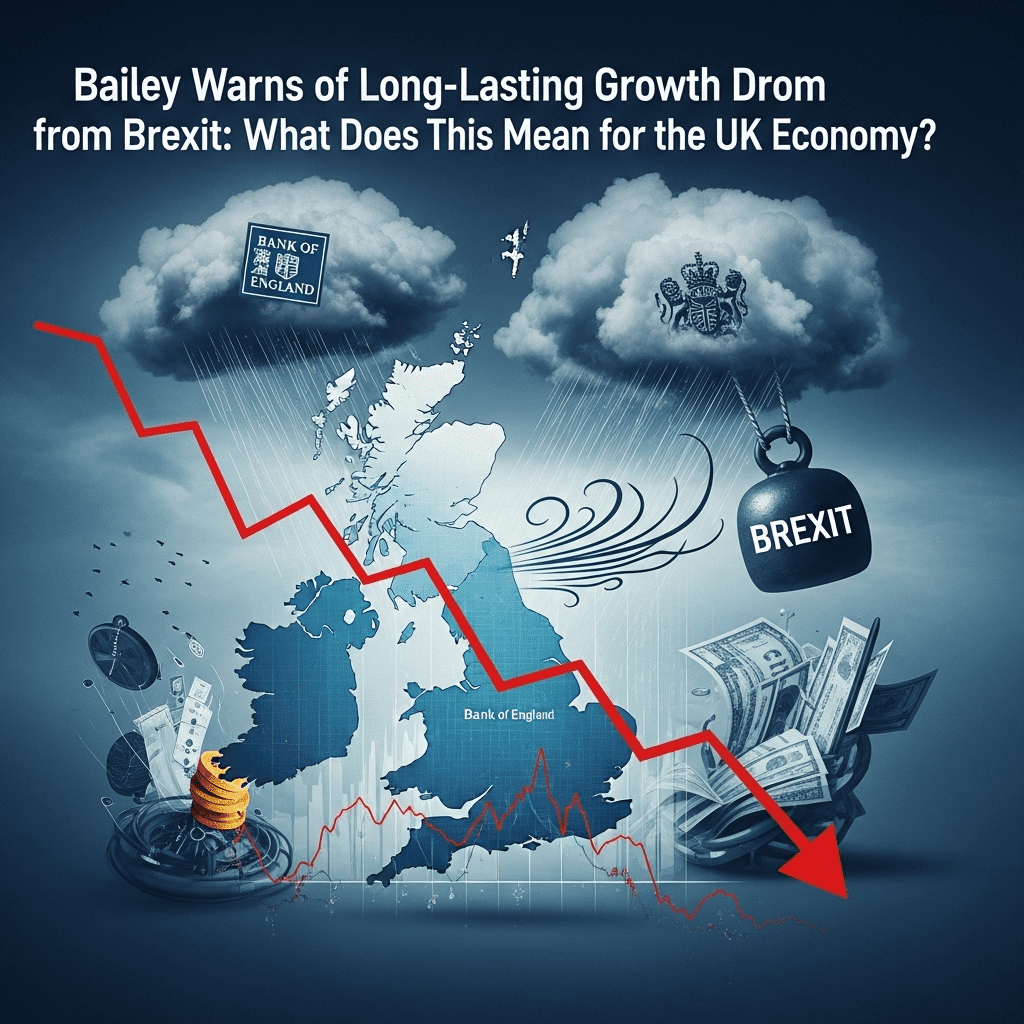
In a recent address, Bank of England Governor Andrew Bailey warned of long-lasting growth drag from Brexit, highlighting rising concerns over the UK’s economic outlook into 2025. As policymakers and investors assess the nation’s prospects, Bailey’s remarks underscore the enduring headwinds that Brexit continues to pose for the UK economy.
Bailey Warns of Long-Lasting Growth Drag from Brexit: What Does This Mean for the UK Economy?
Governor Bailey’s assertion that Brexit’s economic impact will persist well beyond the immediate aftermath of the UK’s EU departure comes at a critical juncture. With inflation stabilizing and monetary tightening cycles nearing their end, structural concerns about UK productivity and investment have become more pronounced.
According to Bailey, persistent trade barriers, regulatory divergence, and frictions in labor mobility have contributed to a sustained drag on growth potential. “The effects of Brexit are likely to be felt across multiple sectors for years,” Bailey stated, pointing to subdued foreign direct investment and moderation in export growth as core symptoms.
These long-term challenges come in tandem with widespread macroeconomic uncertainty, from shifting global supply chains to weak business sentiment across Europe and beyond. While the Bank of England continues to closely monitor monetary policy decisions, Bailey’s comments serve as a stark reminder that monetary tools may not fully offset the lasting consequences of Brexit-induced economic realignment.
How Has Brexit Impacted UK Growth?
Economic data published by the Office for National Statistics (ONS) and several independent bodies reinforces Bailey’s remarks. Since the Brexit referendum in 2016, the UK’s GDP growth has consistently lagged behind peers such as Germany, France, and the U.S. Initial disruption was expected, but a deeper analysis reveals ongoing hurdles: export volumes remain below pre-Brexit trends, while key industries—manufacturing, financial services, and agriculture—report continued strain from customs bottlenecks and altered regulatory frameworks.
Additionally, the UK has experienced a notable decline in productivity growth. According to a 2024 report from the Institute for Fiscal Studies (IFS), Brexit has led to a nearly 5% reduction in trade intensity, while business investment remains suppressed. The labor market, although resilient in headline figures, is confronting skills shortages partially attributed to tighter post-Brexit immigration rules and reduced access to EU talent pools.
Policy Options: What Can Be Done in Light of Bailey’s Warning?
As Bailey warns of long-lasting growth drag from Brexit, policymakers face tough choices. While some advocate for renewed efforts to deepen bilateral ties with European partners and streamline customs protocols, others argue for greater emphasis on domestic dynamism—increasing support for innovation, skills development, and regional investment.
The Treasury has signaled intent to explore targeted tax incentives and infrastructure improvements. At the same time, business leaders are urging the UK government to resolve lingering uncertainties over regulatory alignment, especially in critical sectors like pharmaceuticals, digital technology, and green energy. These steps could help mitigate the Brexit burden and restore investor confidence, both at home and abroad.
Meanwhile, the Bank of England stresses the importance of clear communication and transparency. Monetary policymakers continue to weigh inflation risks against the need to nurture fragile growth, especially as the global economic environment remains volatile in 2025.
Investor Perspectives and Market Reaction
From an investment perspective, Bailey’s warnings have prompted renewed interest in risk assessment for UK assets. Investors are increasingly looking for economic updates and sectoral analysis to navigate the evolving landscape. Sterling has exhibited modest volatility as market participants digest the prospect of a prolonged period of sub-trend growth, while UK-listed companies with heavy European exposure face fresh scrutiny.
For portfolio managers and analysts, the emphasis is on identifying sectors most insulated from Brexit frictions, such as technology, renewable energy, and healthcare. Additionally, the resilience of the UK’s world-renowned universities and innovation hubs remains a bright spot for long-term growth, despite the broader challenges highlighted by Bailey’s speech.
Navigating Uncertainty in the Post-Brexit Era
As “Bailey warns of long-lasting growth drag from Brexit” becomes a pivotal theme for policymakers, businesses, and investors alike, strategic adaptation and flexibility are paramount. Whether through renewed trade negotiations, targeted fiscal measures, or continued innovation incentives, the UK’s response to Brexit’s enduring economic drag will shape its fortunes well beyond 2025.
For the latest analysis, policy trends, and investment insights in a fast-moving global economy, industry professionals continue to monitor how the UK navigates these structural headwinds. Bailey’s warning, rooted in credible data and decades of economic stewardship, reinforces the need for proactive leadership—both fiscal and monetary—to counterbalance the persistent shadow cast by Brexit.