






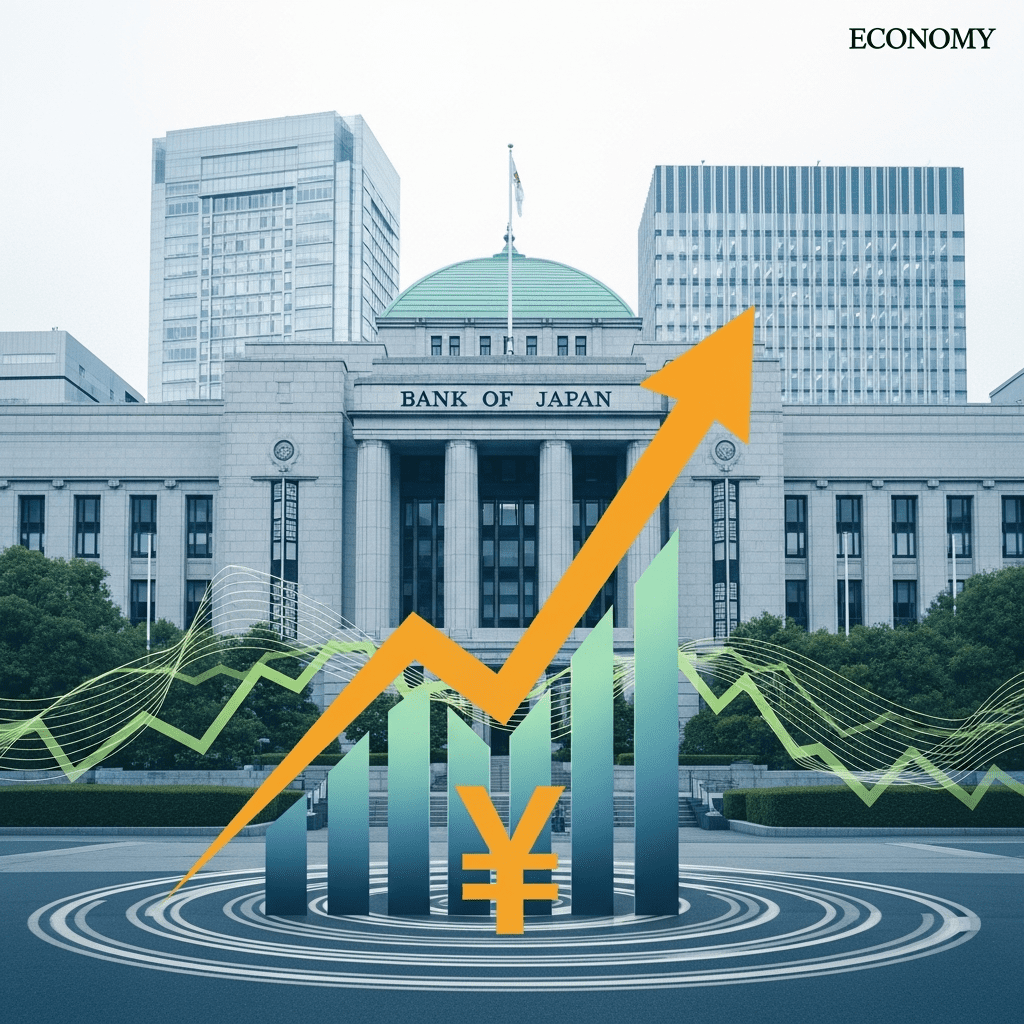
The Bank of Japan ($8301.T) revealed fresh signals of a potential BOJ December interest rate hike, catching markets off guard as the yen surged 1.3% to 148.92 per USD on Monday. This rare hawkish turn follows a prolonged period of negative rates—will the BOJ finally act this December?
BOJ Policy Minutes Point to Rising Odds for December Rate Move
The latest Policy Board summary, published on November 9, indicates that several BOJ officials are increasingly concerned about rising wage inflation and persistent price pressures. According to Reuters, two board members specifically advocated for raising rates “without delay if data justify.” The Japanese yen climbed sharply on the news, gaining 1.3% to 148.92 per US dollar by midday trading in Tokyo on November 10, reflecting investor repositioning in response to the summary. Notably, 10-year Japanese government bond yields rose to 0.969%, the highest level since 2012, per Bloomberg data. ($8301.T shares closed at ¥3,643, up 0.6% following the release.)
How BOJ’s Policy Shift May Impact Global Currency and Bond Markets
The prospect of a December interest rate hike from the Bank of Japan has broad implications for both currency and global bond markets. A surprise tightening in Japan could encourage yen repatriation, pressuring the US dollar, euro, and other G10 currencies. In recent months, global investors increased holdings in Japanese equities and sovereign debt, with foreign share purchases totaling ¥2.4 trillion in October according to the Tokyo Stock Exchange. A shift in BOJ policy may also lead to higher yields across global fixed income, as Japanese buyers seek domestic returns over US Treasuries or European bonds. Meanwhile, Asian regional markets are bracing for volatility; the MSCI Asia Pacific Index shed 0.9% following the BOJ’s unexpectedly hawkish tone. (Source: Bloomberg, TSE data)
How Investors Should Position For a BOJ December Rate Hike
Portfolio managers and currency traders are actively reassessing positions ahead of a potential BOJ December interest rate hike. Investors exposed to FX carry trades—where funds are borrowed in yen and invested in higher-yielding assets—may face sudden reversals if the yen continues its ascent. Hedging strategies across currency derivatives are recommended, particularly for those with exposure to Japanese imports or overseas Japanese assets. Financials, especially Japanese banks ($8411.T), could benefit from a normalization of interest rates, while exporters may encounter margin pressure as the yen strengthens. For broader context on rate decisions impacting currency markets, see forex trading insights and latest financial news. Investors should also watch the investment strategy section for timely analysis on central bank pivots worldwide.
What Analysts Expect Next for BOJ and the Japanese Yen
Most institutional analysts now place 40-50% odds on a December hike by the Bank of Japan, citing sticky inflation data and robust wage growth as main catalysts. Japanese core CPI rose 2.6% year-on-year in September, above the BOJ’s 2% target for the 18th consecutive month (Source: Japan Statistics Bureau, October 2025). Industry observers note that strong labor unions secured another round of wage increases last quarter, further emboldening policymakers. Market consensus suggests a “live” meeting in December, where communication from Governor Ueda will be crucial in setting the tone for 2026.
BOJ December Interest Rate Hike Signals Volatility for Global Markets
With the BOJ December interest rate hike scenario gaining traction, investors should prepare for heightened volatility in FX and fixed income markets. Key events to monitor include Japan’s Q4 inflation report, upcoming wage negotiations, and G7 central bank commentary. The focus keyphrase “BOJ December interest rate hike” will remain at the heart of market-watchers’ search queries in the weeks to come. Prudent risk management and agile strategy adjustments will be essential as the BOJ meeting approaches.
Tags: BOJ, 8301.T, interest rates, yen, forex