




What Happened
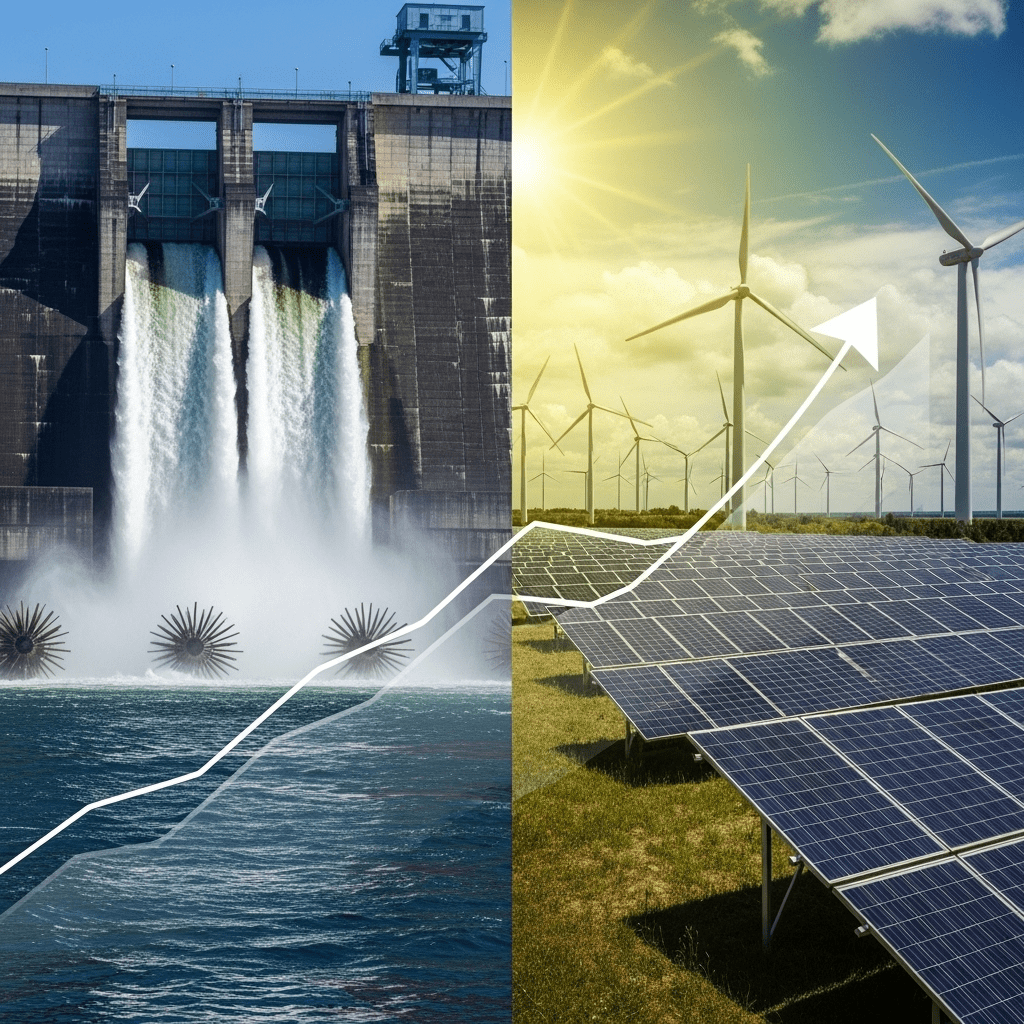
In 2025, “U.S. hydropower compete” has become a pressing question as federal energy data reveals the sector’s growth has plateaued even as solar and wind installations reach all-time highs. According to the U.S. Energy Information Administration (EIA), hydropower accounted for roughly 6.1% of total U.S. electricity generation in 2024, declining marginally from previous years as large new hydro projects remain rare and capacity additions are minimal. Meanwhile, solar and wind crossed a combined 25% share for the first time, buoyed by federal incentives and state policy mandates. In Congressional testimony this spring, National Hydropower Association CEO Malcolm Woolf emphasized, “Hydropower modernization projects are struggling to attract sufficient investment compared to wind and solar, given regulatory hurdles and limited government support.” (Source: EIA, National Hydropower Association, Bloomberg Green)
Why It Matters
The debate over whether U.S. hydropower can compete in the new energy era has far-reaching implications for the country’s energy portfolio and climate objectives. Hydropower’s dispatchable generation is valued for its grid stability, providing critical on-demand support as intermittent renewables expand. However, the sector faces aging infrastructure—some plants are over 50 years old—and challenging relicensing requirements. Meanwhile, the Inflation Reduction Act’s (IRA) incentives favor solar, battery storage, and wind, leading to a record $82 billion in private clean energy investment during 2024 (Reuters). Analysts warn that without policy parity and modernization funding, hydropower may lose further ground, complicating the nation’s broader decarbonization strategy and potentially leading to increased reliance on natural gas during peak demand.
Impact on Investors
For investors, the question of “U.S. hydropower compete” directly shapes outlooks for listed utilities, infrastructure funds, and renewable energy portfolios. Utilities with significant hydro assets—such as Duke Energy (DUK), Brookfield Renewable Partners (BEP), and NextEra Energy (NEE)—have pivoted toward solar and wind in new capital deployment. S&P Global analysts note, “Legacy hydropower remains profitable but offers limited near-term growth; the market prefers growth sectors like solar-plus-storage.” The regulatory uncertainty and slow permitting process for hydro upgrades add to risk, though hydro remains attractive for its grid-balancing role. Investors seeking inflation-hedged returns may favor hydro-linked bonds or green infrastructure ETFs with diversified renewable exposure. For comparative perspectives and diversification ideas, readers may reference investment insights and recent market analysis on energy transition themes. Policy changes tied to the 2024 election outcome could shift the calculus further, with bipartisan proposals on the table for expedited hydro relicensing.
Expert Take
Analysts note that hydropower’s competitive position relies on modernization investments and regulatory reforms to streamline relicensing. Market strategists suggest that unless hydropower can unlock fresh capital and policy support, its role may continue to diminish relative to solar and wind.
The Bottom Line
U.S. hydropower’s future hinges on its ability to compete in a rapidly changing energy landscape dominated by solar and wind growth. For now, the sector remains a vital grid resource but faces headwinds from regulatory barriers and aging assets. Investors should monitor policy developments and utility capital allocation trends—accessing up-to-date perspectives via clean energy coverage—as the role of hydropower is reassessed in America’s energy transition.
Tags: U.S. hydropower, renewable energy, electric utilities, energy transition, investor analysis.