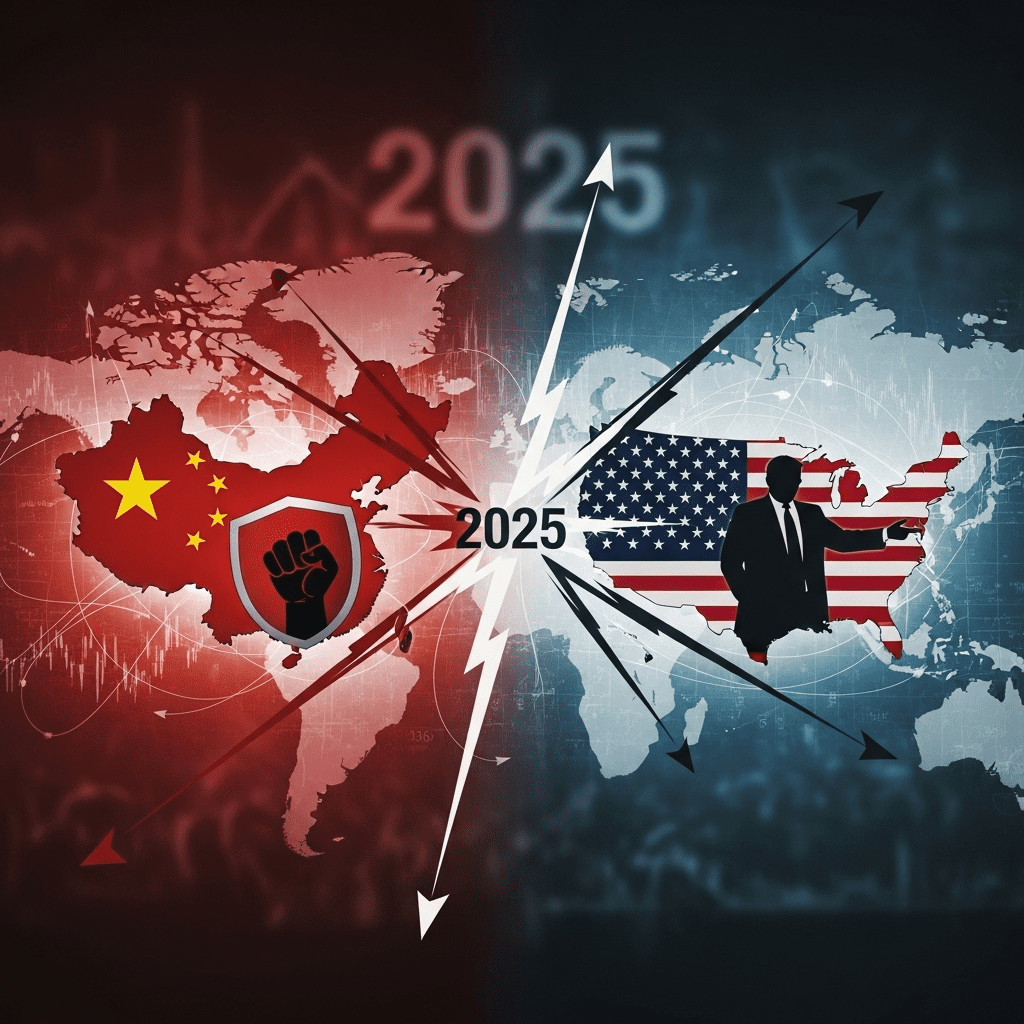
Amid fresh rounds of tariffs and renewed diplomatic tensions, China blames Trump and US for escalating trade war, marking a significant turning point for the global economy in 2025. As the rhetoric intensifies and both sides implement stricter trade barriers, investors and policymakers worldwide are reevaluating their strategies in light of mounting uncertainty.
How China Blames Trump and US for Escalating Trade War
Chinese authorities have publicly accused former President Donald Trump and the United States of igniting a new wave of economic conflict. At the heart of these claims are recent US policies that have revived sanctions, imposed new tariffs on Chinese imports, and targeted strategic sectors like technology and renewable energy. Beijing’s Ministry of Commerce issued a pointed statement in June 2025, asserting that “continued provocations and unilateral measures from Washington” have left China with no choice but to respond in kind.
The renewed focus on confrontation has rattled global markets. Economic analysts on global growth forecasts highlight that escalating tariffs could shave significant points off both US and Chinese GDP, with ripple effects for supply chains and multi-national companies. China’s criticism also emphasizes Trump-era policies—such as restrictions on Chinese tech firms and aggressive intellectual property enforcement—as direct causes of today’s trade friction.
Global Economic Implications of Escalating Trade Tensions
The widening rift between the world’s two largest economies comes at a time when global recovery remains fragile. Economists warn that sustained escalation may trigger inflationary pressures, disrupt commodity markets, and affect emerging economies reliant on Sino-American trade. Supply chain dislocation, previously seen during the earlier phases of the trade war, is making a strong comeback, impacting sectors from semiconductors to agriculture.
Many investment managers are now advising caution, stressing the importance of diversification and monitoring exposure to affected sectors. Diversified portfolios that include non-US and non-China equities, according to recent investment insights, could offer a buffer against volatility caused by unpredictable policy shifts.
China’s Strategic Response to US Policies
As China blames Trump and US for escalating trade war policies, the nation is simultaneously intensifying its own strategic countermeasures. In 2025, Beijing has announced additional tariffs on high-value US exports, increased regulatory checks for American firms operating in China, and accelerated its “dual circulation” strategy, aiming to boost domestic consumption and innovation. This push aligns with China’s longer-term goal of achieving greater self-reliance, especially in technology and critical industries.
Trade analysts note that China is also exploring deeper commercial relationships with the European Union, ASEAN nations, and Middle Eastern partners to mitigate US-centric risks. This pivot reflects a broader trend toward regionalization, which may redefine global trade patterns for years to come.
Impact on Investors and Global Markets
As the economic stand-off intensifies, global markets are exhibiting heightened volatility. Investors are watching for policy announcements and trade negotiations, as stock indices across Asia, the US, and Europe fluctuate in response to each development. The persistent uncertainty underscores the importance of tracking macroeconomic signals and maintaining up-to-date knowledge of the best investing strategies for 2025.
Emerging markets with less exposure to US-China flows may become relative safe havens, while sectors such as manufacturing, logistics, and technology remain particularly vulnerable. Additionally, currency fluctuations between the US dollar and Chinese yuan are expected to influence commodity prices and cross-border capital movements.
Prospects for Resolution and Future Outlook
Despite the heightened rhetoric, experts caution against assuming that either the US or China is seeking a complete economic decoupling. Some international trade observers believe that political motivations, including electoral cycles in both countries, partially drive the public blame game. There is consensus, however, that the tone and substance of US-China relations under the shadow of the Trump legacy will shape investment climates for the foreseeable future.
Efforts by regional blocs—such as the Comprehensive and Progressive Agreement for Trans-Pacific Partnership (CPTPP) and the Regional Comprehensive Economic Partnership (RCEP)—may offer alternative frameworks for commercial engagement, buffering the blow for some affected nations. Looking ahead, investors and policymakers worldwide will need to closely monitor developments, adapt to new realities, and leverage timely analysis on platforms like ThinkInvest.org for well-informed decision making.
Conclusion
The fact that China blames Trump and US for escalating trade war highlights the enduring challenges of geopolitical rivalry in a multipolar world. As both nations double down on strategic responses and economic nationalism rises, global markets face a critical juncture. Active risk management, broader diversification, and reliance on credible financial sources remain key for navigating the unpredictability in 2025’s economic landscape.