




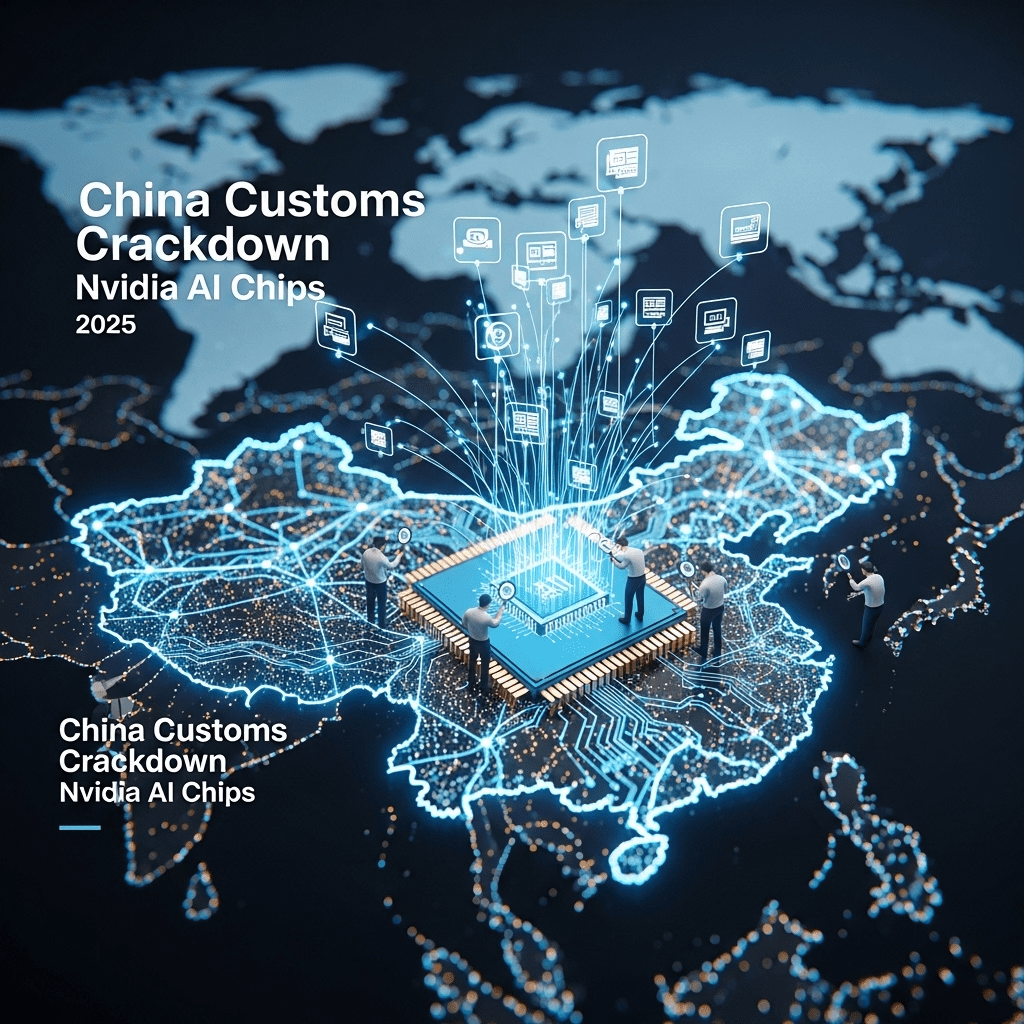
Amid escalating global tech competition, China launches customs crackdown on Nvidia AI chips, signaling intensified efforts to regulate advanced semiconductor imports in 2025. This move is set to reverberate across international supply chains and provoke shifts in economic strategy for technology, manufacturing, and investment sectors worldwide.
China Launches Customs Crackdown on Nvidia AI Chips: A Turning Point in Tech Trade
The announcement that China launches customs crackdown on Nvidia AI chips marks a significant escalation in the ongoing battle for dominance in the artificial intelligence (AI) technology sector. Under new regulatory guidelines, Chinese customs authorities are scrutinizing imports of advanced graphics processing units (GPUs) and AI accelerators, particularly those produced by Nvidia—a leader in AI chip technology.
This measure arrives as tensions between the U.S. and China continue to intensify around technology access and intellectual property. Nvidia’s chips power many of the world’s most sophisticated AI applications, ranging from cloud computing to autonomous vehicles. With China representing one of the largest markets for semiconductors, the crackdown presents both logistical challenges and strategic obstacles not only for Nvidia but for the broader global tech ecosystem.
Drivers Behind China’s Latest Semiconductor Controls
China’s decision to target Nvidia’s AI chips is rooted in multiple priorities. First, it seeks to bolster its domestic semiconductor industry by limiting foreign competition and encouraging local alternatives. Second, Beijing is responding to recent U.S. export restrictions on advanced chips by attempting to tighten its control over which technologies enter the Chinese market.
According to sector analysts, the timing is hardly accidental: China’s government aims to accelerate self-sufficiency in AI and chip manufacturing, aligning with its “Made in China 2025” initiative. Meanwhile, global investors should note that this policy shift also creates uncertainty for multinational firms reliant on China-based electronics manufacturing. For more in-depth market analysis, investors are advised to monitor policy developments closely.
Global Economic Implications of China’s Nvidia AI Chip Crackdown
China launches customs crackdown on Nvidia AI chips at a critical juncture in the global semiconductor supply chain. Nvidia, along with its suppliers and customers, must now grapple with longer customs delays, the risk of confiscations, and potential blacklisting of key products.
This regulatory tightening could reshape regional supply chain dynamics. For manufacturers in Taiwan, South Korea, and the United States, the move poses the risk of revenue loss and supply disruptions. In turn, this could prompt businesses to diversify their supply bases—a trend economists have termed “de-risking.” Meanwhile, investors seeking emerging opportunities in AI and semiconductors should weigh both the regulatory risks and long-term demand trends.
Potential for Innovation and Domestic Growth in China
While the crackdown creates immediate challenges for foreign chipmakers, it also presents opportunities for local Chinese tech firms. Companies such as Huawei and SMIC may accelerate the development of competitive AI chips, fueled by government support and market demand. Over the long run, this could reduce China’s dependence on foreign technology and spur investment in next-generation AI solutions.
Investment and Strategic Risks in the Semiconductor Market
As China launches customs crackdown on Nvidia AI chips, the investment landscape for semiconductors is rapidly evolving. Market volatility is likely, particularly for companies with significant exposure to Chinese demand or supply chains. Risk analysis should include consideration of tariff increases, regulatory unpredictability, and shifts in consumer behavior resulting from tech nationalism.
International businesses and institutional investors would benefit from tactical diversification and updated scenario planning. Detailed investment insights are essential in preparing portfolios for ongoing disruptions in the global tech sector in 2025.
Outlook for Technology, Trade, and AI Leadership
The crackdown underscores an ongoing realignment in global technology leadership. As China launches customs crackdown on Nvidia AI chips, firms and investors face new uncertainties but also new possibilities, especially regarding cross-border partnerships and the evolution of AI capabilities.
In conclusion, ongoing vigilance, agile strategy, and robust research will be critical for navigating the changing landscape of global trade and technology policy in 2025 and beyond.