




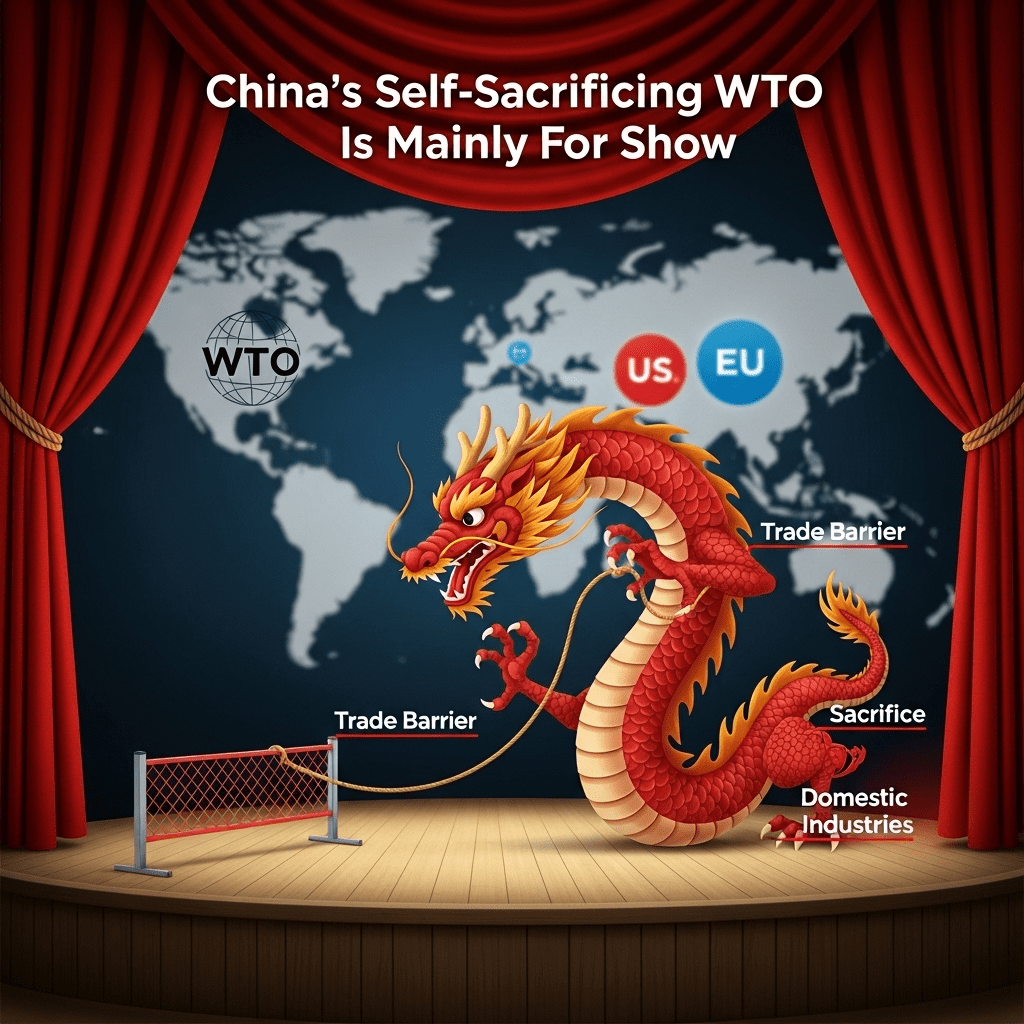
Since late 2024, headlines have buzzed with the assertion that China’s self-sacrificing WTO gambit is mainly for show. As diplomatic tensions persist and trade policies evolve, the world is watching to discern whether China’s bold gestures at the World Trade Organization signal meaningful change or simply a calculated performance.
The Strategy Behind China’s Self-Sacrificing WTO Gambit Is Mainly For Show
China’s current approach with the WTO reflects a shift in both tone and substance. By projecting an image of sacrifice—lowering certain trade barriers and making limited concessions—China appears to be taking steps that would ostensibly benefit global commerce at its own expense. However, a closer look reveals that these moves often come with carefully crafted exceptions and opt-outs that protect key domestic industries. Analysts argue this is less about genuine economic pain and more about shaping China’s international image and gaining leverage amidst trade disputes.
Understanding the WTO Arena in 2025
The World Trade Organization, a crucial arbiter of international trade rules, is a stage where nations continuously negotiate the balance between self-interest and collective gain. In 2025, the geopolitical climate is intensely competitive, with the United States and the European Union scrutinizing China’s compliance with both the spirit and the letter of WTO agreements. Within this context, any action—especially one described as “self-sacrificing”—is met with skepticism by global stakeholders and financial analysts alike. For investors monitoring emerging trends, insights from platforms such as ThinkInvest can provide valuable context on the real motivations and likely outcomes.
Dissecting the Motives: Performance Over Policy?
The Power of Optics in International Relations
China’s self-sacrificing narrative serves several strategic purposes. First, it counters accusations of protectionism, helping Beijing deflect criticism from major trading partners. Second, it positions China as a leader willing to prioritize global stability—enhancing its credentials in multilateral negotiations. This approach also appeals to developing economies searching for a champion among major powers. However, the tangible economic impact of these moves tends to be modest. Behind the curtain, China often ensures minimal disruption to vital sectors like technology, energy, and agriculture by leveraging loopholes within WTO frameworks.
Short-Term Sacrifice, Long-Term Gain?
While superficially conceding on less critical fronts, China strengthens its hand for negotiations on issues that matter most domestically. A well-timed gesture can earn diplomatic goodwill or dissuade potential trade penalties. For global investors and policymakers, separating performance from policy is essential when interpreting China’s actions. Resources studying economic indicators and market sentiment, such as ThinkInvest, become indispensable in seeing through the theatrics.
Consequences for the Global Economy
What does this gambit mean for the wider world? Firstly, it complicates efforts to reform the WTO, adding another layer of distrust among major trading blocs. While China’s actions might momentarily ease tensions, they rarely address core issues such as intellectual property rights, state subsidies, and market access. The lack of substantive reform diminishes the WTO’s ability to serve as an engine for fair competition and inclusive growth. Investors tracking major trends can find guidance through analysis offered by ThinkInvest, especially as new trade agreements are forged or challenged.
Short-Lived Confidence Boosts
Markets may initially react positively to China’s high-profile WTO declarations, with surges in cross-border investment and improved sentiment among trading partners. Yet, these confidence boosts often prove temporary if underlying trade barriers remain in place or if fresh disputes arise soon after. In 2025, as economies navigate inflation, supply chain disruptions, and technological decoupling, the limits of such “for-show” moves are starkly revealed.
The Road Ahead: What to Watch in WTO Negotiations
For stakeholders eager to see real progress, monitoring the fine print of each Chinese WTO concession is crucial. Are the reforms enforceable? Will they set precedents for future disputes? As the world adapts to new economic realities, the focus must remain on genuine, verifiable changes rather than headline-grabbing gestures. The coming months will determine whether China shifts from performance to policy—and how investors should recalibrate their strategies accordingly.
Conclusion: Parsing The Show from Substance
The assertion that China’s self-sacrificing WTO gambit is mainly for show remains convincing for many experts, especially given the broader context of global economic competition in 2025. For investors, policymakers, and market watchers, vigilance and critical analysis are fundamental. With the world’s spotlight on Beijing, the true measure of China’s WTO actions lies not in their theatrical presentation, but in their long-term impact on international commerce and economic policy.