




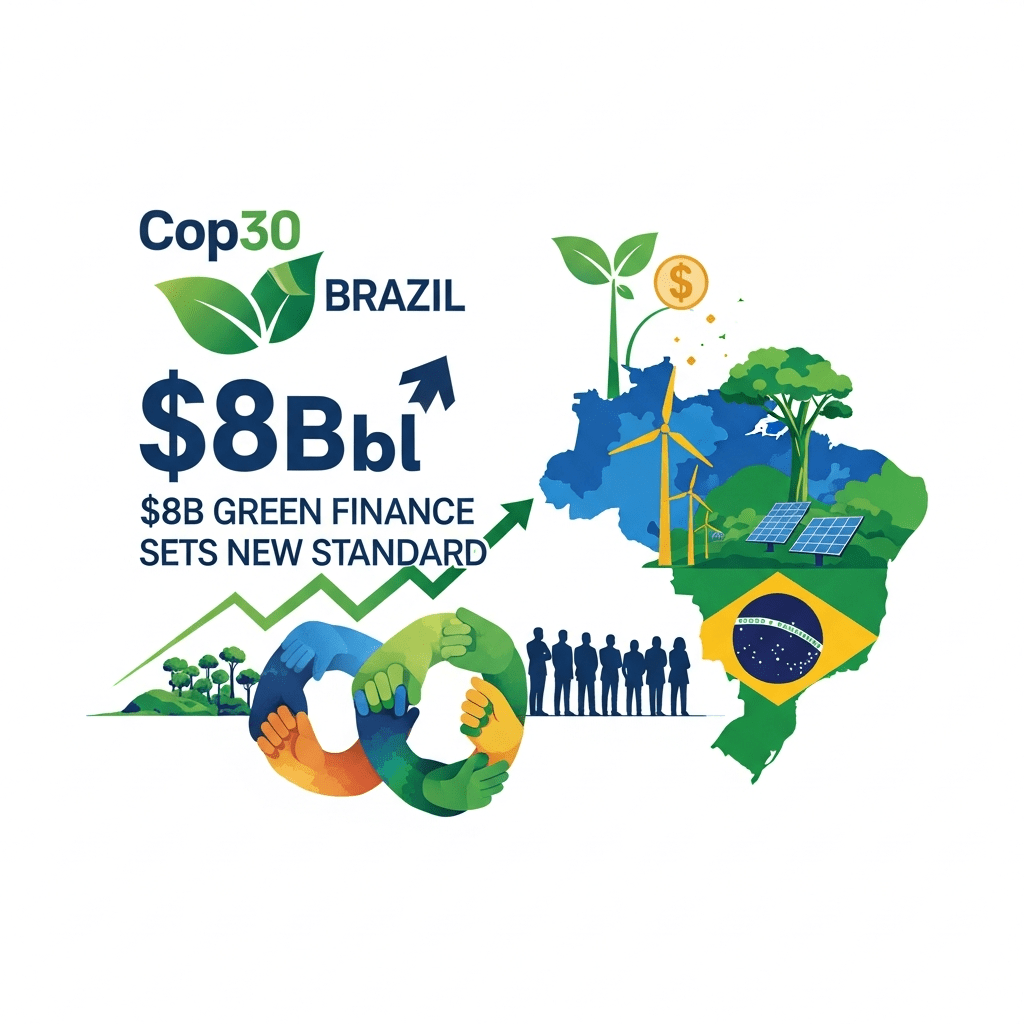
Brazilian energy equities ($BVSP) surged 2.7% as Cop30 climate conference Brazil opened with leaders pledging a record $8 billion for green finance. The scale of investment and coordinated market action stunned analysts, laying groundwork for major sector shifts as the summit commences.
Cop30 Launches in Brazil: $8B Green Finance Deal Sets New Standard
World leaders and executives convened in Belém, Brazil, on November 10, 2025, for the opening of the Cop30 climate conference. The event, hosted by the United Nations, began with a headline-grabbing $8 billion commitment to green finance—a 33% increase from Cop28’s $6 billion announced in 2023, according to UNFCCC data. Brazil’s Ibovespa Index ($BVSP) responded positively, climbing from 129,500 to 132,000 within hours. Notably, major energy exporters Petrobras ($PBR) and Eletrobras ($EBR) both saw volumes spike by more than 25% versus their 20-day averages (Reuters, Nov. 2025). The investment package prioritizes renewable power, reforestation, and supply chain decarbonization in Latin America, signaling a broader re-rating of ESG assets.
Climate Policy Shifts at Cop30 Reshape Energy and Commodities Markets
This Cop30 agreement sends ripples through global energy and commodity markets. Carbon pricing targets, expected to ratchet up to $70 per metric ton by 2026 from a global average of $47 (BloombergNEF, Sept. 2025), pressure traditional oil and coal producers while boosting renewables. Latin America’s hydro and wind infrastructure spend is projected to jump 18% year-on-year, per the International Energy Agency’s 2024 outlook. Meanwhile, commodity traders are watching closely as sugar, soy, and beef exports face new sustainability requirements—with Brazil accounting for 23% of global soy exports and over 15% of beef (USDA, 2024). The summit’s early consensus signals regulatory trajectories that could alter profit models across agri-business, utilities, and industrials.
Portfolio Strategies: Positioning for Cop30-driven ESG and Energy Swings
Investors tracking Cop30 climate conference Brazil are recalibrating across sectors. Long-term holders in renewable-focused ETFs, such as iShares Global Clean Energy ($ICLN), may benefit from accelerated flows: Q3 2025 saw $1.4 billion in net new assets, a 22% quarterly increase (Morningstar, Oct. 2025). Conversely, exposure to carbon-intensive entities—think global oil majors or regional utilities reliant on coal—faces heightened regulatory risk and potential capital outflows. For active traders, volatility in carbon credit futures and clean-tech equities could present both speculative opportunities and hedging challenges. To stay informed on sectoral impacts, utilize stock market analysis for energy equities, and monitor latest financial news surrounding ESG regulatory announcements. As the summit develops, risk management strategies must incorporate policy shifts and commodity price sensitivity.
Analysts Forecast Strong ESG Flows and Policy Catalysts Amid Cop30
Industry analysts observe that Cop30’s financial commitments and policy debates could catalyze long-term reallocation toward ESG and sustainable infrastructure. According to S&P Global, global ESG fund assets surpassed $2.9 trillion in Q2 2025, with momentum building from climate-linked policy reform. Market consensus suggests segmented outperformance among renewables and select agri-tech, but broad sectoral repricing will be determined by the final language on enforcement and financial mechanisms. Investment strategists note this is a pivotal moment for cross-border climate investment frameworks, with Brazil now central to global decarbonization strategies.
Cop30 Climate Conference Brazil Sets Stage for Investment Realignment
With the Cop30 climate conference Brazil igniting an $8 billion green finance wave and raising sector expectations, institutional investors must track regulatory developments and global capital flows. Eyes are now on forthcoming agreements and their implementation—especially for those with exposure to Latin American energy, ESG funds, and transitional commodities. Expect policy clarity from Cop30 to trigger the next phase of energy and market realignment.
Tags: Cop30, Brazil, ESG, green finance, energy sector