




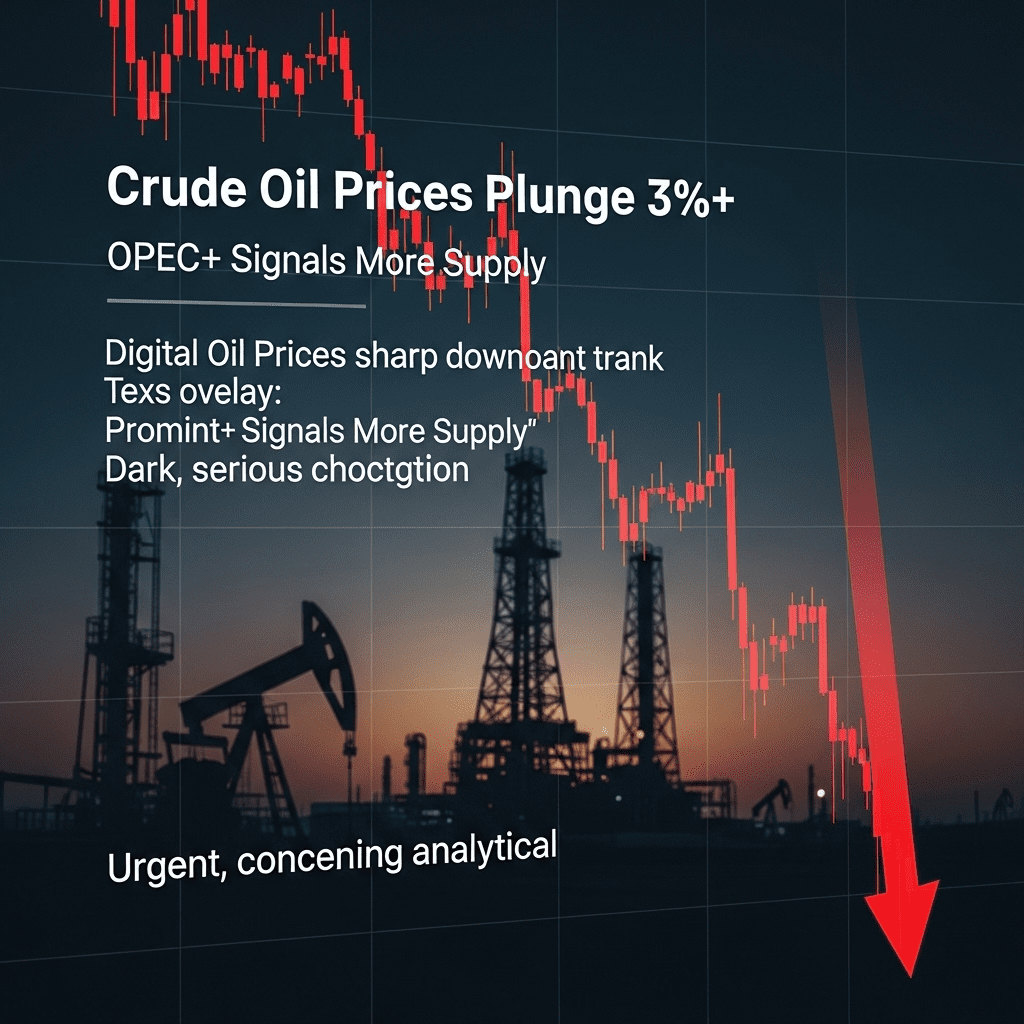
The energy markets faced turbulence this week as crude oil prices plunge over 3% as OPEC+ signals more supply. This unexpected move has sent ripples across global markets, sparking concerns about future price stability and energy security. In this article, we delve into the causes behind the price drop, the strategic motivations of OPEC+ members, and what this new supply signal means for investors and the global economy in 2025 and beyond.
Why Did Crude Oil Prices Plunge Over 3% as OPEC+ Signals More Supply?
The dramatic downturn in crude oil prices is directly related to OPEC+’s recent announcement indicating intentions to gradually ramp up oil production. As one of the most influential alliances in the energy sector, any signals from OPEC+ are closely watched by traders, policymakers, and analysts. The message was unambiguous: higher output is on the horizon, and markets reacted immediately with a sell-off, resulting in the steepest single-day drop in several months.
This announcement came during a period of already fragile price equilibrium. Global inventories were stabilizing and expectations pointed toward a tight supply, but the OPEC+ communication reversed that sentiment. The immediate oversupply risk, combined with concerns over slowing economic growth in key consumption regions, put strong downward pressure on benchmark crude contracts.
OPEC+ Strategy: Balancing Market Share and Price Stability
Understanding the motives behind OPEC+’s decision is crucial for all market participants, from industry professionals to retail investors reading energy outlooks on portals like ThinkInvest.org. Historically, OPEC+ has managed output levels to support prices, optimizing revenue for member states. However, internal dynamics, including pressure from some members to secure market share, have significantly shaped this latest call for higher production volumes.
Key Factors Influencing OPEC+’s Supply Signal
- Rising Non-OPEC+ Output: Competitors like the US, Brazil, and Canada are ramping up production, prompting OPEC+ to prevent loss of global market share.
- Economic Indicators: Sagging demand in certain markets, especially amid 2025’s shifting economic outlook, has led to a balancing act between price and volume strategies.
- Geopolitical Dynamics: Energy geopolitics, such as regional conflicts and shifting alliances, play a role in OPEC+ decision-making.
Market Impact: Short-Term Volatility and Long-Term Uncertainty
The most immediate effect of the announcement was a sharp reversal of bullish oil price momentum. Major benchmarks like Brent crude and West Texas Intermediate saw swift declines, with both dropping by over 3%. Such a pronounced move has broad implications:
Investor and Producer Responses
Energy stocks took a hit in tandem with crude prices, leading portfolio managers to reevaluate sector exposure and re-balance strategies for commodity-linked assets. Conversely, major oil-importing nations may temporarily benefit from softer energy costs, though this advantage may wane if increased supply translates into long-term market instability.
Energy companies are now reassessing their 2025 capital spending plans, prioritizing flexibility amid uncertain revenue expectations. This response has direct consequences for supporting industries, including oilfield services and shipping. For in-depth forecasts and opportunity analysis, many investors turn to [expert guides] published by financial centers and energy research outlets.
How Will Crude Oil Prices Fluctuate Through 2025?
With crude oil prices plunge over 3% as OPEC+ signals more supply setting the tone, analysts are now revising supply-demand models. Key uncertainties will dominate the energy narrative for the remainder of 2025:
- Energy Transition: The ongoing transition to renewables and clean energy is influencing medium- and long-term oil demand expectations.
- China and India: The trajectory of energy consumption in these regions will have an outsized impact on global demand balances.
- US Shale Response: If American producers respond to lower prices by cutting output, this could provide a price floor. If not, the market may face prolonged softness.
- OPEC+ Discipline: The alliance’s ability to maintain unity and discipline around production targets is crucial.
Staying informed is essential during such volatile periods; resources like [market analyses] and economic bulletins offer investors and businesses data-driven insights.
Conclusion: Navigating the Energy Sector in a Shifting Landscape
As crude oil prices plunge over 3% as OPEC+ signals more supply, the energy sector enters a period of increased uncertainty. Stakeholders must watch not only OPEC+ actions but also macroeconomic trends and the evolving energy transition. While short-term pain may beset oil producers and sectors linked to higher prices, emerging opportunities could arise for savvy investors and consumer-driven businesses if volatility persists through 2025.
The coming months will be critical for recalibrating strategies, allocating capital, and leveraging insights from credible industry platforms such as [ThinkInvest.org]. Diligent monitoring and agile decision-making will be essential for those navigating the complex oil market landscape ahead.