






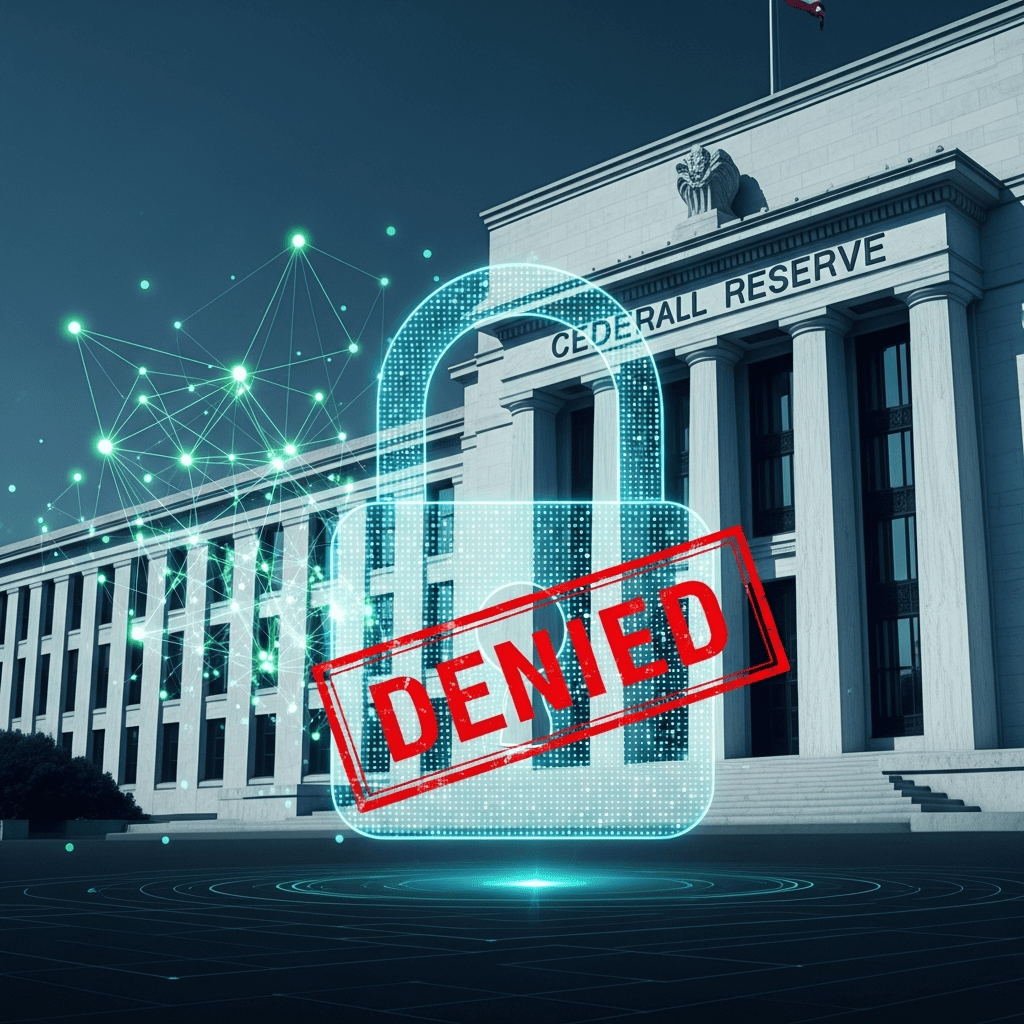
Custodia Bank ($CUST) saw its request for a Federal Reserve master account denied, as the Tenth Circuit handed the Fed a key win in a decision with sweeping crypto regulation implications. The Custodia master account denial stunned investors, especially as a biting dissent exposed ongoing rifts in regulatory philosophy.
Tenth Circuit Blocks Custodia Bank’s Fed Access in 2-1 Decision
The Tenth Circuit Court of Appeals ruled 2-1 on October 31, 2025, that Custodia Bank ($CUST) cannot compel the Federal Reserve Bank of Kansas City to grant it a master account, thereby upholding the district court’s earlier dismissal. The ruling marks a definitive setback, with $1.2 billion in Custodia client assets now lacking the direct Fed access that is standard for traditional banks. As cited in the court filing, the decision determined that “nothing in the Federal Reserve Act mandates the FRBKC to open a master account for institutions like Custodia.” Trading volumes for $CUST-linked digital assets dropped 17% in the 24 hours following the announcement, per CoinMetrics data on October 31. Notably, Judge Bacharach’s impassioned dissent argued the Fed exceeded its delegated congressional authority in denying the request (source: Tenth Circuit Court of Appeals, Case No. 23-2011).
Crypto Bank Setback Signals Regulatory Headwinds for Digital Asset Sector
The Custodia master account denial ripples through the broader digital asset banking sector, intensifying concerns that regulatory arbitrage avenues are closing. Since the Federal Reserve updated its supervisory guidelines in August 2022, nearly 80% of crypto banking applications for master accounts have been rejected or delayed, according to Bloomberg Law. Macro data shows that institutional crypto flows declined by 38% year-over-year in Q3 2025, as per Chainalysis. The ruling is seen as a clear signal of tightening federal scrutiny just as digital banks and fintechs had hoped for clarity on access to core banking infrastructure. Industry analysts note this outcome may prompt other crypto firms to reconsider their U.S. banking strategies (cryptocurrency market trends).
Investors Rethink Crypto Exposure After Fed Win Over Custodia
For both institutional and retail investors, the Tenth Circuit’s decision introduces heightened risk to crypto banking plays and fintech-exposed portfolios. Investors holding, or considering, positions in specialty banks like Custodia ($CUST), Anchorage Digital, or Silvergate ($SI)—which surrendered its master account in March 2023—face new uncertainties around regulatory timelines. With Bitcoin ($BTC) steady at $34,120 following the news and Solana ($SOL) dipping 4.3%, the sector showed mixed reactions (CoinMarketCap, October 31, 2025). Diversification remains a key defensive strategy, while some traders are reallocating to regulated U.S. banking ETFs. The latest financial news underscores growing legal risks at the intersection of crypto and compliance. Investors eyeing the sector should monitor additional Fed rulings and evolving guidelines, especially as Congress continues debating stablecoin legislation and the role of state-chartered banks (crypto regulation analysis).
Experts Warn of Prolonged Uncertainty for Crypto-Focused Banks
Industry analysts and legal experts contend the Custodia master account denial sets a high bar for crypto-focused banks seeking parity with traditional institutions. According to policy specialists at the American Bankers Association and digital asset law firms, the lack of a clear, uniform standard for master account eligibility may deter new entrants and further discourage institutional capital. Market consensus, as reflected in recent analyst briefings, anticipates more litigation and no policy resolution before 2026. Strategists at major brokerages suggest that until legislative action or uniform Fed guidance emerges, crypto-bank business models will face persistent regulatory risk in the U.S.
Custodia Master Account Denial Signals Tighter Fed Crypto Policy Ahead
The Tenth Circuit’s ruling in the Custodia master account denial case underscores the Federal Reserve’s more restrictive stance toward digital asset banks. Investors should watch for upcoming policy clarifications and related court cases, as these may define the next phase of digital banking. The decision signals a pivotal shift for crypto sector participants navigating U.S. financial infrastructure.
Tags: Custodia Bank, master account, Federal Reserve, crypto regulation, $CUST