




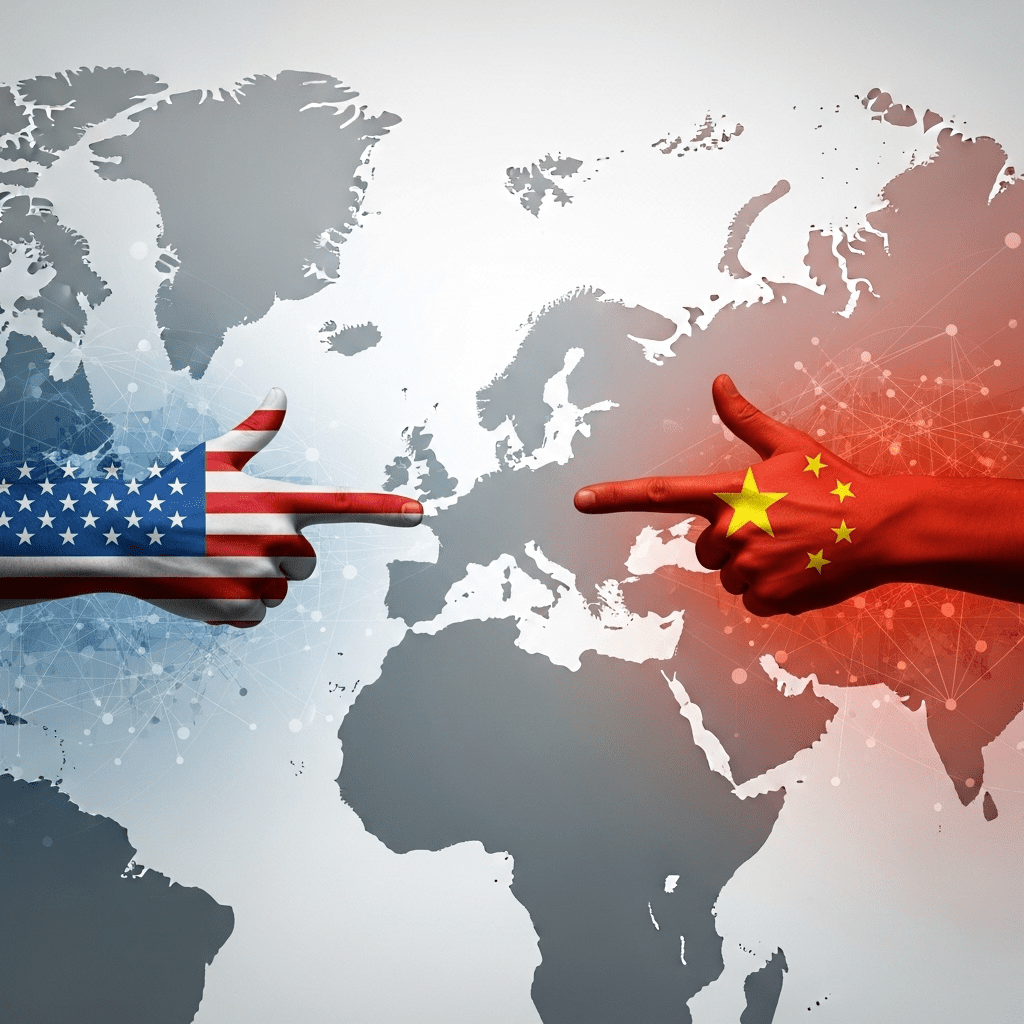
As Europe slowly awakens to its entry into US-China wars, the continent’s economic outlook and strategic priorities are shifting in response to the escalating tensions between the world’s two largest economies. In 2025, European policymakers, investors, and businesses are beginning to recognize that their traditional position of neutrality is becoming increasingly untenable as both Washington and Beijing intensify their competition for technological, political, and market dominance.
Europe slowly awakens to its entry into US-China wars: Economic Ramifications
The economic fallout as Europe slowly awakens to its entry into US-China wars is profound. For over a decade, the European Union (EU) has benefited from robust trade with both the United States and China, which together account for nearly 30% of the EU’s external trade. However, recent moves—such as new tariffs, sanctions on technology transfers, and supply chain restrictions—are forcing European companies to reconsider their reliance on both superpowers.
The growing bifurcation of global commerce, driven by national security concerns, has placed sectors such as automotive, pharmaceuticals, and semiconductors under intense pressure. German carmakers, for example, have found themselves caught between lucrative sales in the Chinese market and increasing obligations to comply with evolving American export controls. The EU’s GDP growth forecasts for 2025 are being adjusted downward, reflecting concerns over diminished cross-border investments and rising input costs.
The Policy Response: Strategic Autonomy in Focus
The continent’s recognition of the shifting geopolitical landscape has accelerated efforts to assert what Brussels calls “strategic autonomy.” European Commission President Ursula von der Leyen has emphasized reducing critical dependencies—especially in energy, digital infrastructure, and advanced manufacturing—to bolster resilience against external shocks. The EU’s Chips Act, massive investments in green technologies, and revamped industrial policy are all direct responses to the disruptions caused by US-China tensions.
Across major markets, security reviews on foreign investments and stricter vetting of outbound capital flows are now commonplace. European financial institutions are increasingly scrutinizing client exposures to both Chinese and American assets, causing volatility but also spawning new investment insights about risk diversification strategies within the bloc.
Investor Sentiment and Market Dynamics Amid Great Power Rivalry
Investor sentiment in 2025 reflects growing caution as Europe slowly awakens to its entry into US-China wars. The realignment of global supply chains is hitting equity valuations for some core European industries while supporting sectors positioned as alternatives to Chinese or American dominance—such as cybersecurity, energy security, and battery technology companies.
Capital inflows into European defense and dual-use technology firms are on the rise. Meanwhile, sovereign wealth funds and pension managers are favoring pan-European assets that offer insulation from global trade disruptions. A recent survey by the European Investment Bank reports that over 58% of large European investors are recalibrating portfolios to mitigate geopolitical risk, marking the highest level of strategic repositioning seen since 2008.
Trade Policy Shifts and Regulatory Developments
European trade policy has entered a new era of pragmatism. Brussels is leveraging the EU’s single market to negotiate trade deals with emerging economies, seeking to hedge against over-reliance on the US and China. The EU’s Carbon Border Adjustment Mechanism (CBAM) which goes fully operational in 2025, is a clear example of how Europe is embracing regulatory tools to protect its industry from external shocks while advancing green transition goals.
Regulatory oversight is now extending into financial services, cloud computing, and artificial intelligence. This complex web of rules aims to ensure that European businesses remain competitive and secure in a splintered global marketplace where technology standards and data management practices diverge according to geopolitical allegiances. These challenges make expertise in international regulatory risk, such as the analysis provided by market outlook reports, increasingly important for decision-makers across the continent.
Future Outlook: Can Europe Chart Its Own Economic Path?
As Europe slowly awakens to its entry into US-China wars, the question of whether the continent can maintain or reclaim strategic economic sovereignty looms large. Much rests on internal unity among EU states, effective reindustrialization strategies, and ongoing efforts to realign trade and investment flows towards Asia’s other rising economies and the Global South.
Experts agree that Europe’s evolving response could lay the groundwork for a more multipolar world economy—provided the region accelerates innovation, invests in critical infrastructure, and deepens collaboration with like-minded partners. The next wave of EU climate and digital initiatives, expected later in 2025, will serve as a litmus test for Europe’s ability to adapt in an era shaped by superpower rivalry.
For investors, policymakers, and business leaders, staying abreast of economic shifts and regulatory developments will be crucial. Resources such as financial education tools will be indispensable for navigating these uncertain waters and capitalizing on emerging opportunities as Europe recalibrates its global role.