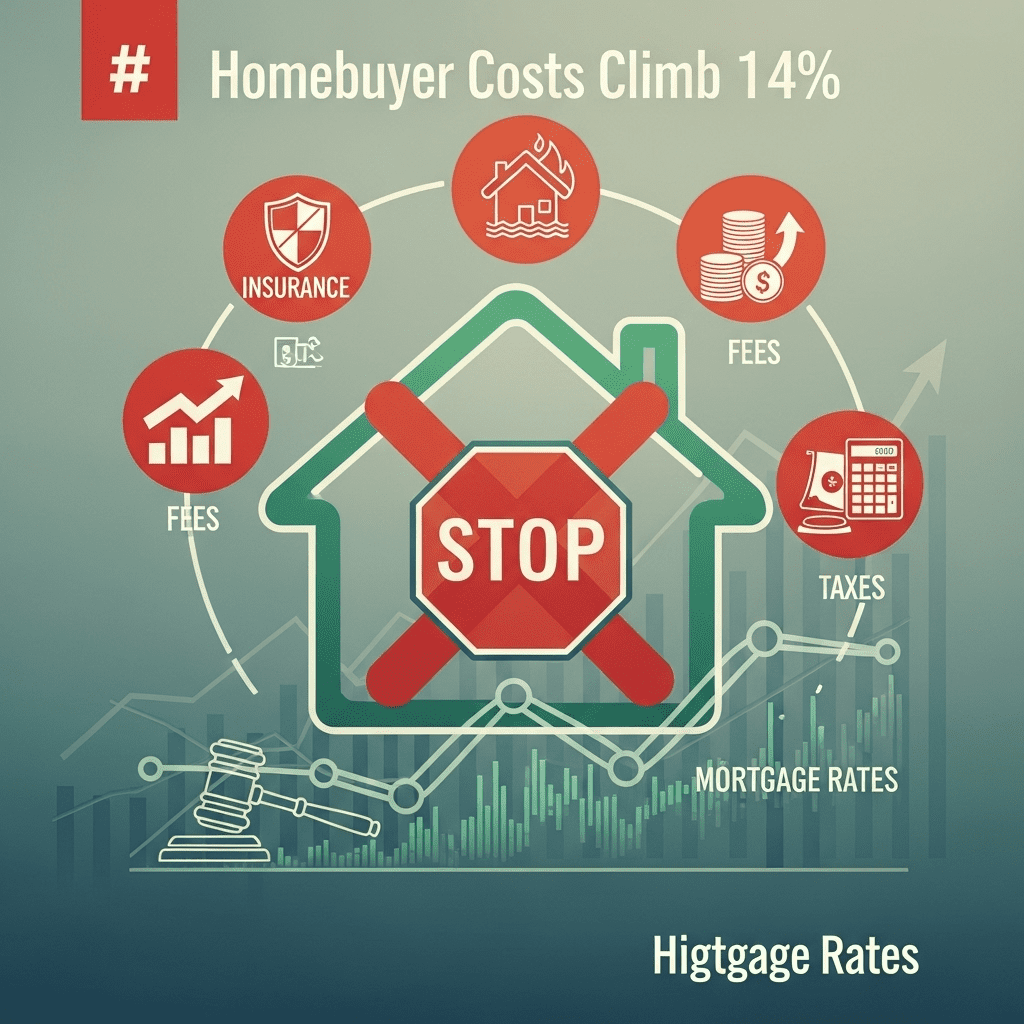
Affordability for first-time homebuyers took an unexpected hit this quarter, as Wells Fargo & Co. ($WFC) revealed total monthly costs spiked 14% year-over-year even with mortgage rates holding at 6.7%. Recent fee hikes and insurance surges expose fresh barriers—why isn’t lower demand translating to affordable homes?
Homebuyer Costs Climb 14%: Insurance and Fees Exceed Rate Impact
First-time homebuyer affordability has deteriorated sharply in 2025. According to Freddie Mac data as of September 2025, the average 30-year fixed mortgage rate stabilized at 6.7%, virtually unchanged from late 2024. Yet, Wells Fargo & Co. ($WFC) reports typical total monthly payments, including insurance and taxes, have leapt 14% versus the previous year, now reaching $2,362 for a median-priced U.S. home. The Federal Housing Finance Agency (FHFA) highlights that property insurance premiums rose by an average 19% nationally due to increased climate risk exposures, especially in Florida and California. Many lenders also raised origination and PMI (private mortgage insurance) fees, lifting upfront borrower costs by 7% since mid-2024. These combined expenses are overtaking interest rates as primary obstacles for new entrants to the housing market (sources: Freddie Mac Primary Mortgage Market Survey, FHFA, Wells Fargo Q3 2025 Housing Report).
Why Housing Affordability Crisis Deepens Amid Flat Home Prices
Despite a marginal 1.1% rise in the S&P CoreLogic Case-Shiller National Home Price Index as of August 2025, first-time buyers aren’t feeling relief. Persistently high inflation in home-related expenses—insurance, taxes, and HOA dues—now drive total cost of ownership higher even as price appreciation slows. Moody’s Analytics notes that median property taxes jumped 8% year-over-year in key metropolitan regions, while climate-related mitigation fees and stricter building codes introduced in 2024 have further inflated closing costs. Simultaneously, the share of first-time homebuyers hit a 12-year low of 27% in Q3 2025, per National Association of Realtors (NAR) survey data. This divergence shows that broader financial market trends are not syncing with on-the-ground affordability for individual buyers.
Strategies for Investors: Navigating Volatile Affordability Trends
Investors allocating capital to residential real estate or REITs linked to homeownership must weigh new risks and opportunities. Traditional price-to-income ratios matter less as structural expenses—insurance, taxes, and compliance costs—become dominant. Investors eyeing single-family rentals should factor in rising carrying costs, which, according to Blackstone Inc. ($BX), have outpaced rental yield growth in several Sun Belt markets since early 2025. Mortgage-backed securities face potential headwinds if default risk climbs among first-time buyers stretched by non-rate burdens. Meanwhile, opportunity emerges in green housing bonds and firms specializing in climate-resilient property construction, as demand for affordable, insurable homes remains robust. For broader context on these risks and opportunities, review our investment strategy insights.
What Analysts Expect for Homebuyer Affordability in 2026
Industry analysts observe that affordability challenges will persist into 2026 unless there is regulatory action targeting insurance and ancillary costs. Market consensus suggests mortgage rates are unlikely to fall below 6% over the next 12 months, while expectations for property tax and insurance premium increases remain elevated. According to research compiled by Redfin and Fannie Mae through September 2025, first-time buyer participation may only recover as local governments introduce subsidies or reform fee structures to lower barriers.
First-Time Homebuyer Affordability 2025 Signals a New Market Reality
First-time homebuyer affordability 2025 data highlights hidden barriers far beyond rates and prices. With insurance, taxes, and fees outpacing wage growth, investors and policymakers should monitor these structural headwinds closely. Watch for upcoming municipal policy shifts or insurer market entries—cost volatility may define the housing landscape into 2026.
Tags: first-time homebuyer, real estate, $WFC, housing affordability, mortgage rates