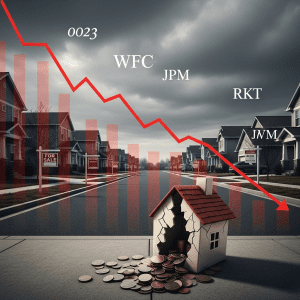






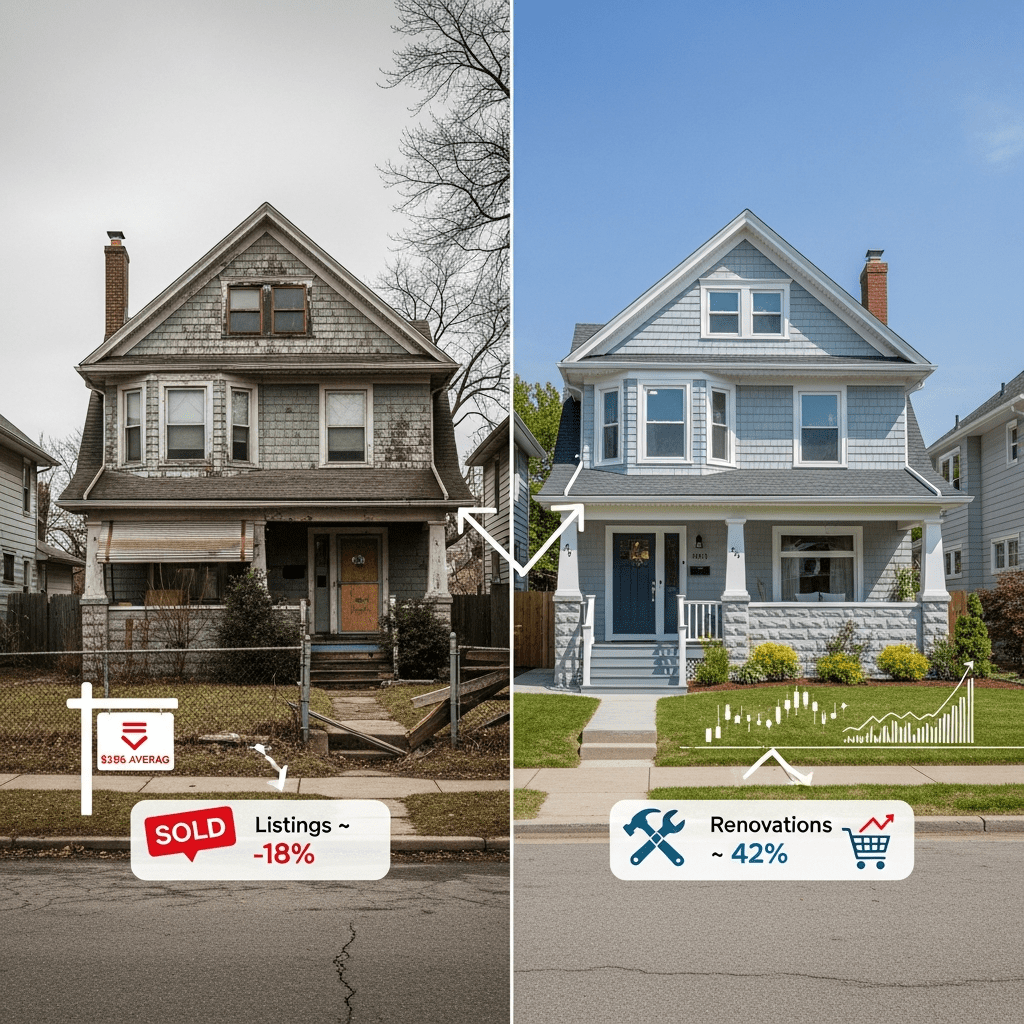
Homebuyers increasingly secured fixer-uppers in 2025, betting renovations would yield their dream home despite soaring market prices, with Lowe’s Companies Inc. ($LOW) leading supply surges. The critical question, ‘is a fixer-upper the best way?’ now fuels market debate as returns and labor shortfalls produce surprising results.
Fixer-Upper Renovations Jump 42% as Home Listings Shrink in 2025
Renovation permit filings across the U.S. rose 42% year-over-year through September 2025, according to U.S. Census Bureau data, as median home prices climbed 7.1% to $459,900 (National Association of Realtors, June 2025). Supply chain leader Lowe’s Companies Inc. ($LOW) reported Q2 2025 sales growth of 5.4% as demand for renovation materials hit new highs. The number of listed single-family homes fell 18% from January to September 2025, squeezing buyers toward older properties and sparking a jump in “fixer-upper” transactions (Redfin market report, September 2025).
Why Tight Supply and High Rates Boost the Fixer-Upper Trend
With 30-year mortgage rates holding near 7.2% in October 2025 (Freddie Mac), monthly payments for new homes climbed to record levels, outpacing wage growth. Scarce new construction—down 12% YOY in completed units per U.S. Census data—drove buyers toward older, lower-priced homes in need of major upgrades. Historically, renovation booms correlate with market undersupply. In 2022, just 14% of existing home sales were fixer-uppers; by August 2025, that figure exceeded 25% (Zillow). This shift reflects both affordability constraints and pandemic-era savings funneling into home customization. Building product sector indices, including Home Depot ($HD), gained over 8% in the first nine months of 2025, underscoring investor confidence in renovation-led housing demand.
How Investors Can Strategize for the Renovation Real Estate Boom
For investors, fixer-uppers present unique risk-reward profiles. Data from ATTOM shows the average U.S. resale profit on renovated homes reached $87,500 in Q3 2025, a 15% increase from the prior year. However, renovation cost inflation—up 9.3% annually (Bureau of Labor Statistics, 2025)—erodes margins for inexperienced buyers. Long-term investors may benefit from diversified exposure through building supply equities, while direct buyers face heightened competition and unpredictable permitting backlogs. Builders and material suppliers such as Lowe’s ($LOW) and Home Depot ($HD) remain well positioned for continued outperformance amid renovation demand. For deeper sector analysis, stock market research on home improvement stocks and broader investment strategy insights reveal evolving investor sentiment in real estate-linked assets.
What Market Analysts Expect Next for the Home Renovation Sector
Industry analysts observe that renovation trends are likely to persist as affordability pressures and inventory shortages dominate the market heading into 2026. According to a mid-2025 J.P. Morgan housing outlook, persistent interest rate elevation and sluggish new construction will continue favoring upgrades of existing property. Market consensus suggests renovation demand could moderate only if mortgage rates fall or builders substantially increase supply.
Fixer-Upper Market Signals New Era for 2025 Homebuyers
Record renovation activity in 2025 signals that, for many, is a fixer-upper the best way to secure a dream home in a tight market. Investors and homeowners must monitor input costs, labor trends, and policy factors shaping supply. The key takeaway: fixer-upper strategies offer opportunity, but selectivity and strong planning are essential for sustainable returns.
Tags: fixer-upper, $LOW, real estate, renovation market, homebuyers