




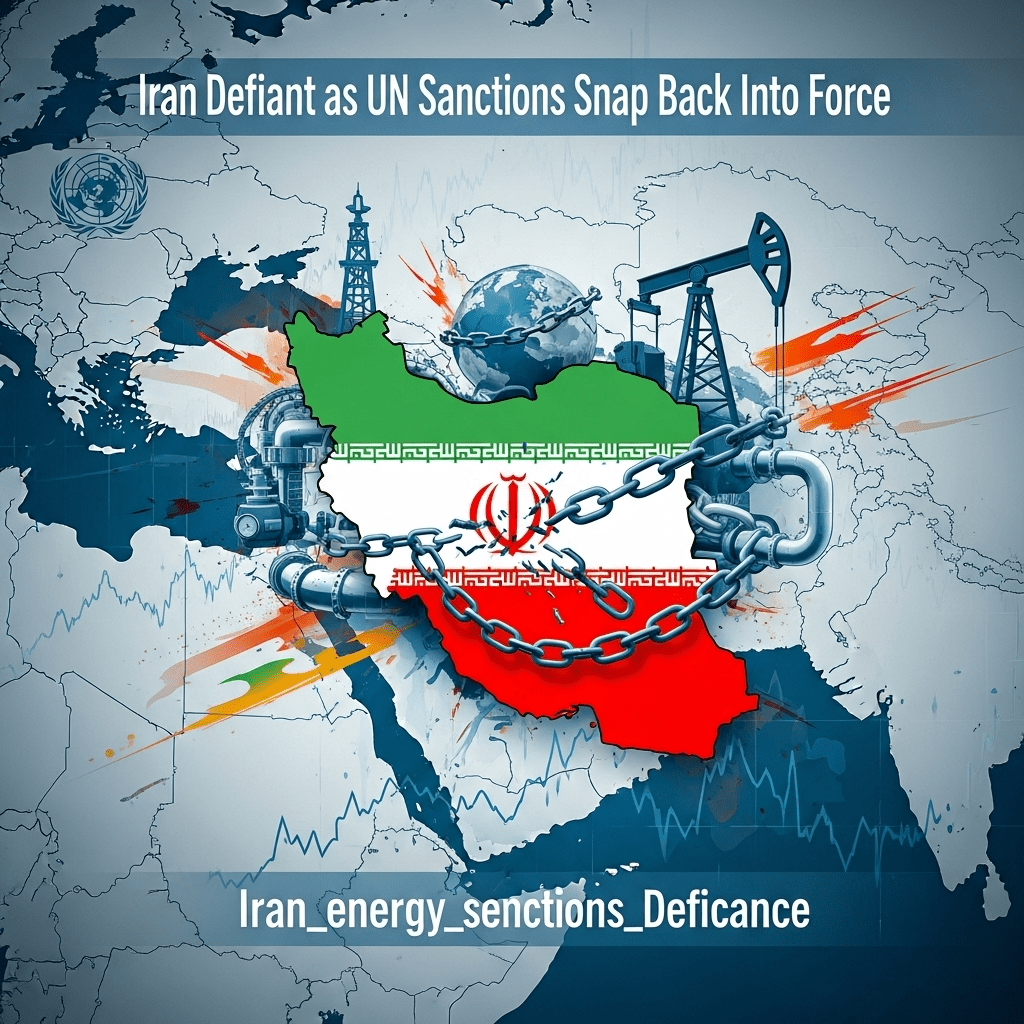
The energy sector is on high alert as Iran defiant as UN sanctions snap back into force, an event shaking the very foundations of global oil and gas markets in 2025. With renewed restrictions targeting Tehran’s economy, the world is witnessing not only diplomatic tensions but also major ripples across energy supply chains and regional stability.
Iran Defiant as UN Sanctions Snap Back Into Force: A Geopolitical Overview
In early 2025, the United Nations Security Council acted to reactivate comprehensive sanctions on Iran, citing concerns over compliance with international nuclear agreements. However, Iran has publicly rejected the legitimacy of these measures, vowing to continue its energy exports and strengthen partnerships beyond Western spheres of influence. This bold defiance has forced governments, investors, and energy analysts to reassess the risks and opportunities in this complex landscape.
Energy Industry Implications: Oil, Gas, and Global Supply Dynamics
The return of UN sanctions sharply curtails Iran’s ability to legally export crude oil, petrochemicals, and natural gas. Yet, the country remains the world’s fifth-largest holder of proven oil reserves and a critical supplier to several Asian and regional markets. With global energy investors on edge, market volatility is expected to rise as:
- International oil prices fluctuate in response to potential supply disruptions.
- Alternative suppliers—such as Saudi Arabia, Russia, and US shale producers—move to fill any possible gaps left by Iranian exports.
- Black market channels and gray-market trading are likely to increase, complicating enforcement efforts.
Wider Economic Impact on OPEC and Beyond
Within OPEC, Iran’s isolation could alter the organization’s delicate production balance, just as economies worldwide strive for post-pandemic recovery. Allies like China and Russia may continue to import Iranian oil through indirect or clandestine means, further muddying the market waters and pressuring Western-aligned producers. Energy consultants at leading financial platforms warn of “extended unpredictability” in futures pricing and cross-border trade.
Sanctions Compliance and Global Energy Policies
The international response to Iran’s defiance focuses not only on direct sanctions enforcement but also on secondary measures targeting entities that facilitate Iranian exports. Shipping companies, insurance providers, and financial intermediaries now face heightened scrutiny—to the extent that some global insurers have already distanced themselves from the Iranian market. As reported by industry sources, energy firms are revising their risk management strategies to avoid any breach of sanctions regime.
Renewables and Diversification: A Strategic Pivot
With Iran’s conventional energy sector under pressure, the conversation around renewable energy investments intensifies. Countries heavily dependent on Iranian oil are accelerating their transitions toward alternative sources, such as solar, wind, and LNG imports from non-Iranian suppliers. This push for diversification is expected to shape global energy policy throughout 2025 and beyond, according to research from reputable investment analysts.
Regional Security Concerns and Energy Infrastructure
Iran’s announcement to maintain its energy export volumes despite sanctions raises fears of maritime confrontations and cyber-attacks targeting vital infrastructure in the Strait of Hormuz—a chokepoint for one-fifth of all traded oil. Military posturing and asymmetric tactics could endanger shipping lanes, insurance premiums, and pipeline security, exacerbating risks for energy-importing nations worldwide.
The Outlook for 2025: Energy Markets on Edge
As ‘Iran defiant as UN sanctions snap back into force’ becomes the defining narrative of 2025’s energy dialogue, market participants and policymakers face an uphill battle. The interplay of geopolitical maneuvering, marketing adaptation, and technological innovation will determine the pace and scope of this disruption. While some see opportunities in short-term arbitrage and regional partnerships, others urge a focus on long-term stability through diversified supply, robust diplomacy, and coordinated international enforcement.
Conclusion: Navigating Volatility Through Strategy
The re-imposition of UN sanctions has placed the global energy sector at a crossroads. Stakeholders must monitor developments closely, adapt to shifting market realities, and champion transparent, sustainable solutions for energy security. As the situation unfolds, only those equipped with agile strategies and timely information will steer through this unprecedented period of geopolitical and economic transformation.