JPMorgan Chase ($JPM) denied paying a $20 million legal bill submitted by Frank founder Charlie Javice, intensifying the ongoing JPMorgan Frank legal bill dispute. The unexpected refusal comes amid high-profile fraud allegations and could set precedent for tech M&A litigation. What does this mean for investors and market confidence?
JPMorgan Withholds $20 Million Legal Payment in Frank Lawsuit Battle
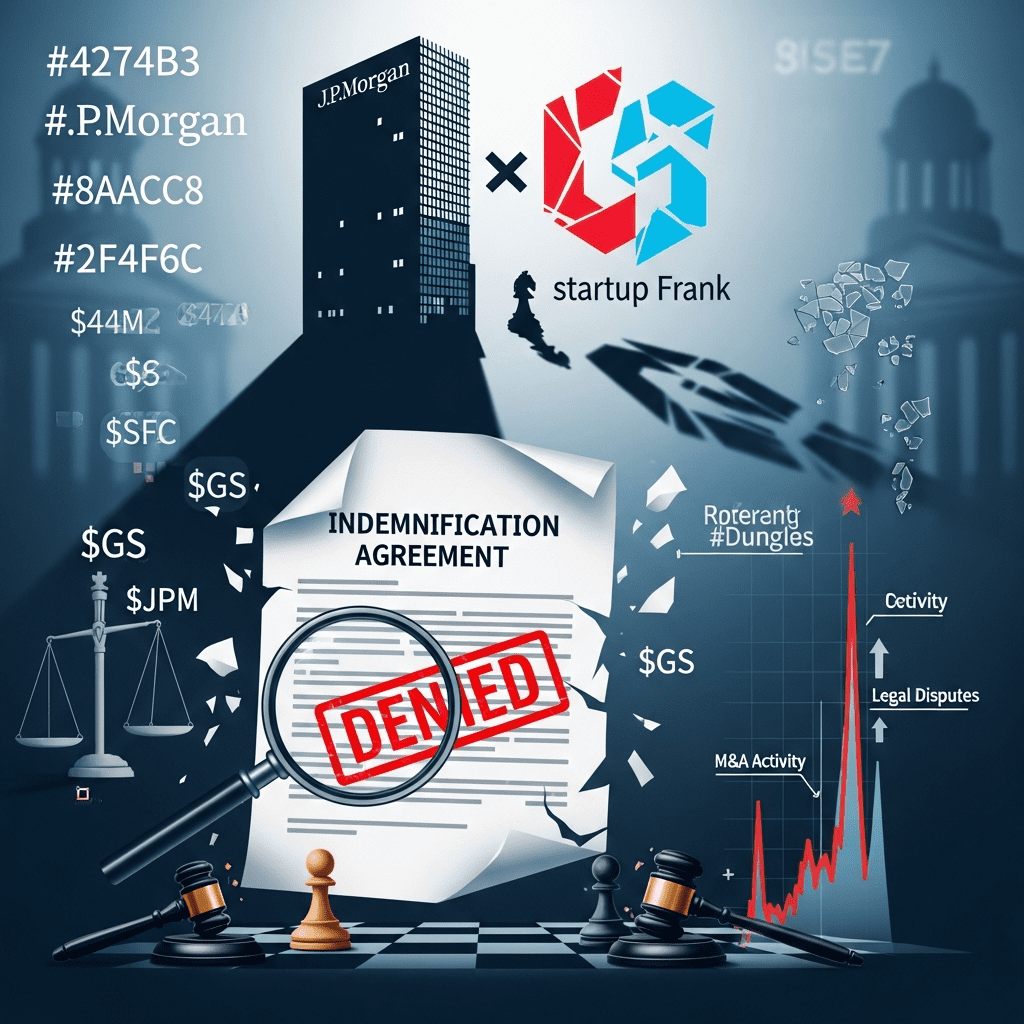
On November 15, JPMorgan Chase ($JPM) formally opposed Frank founder Charlie Javice’s attempt to force the bank to cover nearly $20 million in legal fees, according to newly filed court documents (Reuters, Nov. 2025). The legal demand is tied to the bank’s $175 million 2021 acquisition of Frank, a student-aid startup that JPMorgan alleges was built on fraudulent user data. In its statement, JPMorgan contends that its indemnification obligations do not extend to Javice, who faces both civil and criminal proceedings. As of November 2025, JPMorgan stock trades near $156.80, up about 5.4% year-to-date, while legal spending related to the Frank dispute has surged into eight figures (Bloomberg, Oct. 2025).
Why Fintech M&A Risk Is Rising Amid Legal Fee Disputes
The JPMorgan Frank case underscores escalating risks for tech acquirers amid startup deal scrutiny and post-pandemic litigation. According to PitchBook’s 2025 Q3 report, global M&A activity in fintech dropped 18% year-over-year, while legal disputes post-acquisition are at their highest since 2017. Deal teams now demand more extensive audits: 67% of surveyed financial firms increased due diligence requirements in 2024 (KPMG, 2024), especially when startups claim large active user bases. The Frank fallout has also pressured other banks and VCs to rethink standard indemnification and insurance clauses, with several revising legal coverage limits after high-profile fraud charges.
How Investors Should Reassess Exposure to Fintech Litigation Risks
Investors holding bank or fintech stocks should evaluate litigation risk as a key portfolio variable. The Frank legal battle could introduce new volatility for JPMorgan ($JPM) and tech-sector M&A deals. Financial stocks with large exposure to high-growth tech acquisitions, such as Goldman Sachs ($GS), which recently booked $470 million in litigation reserves (Q2 2025 earnings), may also see cost pressures. Portfolio managers tracking the stock market analysis or seeking updates on latest financial news are closely monitoring similar deal disputes as potential catalysts. Prolonged litigation may delay new M&A cycles and pressure sector multiples, particularly for fast-scaling startups.
What Analysts Expect Next for JPMorgan and Tech M&A
Market consensus suggests ongoing legal wrangling could extend through mid-2026, keeping visibility on JPMorgan’s ($JPM) legal reserves and Frank’s asset value low. Industry analysts observe that M&A legal coverage costs are likely to rise another 10-15% across the financial sector in 2026 as insurers reprice risk. The Frank case is now regarded as a bellwether for how aggressively banks will enforce indemnity carve-outs in future tech and fintech acquisitions.
JPMorgan Frank Legal Bill Dispute Reshapes Tech M&A in 2025
The JPMorgan Frank legal bill dispute is already influencing how market participants approach tech M&A risk, due diligence, and legal exposure. Investors should expect tighter deal scrutiny and increased legal reserve provisioning across financials into 2026. Closely monitoring litigation disclosures and policy updates remains essential, as similar risk events could impact market confidence and deal volume in coming quarters.
Tags: JPM, fintech, legal risk, M&A, Charlie Javice