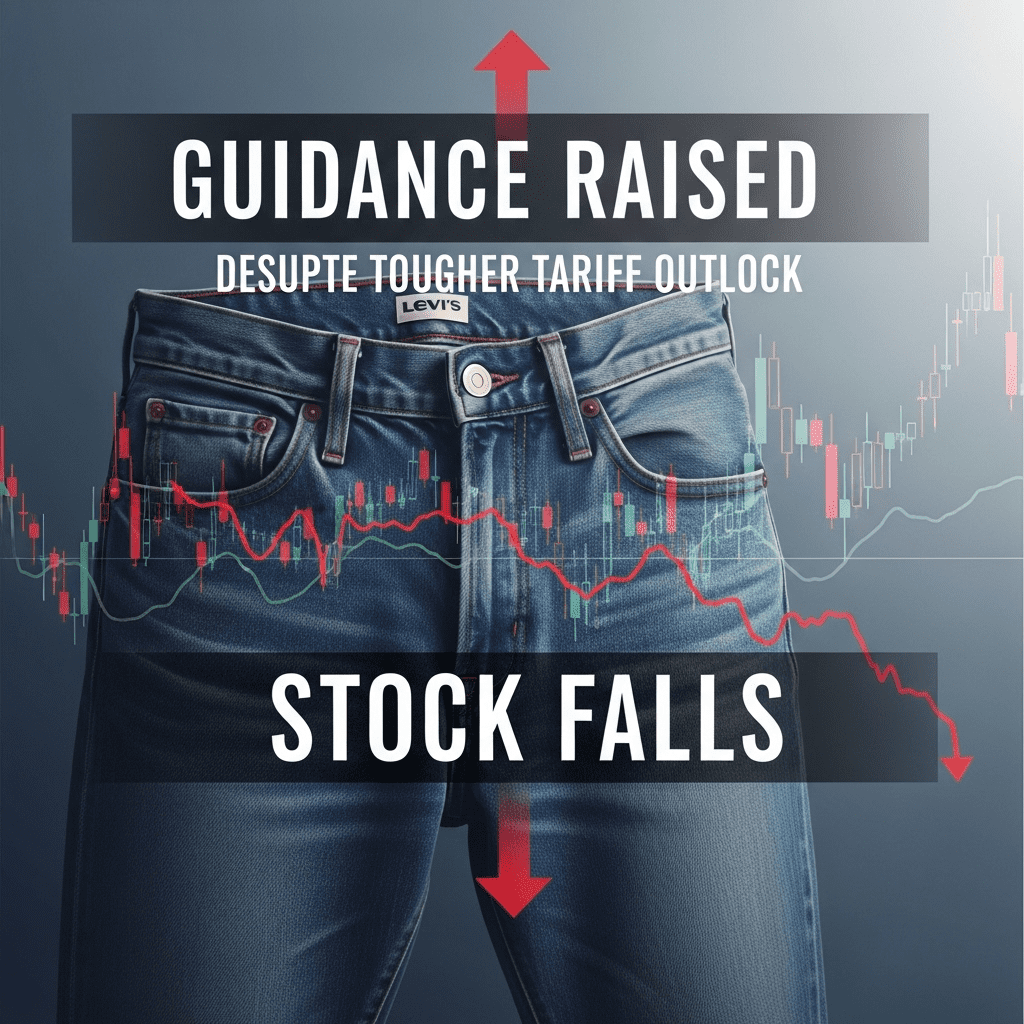
In a surprising twist for 2025 markets, Levi’s raises guidance despite tougher tariff outlook, but the stock falls as investors weigh positive earnings against complex trade headwinds. The iconic denim brand continued its financial momentum by boosting forward-looking projections, even as escalating tariffs pose a challenge for multinational apparel companies. The market, however, delivered a cautious response, sending Levi Strauss & Co. shares downward amid uncertainty over future profitability.
Levi’s Raises Guidance Despite Tougher Tariff Outlook, but the Stock Falls: What’s Behind the Divergence?
Levi Strauss & Co. delivered its latest quarterly results with robust revenue growth and updated earnings guidance, underscoring operational resilience. Management highlighted strong consumer demand in North America and emerging markets, attributing margin improvements to supply chain efficiency and successful direct-to-consumer initiatives. Despite these positives, the company acknowledged “a tougher tariff outlook” as recent trade tensions between the U.S. and key manufacturing partners introduced rising import duties on apparel goods.
This combination—improved profit forecasts but unfavorable trade conditions—sparked volatility. Investors initially saw higher guidance as a vote of confidence but swiftly shifted focus to mounting costs and potential margin compression. As a result, Levi’s stock fell over 7% in post-earnings trading, reflecting concerns that external risks could overshadow near-term gains.
CEO Commentary and Strategic Response
Commenting on the results, CEO Michelle Gass assured stakeholders that Levi’s is proactively restructuring its sourcing strategies to mitigate tariff risks. The company has begun diversifying suppliers and ramping up production outside high-tariff regions, echoing the defensive moves many global retailers face in the evolving geopolitical landscape. These efforts are projected to protect long-term profitability, aiming to reassure both shareholders and industry analysts.
Tariff Pressures Challenge the Apparel Sector
Levi’s experience is emblematic of broader sectoral stress in apparel. Rising tariffs, part of ongoing trade disputes, are increasing costs for brands reliant on overseas manufacturing. Many industry observers, as found on market commentary platforms, believe the impact could extend beyond Levi’s, potentially reshaping the competitive dynamics among global clothiers. For investors seeking investment insights into consumer discretionary stocks, understanding tariff exposure and mitigation strategies is crucial in 2025.
Investor Sentiment: Balancing Guidance with Trade Risks
For Wall Street, the issue extends beyond Levi’s individual performance. Positive guidance signals management’s confidence, but macroeconomic uncertainties dictate caution. This explains why the focus keyphrase—Levi’s raises guidance despite tougher tariff outlook, but the stock falls—resonates throughout analyst reports and retail investor discussions.
Levi’s shares had posted strong gains earlier in the year, making them susceptible to profit-taking amid any negative developments. Some investors viewed the stock drop as a short-term reaction rather than a fundamental concern, arguing that Levi’s brand power and operational agility offer long-term value. Others, referencing market news analyses, noted that persistent tariffs could erode sector-wide margins if negotiations fail to ease trade friction.
Competitors and Industry Implications
Levi’s isn’t alone in navigating these challenges. Competitors like VF Corporation and Gap Inc. are similarly exposed to shifting tariff structures. Many brands are accelerating digital transformation and local sourcing to offset cost pressures. As the apparel industry adapts, successful firms will likely be those able to balance pricing, margin protection, and supply chain resiliency in a volatile regulatory environment.
Outlook for Levi’s and Takeaways for Investors
Looking ahead, Levi’s management reiterated its commitment to brand growth, innovation, and prudent cost control. The company’s raised guidance signals continued confidence, yet the tough tariff outlook ensures inflationary risks aren’t going away soon. Investors should monitor how Levi’s supply chain pivots affect gross margins and whether trade policy evolves in their favor.
For portfolio managers and retail investors, the key takeaway is to weigh short-term volatility against long-term fundamentals when evaluating “Levi’s raises guidance despite tougher tariff outlook, but the stock falls.” Diversification, sector analysis, and close attention to tariff trends remain essential strategies as 2025 unfolds.
In summary, Levi’s latest moves highlight the complexities facing global retailers in a shifting trade landscape. Although cautious market reaction may be temporary, the competitive advantage will lie with companies agile enough to adapt swiftly—making Levi’s a stock to watch throughout the year.